xoxoxoBruce • Apr 2, 2016 12:44 am
Nature has evolved(or created 7,000 years ago), a fascinating array of special purpose structures.
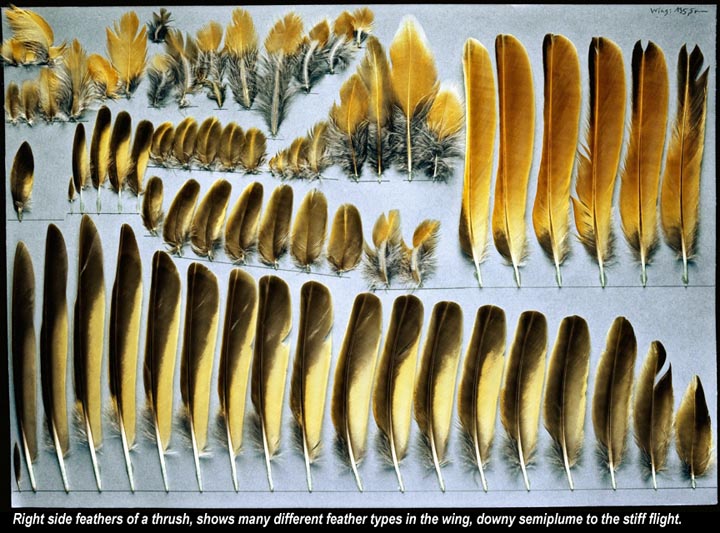
I think feathers are one of the most intriguing, as they are a bird's tools for flight, shelter from the elements,
camouflage from enemies, deterrent to aggressors, and the ticket for sex. That's a lot of tasks for feathers
to respond to, so it's not surprising specialized feathers have evolved.
"Oh Vlad", she breathed, as he wrapped his long, hard, sharp talons around her moist tender ladybird feathers.
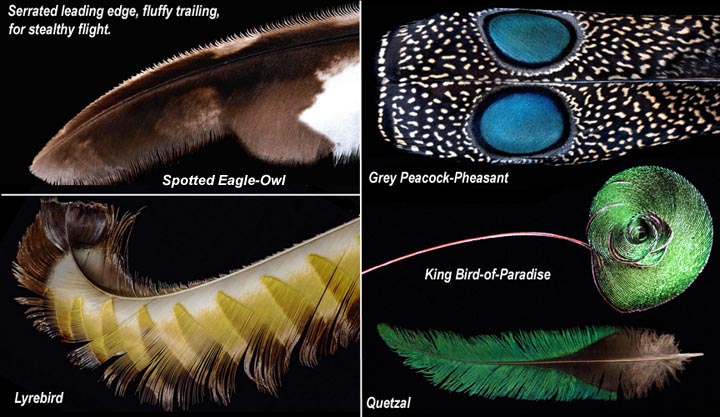
So many variations in coloration, structure, and shape, for function and ornamentation.
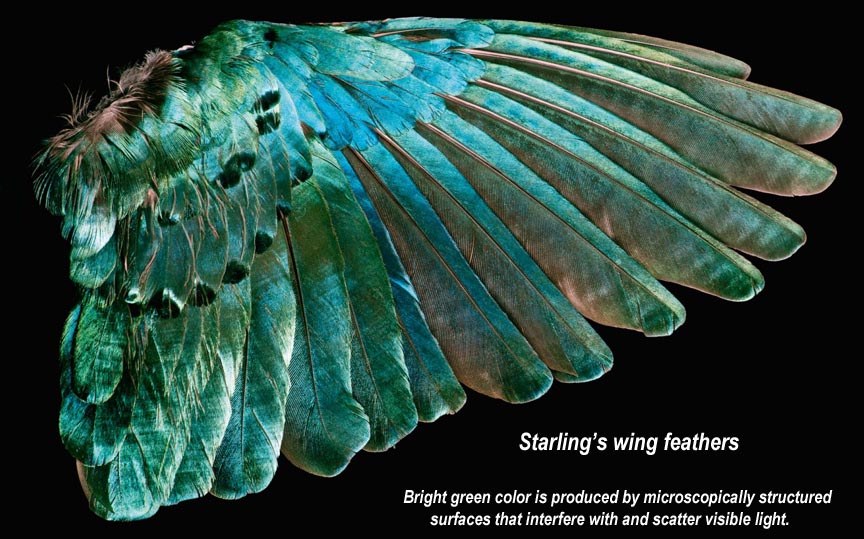
Science has discovered many feathers have no color of their own, no pigmentation at all, but use the structure
of the feather to manipulate light so they appear to have color. It's the same principal that give us blue sky.
Here's a good example of that phenomenon.
Great as feathers are, they do require maintenance, as they catch dirt and host parasites.
So next time you go to the park to feed the birds, take along your hair brush and give the bird a good brushing.
link
I think feathers are one of the most intriguing, as they are a bird's tools for flight, shelter from the elements,
camouflage from enemies, deterrent to aggressors, and the ticket for sex. That's a lot of tasks for feathers
to respond to, so it's not surprising specialized feathers have evolved.
If you were to pick up a spotted eagle-owl’s feather, you might think it doesn’t look like anything special.
It has an uneven, coffee-brown color and white patches. The leading edge is a row of stunted barbs;
on the other side the delicate tendrils wisp away.
But this unassuming tattered edge makes for one of the most fascinating feathers in the world.
Although the design creates drag, it can also muffle the sound of the bird’s approach to prey before it
swiftly folds its talons around an unsuspecting mouse or insect.
"Oh Vlad", she breathed, as he wrapped his long, hard, sharp talons around her moist tender ladybird feathers.
So many variations in coloration, structure, and shape, for function and ornamentation.
Science has discovered many feathers have no color of their own, no pigmentation at all, but use the structure
of the feather to manipulate light so they appear to have color. It's the same principal that give us blue sky.
Here's a good example of that phenomenon.
Great as feathers are, they do require maintenance, as they catch dirt and host parasites.
So next time you go to the park to feed the birds, take along your hair brush and give the bird a good brushing.
link