November 12, 2013: Mini farm!

Undertoad • Nov 12, 2013 7:14 pm
Image

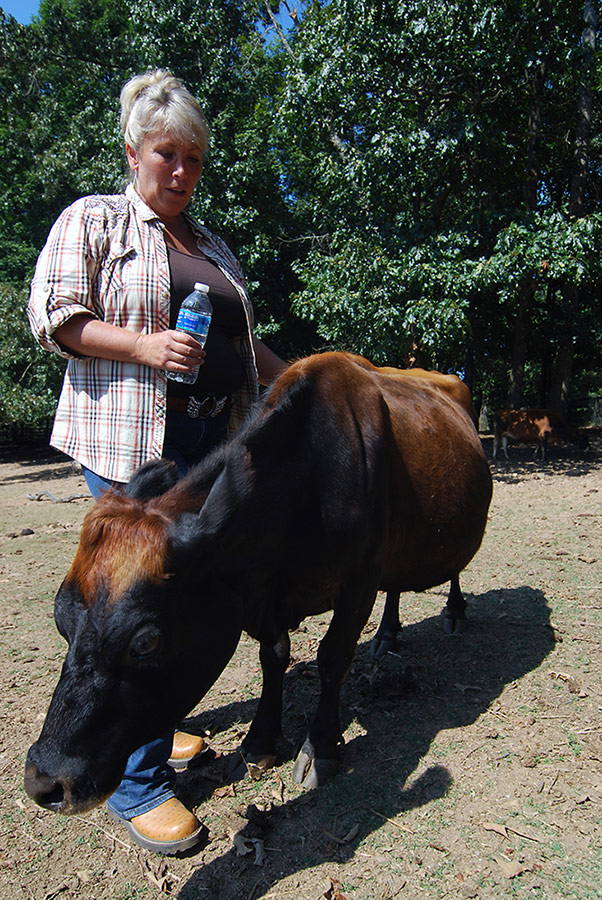
Yes, it's beasts about a third their normal size at Tanglewood Farm in northern Georgia, where Michelle Bolt is raising tiny versions of livestock.

Well maybe "raising" is not the right word.
Image

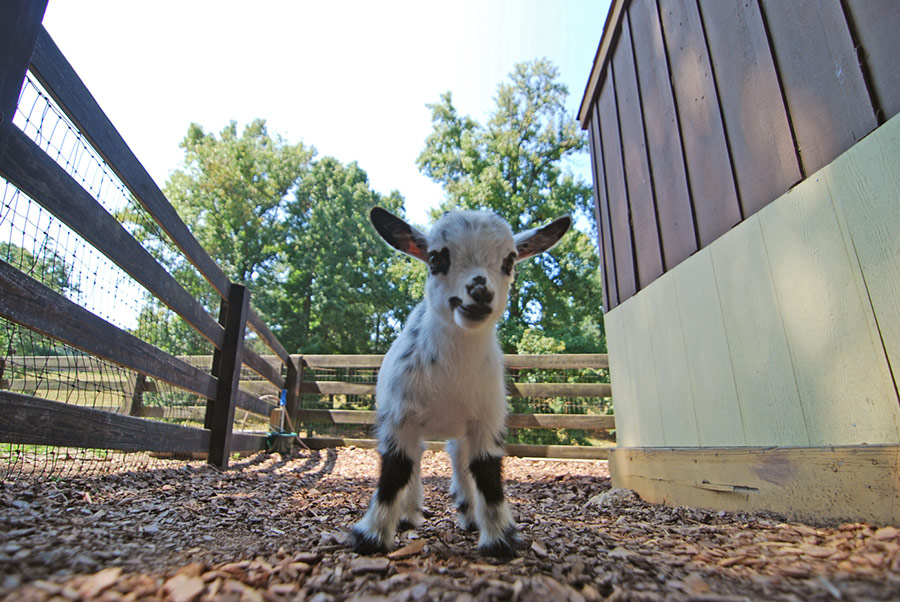
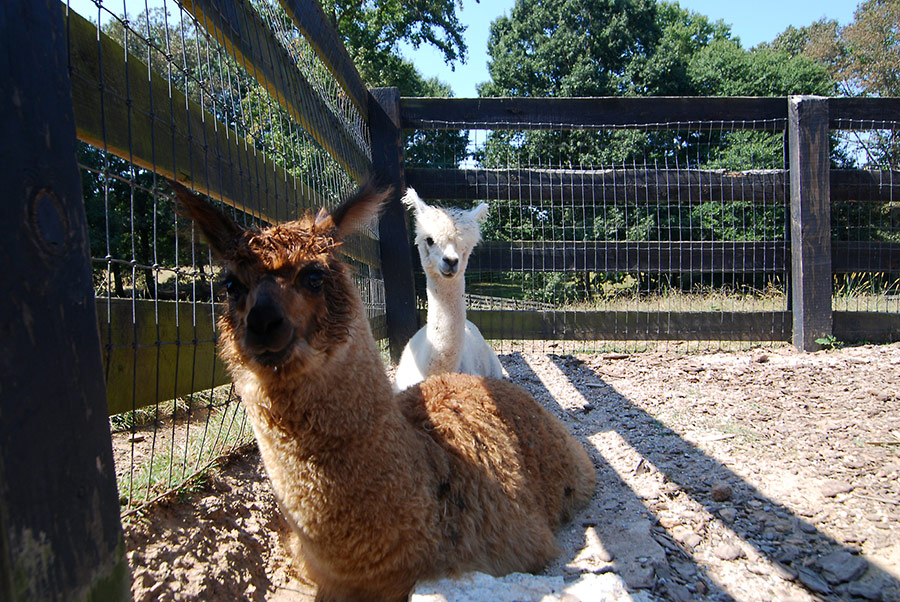
Miniature horses, alpaca, goats, chicken...

This is genetic engineering of animals, strictly speaking, but genetic engineering the old-fashioned way, by breeding for certain traits. Farmers have always tried to breed the best animals for whatever purposes they may have; this is just breeding in a different direction.

After all, there are hundreds of dog breeds, but all of them are of the same subspecies, Canis lupus familiari. There was enough genetic material in the original "dog" to eventually produce both the Chihuahua and the Great Dane.

So Bolt's Jersey cow is weighing in at 700 pounds while the "normal" Jersey cow is 2000. That's not so much range. We need a cow the size of a housecat. That would be really impressive.
Image

In fact, the article suggests that these minis are really "actual size":

While some miniature breeds were selectively bred to be tiny for novelty or manageability, many of them, including mini Jersey cows, Cheviot sheep and Bolt’s Southdown sheep aren’t really miniature, but original. Before coming to the New World, cows and sheep were much smaller than the feedlot breeds we associate with our hamburgers and milk cartons. Weaver’s Cheviots are the un-improved, old-style Scottish border sheep. Same goes for tiny Bantam chickens, which are said to have originated in Asia.


Right, because they've been bred to produce more meat, more milk, more wool, etc. This only means that, again, there's enough genetic kit to breed them to be much, much smaller even than they are in this mini version. Cat-sized cows! We can do this, people!

On the other hand, the smaller version is not "unnatural"; it's not like cows, if they were allowed to breed freely, would automatically return to their smaller version. White people, who evolved to northern climates over tens of thousands of years, do not "return" to black in a few generations if they decide to live in Africa. As animals, we too have bred; we too have changed; everything is what it is now, and that's just fine.
orthodoc • Nov 12, 2013 7:26 pm
A cow the size of a house cat would still be ... a cow. It would step on your foot with its cloven hoofs and then lean on you. Then it would be frustrated because it couldn't make you scream, so it would deposit a tiny steaming cow patty on your floor.
SPUCK • Nov 13, 2013 7:04 am
Bonsai animals.
xoxoxoBruce • Nov 13, 2013 12:47 pm
the "normal" Jersey cow is 2000
Not even close. :headshake
Undertoad • Nov 13, 2013 3:05 pm
You're right, it says here 800-1200 lbs Don't know where I got the earlier figure.
Nirvana • Nov 13, 2013 4:18 pm
1200 would be a big Jersey. :) I have a beef cow here that will be 3 when she gives birth in the spring. She weighs about 700 lbs. Her mother weighed 1500 and her sire weighed about 1400. I dunno why she was so small but she is nice. I bred her to a Jersey bull {artificial } because the calf when born should weigh about 40lbs. Maybe I should go into the mini beef/dairy hybrid business. :D
Nirvana • Nov 13, 2013 4:34 pm
Navy Bean 35 lbs, a week old and me in my down "Michelin" suit ;)

[ATTACH]46005[/ATTACH]

Suede the dog was bigger than her ;)

[ATTACH]46006[/ATTACH]

2 years old
[ATTACH]46007[/ATTACH]
Undertoad • Nov 13, 2013 5:09 pm
Maybe I was looking it up in kg.
Nirvana • Nov 13, 2013 5:29 pm
>kiss< I love the idea of a mini animal farm.Thanks for posting.
Undertoad • Nov 13, 2013 5:40 pm
Certainly! OH -- the original numbers came from the original article. Maybe they were looking it up in kg!
xoxoxoBruce • Nov 13, 2013 9:44 pm
Undertoad;883361 wrote:
You're right, it says here 800-1200 lbs Don't know where I got the earlier figure.
You got it from the 4th paragraph at the link... they lied to you. ;)
SPUCK • Nov 14, 2013 7:21 am
1
Gravdigr • Nov 14, 2013 5:40 pm
Nirvana;883364 wrote:
and me in my down "Michelin" suit


Cold enough for the "Michelin Suit", but warm enough for Clogs?

Seems legit.
Nirvana • Nov 14, 2013 9:08 pm
Well yah! Welcome to March in Northern IN. :D Navy Bean lived in the 10x10 dog kennel with an Xtra large igloo dog house right outside my door for about 3 months. :) No sense putting on boots to feed the baby calf. ;)

Oh and we calve that time of year and trust me you want lots of layers between you and copious amounts of amniotic fluid. :P The movie Ghost Busters comes to mind...
CaliforniaMama • Nov 16, 2013 12:29 pm
Undertoad;883288 wrote:
White people, who evolved to northern climates over tens of thousands of years, do not "return" to black in a few generations if they decide to live in Africa. As animals, we too have bred; we too have changed; everything is what it is now, and that's just fine.


According to Nina Jablonski, an anthropologist I heard lecture about skin, pigmentation will adjust to the climate, but it takes a number of generations. The need for the species to survive drives the change.

An example she gave was Indians who have emigrated to England. Especially the female Muslim Indians who keep themselves covered. They do not get enough Vitamin D and other nutrients from the sun and frequently develop Rickets.

They can take supplements, but there are other things that go on when the sun hits the skin. Eventually, over many generations, the pigmentation of those Indian will change to allow for the greatest useage of the sun on the skin.

She said that with so many people in the U.S. conditioned to wear sunscreen and sunblock, they are finding more and more people with vitamin deficiencies.

Every human needs approx. 10 min of direct sunlight per day to remain healthy. Those with dark skin need more because the darker the pigmentation, the less of the good sun that gets through.
Pico and ME • Nov 16, 2013 2:23 pm
Eventually, over many generations, the pigmentation of those Indian will change to allow for the greatest useage of the sun on the skin.


This would only work if the people who got rickets died off before reproducing. Its not the need to survive that drives the change, its the luck of the draw in genetic mutation that allows a species to survive.
Undertoad • Nov 16, 2013 2:40 pm
I'm not in a position to watch it right now, but here's her TED talk

http://www.ted.com/talks/nina_jablonski_breaks_the_illusion_of_skin_color.html