October 10, 2011 Chamelion

CaliforniaMama • Oct 10, 2011 9:43 am
Image

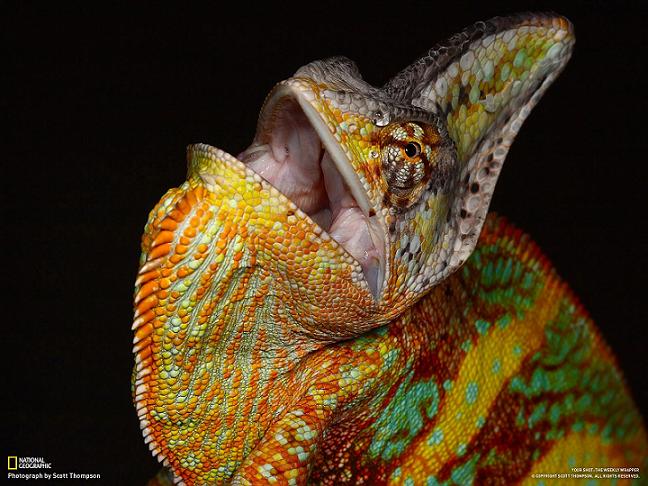
[SIZE="1"]Groan, yawn or gurgle* to start the week.

Photo of his pet, by Scott Thompson

via National Geographic[/SIZE]

*Does a chameleon make noise? No but when you expose it to danger it will make a deep throat gurgle sound . . .
Griff • Oct 10, 2011 10:08 am
Wonderful!
Gravdigr • Oct 10, 2011 3:41 pm
Colorful!
BigV • Oct 10, 2011 4:22 pm
yes, very colorful. makes me wonder if he was raised in a cage lined with Jackson Pollock paintings.

That is one beautiful animal.
classicman • Oct 10, 2011 4:29 pm
Thats a great pic! Best I could do is here. This one is younger so he isn't as colorful ...yet.
CaliforniaMama • Oct 11, 2011 8:52 am
Oh, how sweet!

It looks like one of those weather changing statues that is covered with tiny beads that are either pink or blue depending on the weather.
Wombat • Oct 11, 2011 10:37 pm
It's doing it all wrong: the background is most definately black.
SPUCK • Oct 12, 2011 5:09 am
Needs calibration.
ZenGum • Oct 12, 2011 5:24 am
I'd like to put a chameleon on a TV screen.
BigV • Oct 12, 2011 10:52 am
I'd like to teach the world to sing.
Sundae • Oct 12, 2011 4:14 pm
Of course chameleons change colour according to mood, not background...
But we all knew that, right? :)
classicman • Oct 12, 2011 4:43 pm
not exactly - according to wiki ...
The primary purpose of color change has been found to be due to social signalling, as opposed to camouflage, although both social signalling color change, and color change for purposes of camouflage do occur in most chameleons, to some extent. Color change is also used as an expression of the physiological condition of the lizard, and as a social indicator to other chameleons. Research suggests that social signaling was the primary driving force behind the evolution of color change, and that camouflage evolved as a secondary concern.[9][10] Chameleons tend to show darker colors when angered, or attempting to scare or intimidate others, and males show lighter, multi-colored patterns when courting females.

Some varieties of chameleon—such as the Smith's dwarf chameleon—use their color-changing ability to blend in with their surroundings, as an effective form of camouflage.[11]