xoxoxoBruce • May 12, 2010 12:05 am
There are over 20,000 different species of bees, and most of us are only familiar with a few of them. Most of us aren't aware that not all bees live in hives/nests, either. This bee, Osmia Avoseta, was recently discovered, oddly enough, by two teams on the same day, one in Turkey and one in Iran.
No, Osmia, not Osama.
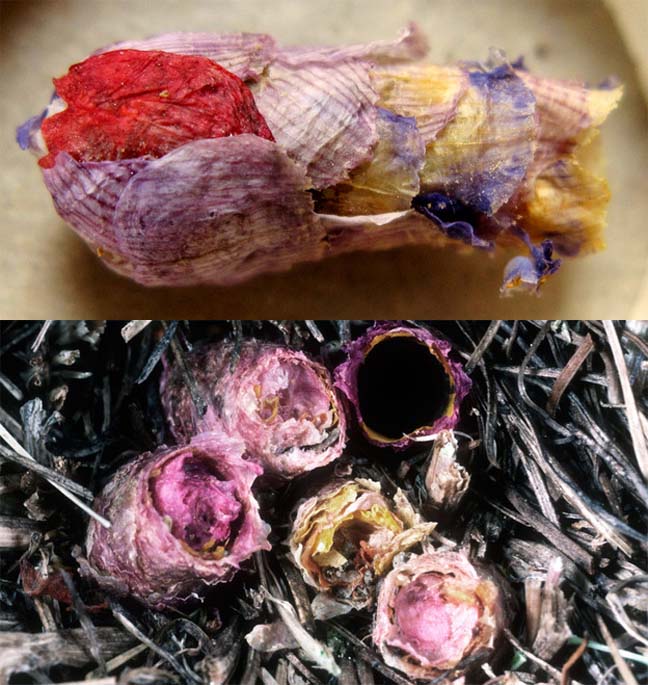
Osmia Avoseta is a solitary bee that builds a tiny nest for each and every egg it lays... and what a nest it is.
I wonder when she has time to store food for the winter, and get her hair done? ;)
link
No, Osmia, not Osama.
Osmia Avoseta is a solitary bee that builds a tiny nest for each and every egg it lays... and what a nest it is.
To begin construction, she bites the petals off of flowers and flies each petal — one by one — back to the nest, a peanut-sized burrow in the ground. She then shapes the multi-colored petals into a cocoon-like structure, laying one petal on top of the other and occasionally using some nectar as glue. When the outer petal casing is complete, she reinforces the inside with a paper-thin layer of mud, and then another layer of petals, so both the outside and inside are wallpapered — a potpourri of purple, pink and yellow.
These meticulous shells are just over a half-inch long and usually will house just one tiny egg. To prepare for her offspring, the mother collects pollen and nectar, which she carries back to the burrow in a nifty part of the digestive tract called the crop. She deposits this gooey blob of nutritional goodness in the bottom of the flower-petal nest. Then, she lays the egg, right on top of the gelatinous blob. At this point, it's time to seal in the egg. The mother bee neatly folds in the inner layer of petals, smears a paper-thin mud layer and then folds the outer petals. The casing is nearly airtight, which helps protect the vulnerable egg (and later larva, then pupa) from flooding or excessive dryness or hoofed animals.
I wonder when she has time to store food for the winter, and get her hair done? ;)
link
