Poems- Not your own.
[COLOR=teal]I've had this copied to my desktop for quite sometime.[/COLOR]
[COLOR=#008080]Thought I'd share it................ (Please share any you have).[/COLOR]
THE WORLD IS A BEAUTIFUL PLACE...
The world is a beautiful place
to be born into
if you don't mind happiness
not always being so very much fun
if you don't mind a touch of hell
now and then
just when everything is fine
because even in heaven
they don't sing
all the time
The world is a beautiful place
to be born into
if you don't mind some people dying
all the time
or maybe only starving
some of the time
which isn't half so bad
if it isn't you
Oh the world is a beautiful place
to be born into
if you don't much mind
a few dead minds
in the higher places
or a bomb or two
now and then
in your upturned faces
or such other improprieties
as our Name Brand society
is prey to
with its men of distinction
and its men of extinction
and its priests
and other patrolmen
and its various segregations
and congressional investigations
and other constipations
that our fool flesh
is heir to
Yes the world is the best place of all
for a lot of such things as
making the fun scene
and making the love scene
and making the sad scene
and singing low songs and having inspirations
and walking around
looking at everything
and smelling flowers
and goosing statues
and even thinking
and kissing people and
making babies and wearing pants
and waving hats and
dancing
and going swimming in rivers
on picnics
in the middle of the summer
and just generally
'living it up'
Yes
but then right in the middle of it
comes the smiling
mortician
~ Lawrence Ferlinghetti ~
The Art of Death by Jessy Liz
Death by murder- death by chance
Death by secret night romance
Death by number- paint the lines
Death in color, or black and lie
Accidental- planned, prolonged
Death by always doing wrong
Death by self- a timeless art
Death by one last broken heart
Sky, I adore you for starting a poetry thread
there is another one
here
I try not to post too many, but I am such a poetry fan - not many places you don't get rolled eyes at that admission
The fabulous ee:
i carry your heart with me
i carry your heart with me(i carry it in
my heart)i am never without it(anywhere
i go you go,my dear; and whatever is done
by only me is your doing,my darling)
i fear
no fate(for you are my fate,my sweet)i want
no world(for beautiful you are my world,my true)
and it's you are whatever a moon has always meant
and whatever a sun will always sing is you
here is the deepest secret nobody knows
(here is the root of the root and the bud of the bud
and the sky of the sky of a tree called life;which grows
higher than the soul can hope or mind can hide)
and this is the wonder that's keeping the stars apart
i carry your heart(i carry it in my heart)
ee cummings
aww :hearts: I am a poet from way back but I don't write ( hardly any ) anymore. I've forgotten how I think. Thanks for the link. Good poems on the other one too. I like the Hopkins and Sexton poem alot. Thanks for playing. both of you :)
If You Forget Me
I want you to know
one thing.
You know how this is:
if I look
at the crystal moon, at the red branch
of the slow autumn at my window,
if I touch
near the fire
the impalpable ash
or the wrinkled body of the log,
everything carries me to you,
as if everything that exists,
aromas, light, metals,
were little boats
that sail
toward those isles of yours that wait for me.
Well, now,
if little by little you stop loving me
I shall stop loving you little by little.
If suddenly
you forget me
do not look for me,
for I shall already have forgotten you.
If you think it long and mad,
the wind of banners
that passes through my life,
and you decide
to leave me at the shore
of the heart where I have roots,
remember
that on that day,
at that hour,
I shall lift my arms
and my roots will set off
to seek another land.
But
if each day,
each hour,
you feel that you are destined for me
with implacable sweetness,
if each day a flower
climbs up to your lips to seek me,
ah my love, ah my own,
in me all that fire is repeated,
in me nothing is extinguished or forgotten,
my love feeds on your love, beloved,
and as long as you live it will be in your arms
without leaving mine.
Pablo Neruda
and this is the wonder that's keeping the stars apart
Approx 20 years since I first read this (am I that old!) and that line still raises goosebumps
Thanks for the Pablo Neruda poem Sky - I only really know The Mermaid and the Drunks. I need to get myself better acquainted with poetry again.
I really don't know all that much. I am sure Brianna is the knowlegable one. I think we can agree on that.
The Day Flies off without Me.
by John Stammers
The planes bound for all points everywhere
etch lines on my office window. From the top floor
London recedes in all directions, and beyond:
the world with its teeming hearts.
I am still, you move, I am a point of reference on a map;
I am at zero meridian as you consume the longitudes.
The pact we made to read our farewells exactly
at two in the afternoon with you in the air
holds me like a heavy winter coat.
Your unopened letter is in my pocket, beating.
Wolves
By
Sundae Girl
11-21-2007
He was singing and playing guitar
Each one louder than the last
She in turn had headphones on
And her Nintendo up full blast
They didn't hear the wolves outside
As they came in, red in tooth and claw
They ate the noisy couple, then
They licked their chops and went next door
Now this pair had no music on
They sat before the fire and read
The wolves had no chance eating them -
They went and ate their kids instead
Don't pollute the world with noise
Beware the deafening machines
You'll miss your chance to 'scape the wolves
And send them upstairs to your teens.
Hahahaha
Sundae Girl, that was great.
Thanks be to spudcon for drawing my attention to it.
Tell it Sylvia! Go on!! Sylvia Plath reading: Daddy. It isn't pretty, it's scathing...Here she is reading her own work..
http://www.youtube.com/watch?v=6hHjctqSBwM
Edison recording Whitman:
http://www.youtube.com/watch?v=wf7J2AvCQO4since feeling is first... (VII) by E. E. Cummings
since feeling is first
who pays any attention
to the syntax of things
will never wholly kiss you;
wholly to be a fool
while Spring is in the world
my blood approves,
and kisses are a better fate
than wisdom
lady i swear by all flowers. Don't cry
- the best gesture of my brain is less than
your eyelids' flutter which says
we are for each other; then
laugh, leaning back in my arms
for life's not a paragraph
And death i think is no parenthesis
The Anzac on the Wall
I wandered thru a country town 'cos I had time to spare,
And went into an antique shop to see what was in there.
Old Bikes and pumps and kero lamps, but hidden by it all,
A photo of a soldier boy - an Anzac on the Wall.
'The Anzac have a name?' I asked. The old man answered 'No,
The ones who could have told me mate, have passed on long ago.
The old man kept on talking and, according to his tale,
The photo was unwanted junk bought from a clearance sale.
'I asked around,' the old man said, 'but no one knows his face,
He's been on that wall twenty years, deserves a better place.
For some one must have loved him so, it seems a shame somehow.
'I nodded in agreement and then said, 'I'll take him now.'
My nameless digger's photo, well it was a sorry sight
A cracked glass pane and a broken frame - I had to make it right
To pry the photo from its frame I took care just in case,
'Cause only sticky paper held the cardboard back in place.
I peeled away the faded screed and much to my surprise,
Two letters and a telegram appeared before my eyes
The first reveals my Anzac's name, and regiment of course
John Mathew Francis Stuart - of Australia's own Light Horse.
This letter written from the front, my interest now was keen
This note was dated August seventh 1917'
Dear Mum, I'm at Khalasa Springs not far from the Red Sea
They say it's in the Bible - looks like Billabong to me.
'My Kathy wrote I'm in her prayers she's still my bride to be
I just cant wait to see you both you're all the world to me
And Mum you'll soon meet Bluey, last month they shipped him out
I told him to call on you when he's up and about.'
'That bluey is a larrikin, and we all thought it funny
He lobbed a Turkish hand grenade into the Co's dunny.
I told you how he dragged me wounded in from no man's land
He stopped the bleeding closed the wound with only his bare hand.
''Then he copped it at the front from some stray shrapnel blast
It was my turn to drag him in and I thought he wouldn't last
He woke up in hospital, and nearly lost his mind
Cause out there on the battlefield he'd left one leg behind.
''He's been in a bad way mum, he knows he'll ride no more
Like me he loves a horse's back he was a champ before.
So Please Mum can you take him in, he's been like my brother
Raised in a Queensland orphanage he' s never known a mother.
'But Struth, I miss Australia mum, and in my mind each day
I am a mountain cattleman on high plains far away
I'm mustering white-faced cattle, with no camel's hump in sight
And I waltz my Matilda by a campfire every night
I wonder who rides Billy, I heard the pub burnt down
I'll always love you and please say hooroo to all in town'.
The second letter I could see was in a lady's hand
An answer to her soldier son there in a foreign land
Her copperplate was perfect, the pages neat and clean
It bore the date November 3rd 1917.
'T'was hard enough to lose your Dad, without you at the war
I'd hoped you would be home by now - each day I miss you more'
'Your Kathy calls around a lot since you have been away
To share with me her hopes and dreams about your wedding day
And Bluey has arrived - and what a godsend he has been
We talked and laughed for days about the things you've done and seen
''He really is a comfort, and works hard around the farm,
I read the same hope in his eyes that you wont come to harm.
Mc Connell's kids rode Billy, but suddenly that changed
We had a violent lightning storm, and it was really strange.'
'Last Wednesday just on midnight, not a single cloud in sight
It raged for several minutes, it gave us all a fright
It really spooked your Billy - and he screamed and bucked and reared
And then he rushed the sliprail fence, which by a foot he cleared'
'They brought him back next afternoon, but something's changed I fear
It's like the day you brought him home, for no one can get near
Remember when you caught him with his black and flowing mane?
Now Horse breakers fear the beast that only you can tame,'
'That's why we need you home son' - then the flow of ink went dry-
This letter was unfinished, and I couldn't work out why.
Until I started reading the letter number three
A yellow telegram delivered news of tragedy
Her son killed in action - oh - what pain that must have been
The Same date as her letter - 3rd November 17
This letter which was never sent, became then one of three
She sealed behind the photo's face - the face she longed to see.
And John's home town's old timers -children when he went to war
Would say no greater cattleman had left the town before.
They knew his widowed mother well - and with respect did tell
How when she lost her only boy she lost her mind as well.
She could not face the awful truth, to strangers she would speak'
My Johnny's at the war you know , he's coming home next week
'They all remembered Bluey he stayed on to the end
A younger man with wooden leg became her closest friend
And he would go and find her when she wandered old and weak
And always softly say 'yes dear - John will be home next week.
'Then when she died Bluey moved on, to Queensland some did say
I tried to find out where he went, but don't know to this day
And Kathy never wed - a lonely spinster some found odd
She wouldn't set foot in a church - she'd turned her back on God
John's mother left no will I learned on my detective trail
This explains my photo's journey, that clearance sale
So I continued digging cause I wanted to know more
I found John's name with thousands in the records of the war
His last ride proved his courage - a ride you will acclaim
The Light Horse Charge at Beersheba of everlasting fame
That last day in October back in 1917
At 4pm our brave boys fell - that sad fact I did glean
That's when John's life was sacrificed, the record's crystal clear
But 4pm in Beersheba is midnight over here.......
So as John's gallant sprit rose to cross the great divide
Were lightning bolts back home a signal from the other side?
Is that why Billy bolted and went racing as in pain?
Because he'd never feel his master on his back again?
Was it coincidental? same time - same day - same date?
Some proof of numerology, or just a quirk of fate?
I think it's more than that, you know, as I've heard wiser men,
Acknowledge there are many things that go beyond our ken
Where craggy peaks guard secrets neath dark skies torn asunder
Where hoofbeats are companions to the rolling waves of thunder
Where lightning cracks like 303's and ricochets again
Where howling moaning gusts of wind sound just like dying men
Some Mountain cattlemen have sworn on lonely alpine track
They've glimpsed a huge black stallion - Light Horseman on his back.
Yes Skeptics say, it's swirling clouds just forming apparitions
Oh no, my friend you cant dismiss all this as superstition
The desert of Beersheba - or windswept Aussie range
John Stuart rides forever there - Now I don't find that strange.
Now some gaze at this photo, and they often question me
And I tell them a small white lie, and say he's family.
'You must be proud of him.' they say –
I tell them, one and all,
That's why he takes the pride of place –
my Anzac on the Wall.
'Spell Checker Blues'
Eye halve a spelling chequer
It came with my pea sea
It plainly marques four my revue
Miss steaks eye kin knot sea.
Eye strike a key and type a word
And weight four it two say
Weather eye am wrong oar write
It shows me strait a weigh.
As soon as a mist ache is maid
It nose bee fore two long
And eye can put the error rite
Its rarely ever wrong.
Eye have run this poem threw it
I am shore your pleased two no
Its letter perfect in it's weigh
My chequer tolled me sew.
Anon
so much depends
upon
a red wheel
barrow
glazed with rain
water
beside the white
chickens.
william carlos williams
Oh! There's a William Carlos Williams in my top 10!
This Is Just to Say
I have eaten
the plums
that were in
the icebox
and which
you were probably
saving
for breakfast.
Forgive me
they were delicious
so sweet
and so cold.
There are so many emotions at the end of the season. And nobody likes to talk about it. But one of them is fear. Fear that you've come this far and it could lal end. The dream could die. But me, I like the fear. It means I'm close. It means, I'm ready.
NBA Commercial "There Can Only Be One"
"Soldier, rest! Thy warfare o'er,
Sleep the sleep that knows not breaking,
Dream of battled fields no more.
Days of danger, nights of waking."
Sir Walter Scott
:f207: :f205: :f32:
All countries serving in Iraq
http://www.globalsecurity.org/military/ops/iraq_orbat_coalition.htmA Legend of Truth
Once on a time, the ancient legends tell,
Truth, rising from the bottom of her well,
Looked on the world, but, hearing how it lied,
Returned to her seclusion horrified.
There she abode, so conscious of her worth,
Not even Pilate's Question called her forth,
Nor Galileo, kneeling to deny
The Laws that hold our Planet 'neath the sky.
Meantime, her kindlier sister, whom men call
Fiction, did all her work and more than all,
With so much zeal, devotion, tact, and care,
That no one noticed Truth was otherwhere.
Then came a War when, bombed and gassed and mined,
Truth rose once more, perforce, to meet mankind,
And through the dust and glare and wreck of things,
Beheld a phantom on unbalanced wings,
Reeling and groping, dazed, dishevelled, dumb,
But semaphoring direr deeds to come.
Truth hailed and bade her stand; the quavering shade
Clung to her knees and babbled, "Sister, aid!
I am--I was--thy Deputy, and men
Besought me for my useful tongue or pen
To gloss their gentle deeds, and I complied,
And they, and thy demands, were satisfied.
But this--" she pointed o'er the blistered plain,
Where men as Gods and devils wrought amain--
"This is beyond me! Take thy work again."
Tablets and pen transferred, she fled afar,
And Truth assumed the record of the War...
She saw, she heard, she read, she tried to tell
Facts beyond precedent and parallel--
Unfit to hint or breathe, much less to write,
But happening every minute, day and night.
She called for proof. It came. The dossiers grew.
She marked them, first, "Return. This can't be true."
Then, underneath the cold official word:
"This is not really half of what occurred."
She faced herself at last, the story runs,
And telegraphed her sister: "Come at once.
Facts out of hand. Unable overtake
Without your aid. Come back for Truth's own sake!
Co-equal rank and powers if you agree.
They need us both, but you far more than me!"
Rudyard Kipling
I've been looking for a poem I read at school for years.
I don't know the title, the first line or the poet - so anthology indexes don't help.
The scattered phrases I remember don't come up on Google.
I'm a bit lost, and anyone offering help will have my undying gratitude.
The subject is Winter. It's set in England (specific geography is mentioned) so it's likely an English poet. It's quite bleak in a beautiful way - whic is perfect for the subject.
Snippets:
"From Salisbury Plain to [something] Tor, the hills are islands in a sea of fog"
"The moon, impassive as a fish's eye"
"The stars have got their flick-knives out"
I know it's not much. But if anyone knows of a great poetry finder...?
[B][/B]
This was originally published as you see it here, with my son's picture, far away in another galaxy......(From memory)
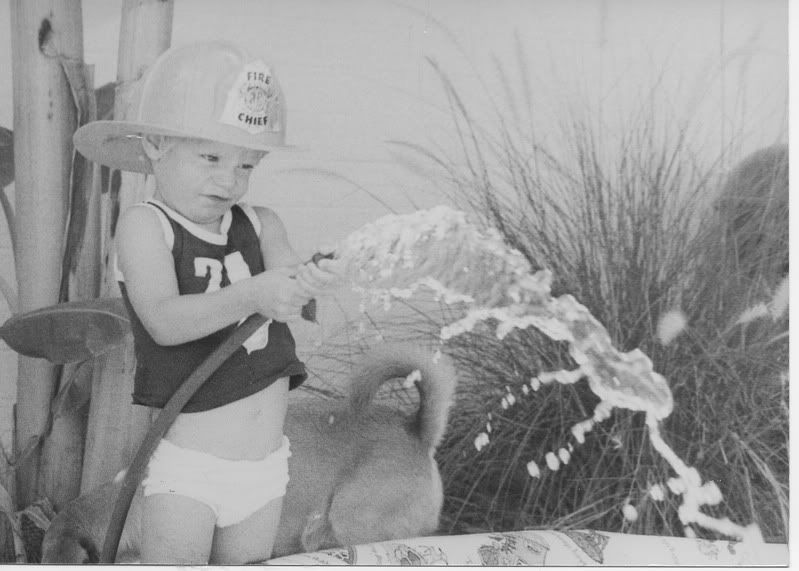
My eyes are like rockets
They catch each fleeting flick,
Nothing can escape me
I'm cunning, I'm slick
I can outrun a wildcat
match it bound for bound,
It would take forty wranglers
just to tie me down
I fear no being
I'm brave and I'm bold,
I'm king of the mountain
I'm three years old.
[Clell West]
great photo Juanco
Luxuriant days of hope
Obsessed nights of lustful energy
Virgin minds sown together
Exasperated Humanity
by [COLOR=black]Gary Hess
[/COLOR]
"The Lanyard"
by Billy Collins
The other day as I was ricocheting slowly
off the pale blue walls of this room,
bouncing from typrewriter to piano,
from bookshelf to an envelope lying on the floor,
I found myself in the L section of the dictionary
where my eyes fell upon the word lanyard.
No cookie nibbled by a French novelist
could send one more suddenly into the past --
a past where I sat at a workbench at a camp
by a deep Adirondack lake
learning how to braid thin plastic strips
into a lanyard, a gift for my mother.
I had never seen anyone use a lanyard
or wear one, if that's what you did with them,
but that did not keep me from crossing
strand over strand again and again
until I had made a boxy
red and white lanyard for my mother.
She gave me life and milk from her breasts,
and I gave her a lanyard.
She nursed me in many a sickroom,
lifted teaspoons of medicine to my lips,
set cold face-cloths on my forehead,
and then led me out into the airy light
and taught me to walk and swim,
and I, in turn, presented her with a lanyard.
Here are thousands of meals, she said,
and here is clothing and a good education.
And here is your lanyard, I replied,
which I made with a little help from a counselor.
Here is a breathing body and a beating heart,
strong legs, bones and teeth,
adn two clear eyes to read the world, she whispered,
and here, I said, is the lanyard I made at camp.
And here, I wish to say to her now,
is a smaller gift -- not the archaic truth
that you can never repay your mother,
but the ruefl admission that when she took
the two-tone lanyard from my hands,
I was as sure as a boy could be
that this useless, worthless thing I wove
out of boredom would be enough to make us even.
Dover Beach
The sea is calm to-night.
The tide is full, the moon lies fair
Upon the straits; on the French coast the light
Gleams and is gone; the cliffs of England stand;
Glimmering and vast, out in the tranquil bay.
Come to the window, sweet is the night-air!
Only, from the long line of spray
Where the sea meets the moon-blanched land,
Listen! you hear the grating roar
Of pebbles which the waves draw back, and fling,
At their return, up the high strand,
Begin, and cease, and then again begin,
With tremulous cadence slow, and bring
The eternal note of sadness in.
Sophocles long ago
Heard it on the Agaean, and it brought
Into his mind the turbid ebb and flow
Of human misery; we
Find also in the sound a thought,
Hearing it by this distant northern sea.
The Sea of Faith
Was once, too, at the full, and round earth's shore
Lay like the folds of a bright girdle furled.
But now I only hear
Its melancholy, long, withdrawing roar,
Retreating, to the breath
Of the night-wind, down the vast edges drear
And naked shingles of the world.
Ah, love, let us be true
To one another! for the world, which seems
To lie before us like a land of dreams,
So various, so beautiful, so new,
Hath really neither joy, nor love, nor light,
Nor certitude, nor peace, nor help for pain;
And we are here as on a darkling plain
Swept with confused alarms of struggle and flight,
Where ignorant armies clash by night.
--Matthew Arnold
Emphasized the part I love.
Choco, thank you for posting that. I have expressed my extreme dislike of all poetry before... but I really liked that one. :)
The Lanyard is one of those poems that I figured every Cellar parent would be able to relate to. :)
Billy Collins is by far my favorite poet -- I highly recommend his stuff even if you don't usually like poetry.
End of Summer
by James Richardson
Just an uncommon lull in the traffic
so you hear some guy in an apron, sleeves rolled up,
with his brusque sweep brusque sweep of the sidewalk,
and the slap shut of a too thin rental van,
and I told him no a gust has snatched from a conversation
and brought to you, loud.
It would be so different
if any of these were missing is the feeling
you always have on the first day of autumn,
no, the first day you think of autumn, when somehow
the sun singling out high windows,
a waiter settling a billow of white cloth
with glasses and silver, and the sparrows
shattering to nowhere are the Summer
waving that here is where it turns
and will no longer be walking with you,
traveller, who now leave all of this behind,
carrying only what it has made of you.
Already the crowds seem darker and more hurried
and the slang grows stranger and stranger,
and you do not understand what you love,
yet here, rounding a corner in mild sunset,
is the world again, wide-eyed as a child
holding up a toy even you can fix.
How light your step
down the narrowing avenue to the cross streets,
October, small November, barely legible December.
Help me choose -- whose poetry would you choose for a paper:
Mary Oliver
Galway Kinnell
Seamus Heaney
or Rita Dove?
Help me choose -- whose poetry would you choose for a paper:
Mary Oliver
Galway Kinnell
Seymore Heiny
or Rita Dove?
Fixed it for ya'.
Sorry, couldn't resist. :D
I’d rather be thin than famous,
I don’t wanta be fat,
And a woman throws me outta bed
Callin me Gordo, & everytime
I bend
to pickup
my suspenders
from the davenport
floor I explode
loud huge grunt-o
and disgust
every one
in the familio
I’d rather be thin than famous
But I’m fat
Paste that in yr. Broadway Show
--Kerouac
Help me choose -- whose poetry would you choose for a paper:
Mary Oliver
Galway Kinnell
Seamus Heaney
or Rita Dove?
Mary or Rita. But, then, I'm partial to women poets (and no, I'm NOT a lesbian) but I have vacationed in Provincetown AND Key West.
:muse:
Wild Geese
by Mary Oliver
You do not have to be good.
You do not have to walk on your knees
for a hundred miles through the desert repenting.
You only have to let the soft animal of your body
love what it loves.
Tell me about despair, yours, and I will tell you mine.
Meanwhile the world goes on.
Meanwhile the sun and the clear pebbles of the rain
are moving across the landscapes,
over the prairies and the deep trees,
the mountains and the rivers.
Meanwhile the wild geese, high in the clean blue air,
are heading home again.
Whoever you are, no matter how lonely,
the world offers itself to your imagination,
calls to you like the wild geese, harsh and exciting —
over and over announcing your place
in the family of things.
Who is the cat
that wears the world as a hat
?
What's the name of the guy who is greeted when he wakes
by the St. Pauli girl and a tray of pancakes!
William Shakespeare (1564-1616)
from Macbeth
A dark Cave. In the middle, a Caldron boiling. Thunder.
Enter the three Witches.
1 WITCH. Thrice the brinded cat hath mew'd.
2 WITCH. Thrice and once, the hedge-pig whin'd.
3 WITCH. Harpier cries:—'tis time! 'tis time!
1 WITCH. Round about the caldron go;
In the poison'd entrails throw.—
Toad, that under cold stone,
Days and nights has thirty-one;
Swelter'd venom sleeping got,
Boil thou first i' the charmed pot!
ALL. Double, double toil and trouble;
Fire burn, and caldron bubble.
2 WITCH. Fillet of a fenny snake,
In the caldron boil and bake;
Eye of newt, and toe of frog,
Wool of bat, and tongue of dog,
Adder's fork, and blind-worm's sting,
Lizard's leg, and owlet's wing,—
For a charm of powerful trouble,
Like a hell-broth boil and bubble.
ALL. Double, double toil and trouble;
Fire burn, and caldron bubble.
3 WITCH. Scale of dragon; tooth of wolf;
Witches' mummy; maw and gulf
Of the ravin'd salt-sea shark;
Root of hemlock digg'd i the dark;
Liver of blaspheming Jew;
Gall of goat, and slips of yew
Sliver'd in the moon's eclipse;
Nose of Turk, and Tartar's lips;
Finger of birth-strangled babe
Ditch-deliver'd by a drab,—
Make the gruel thick and slab:
Add thereto a tiger's chaudron,
For the ingrediants of our caldron.
ALL. Double, double toil and trouble;
Fire burn, and caldron bubble.
2 WITCH. Cool it with a baboon's blood,
Then the charm is firm and good.
--------------------------------------------------------------------------------
brinded - having obscure dark streaks or flecks on gray
gulf - the throat
drab - prostitute
chaudron - entrails
The above appears at the beginning of Act IV, Scene 1 as found in:
Shakespeare, William. The Globe Illustrated Shakespeare: The Complete Works Annotated. Howard Staunton ed. New York: Gramercy Books, 1993.
In Flanders Fields
by John McCrae, May 1915
In Flanders fields the poppies blow
Between the crosses, row on row,
That mark our place; and in the sky
The larks, still bravely singing, fly
Scarce heard amid the guns below.
We are the Dead. Short days ago
We lived, felt dawn, saw sunset glow,
Loved and were loved, and now we lie
In Flanders fields.
Take up our quarrel with the foe:
To you from failing hands we throw
The torch; be yours to hold it high.
If ye break faith with us who die
We shall not sleep,
though poppies grow
In Flanders fields.
Inspiration for the Poem
On 2 May, 1915, in the second week of fighting during the Second Battle of Ypres Lieutenant Alexis Helmer was killed by a German artillery shell. He was a friend of the Canadian military doctor Major John McCrae. It is believed that John began the draft for his famous poem 'In Flanders Fields' that evening.
Inspiration for The Poppy Umbrella
On Armistice Day in Ieper (Ypres) the idea for The Poppy Umbrella was inspired by the powerful image of poppies growing amongst the soldiers' graves in John McCrae's poem.
http://www.greatwar.co.uk/umbrella/poppyidea.htmA counterspell:
How do I love thee? Let me count the ways.
I love thee to the depth and breadth and height
My soul can reach, when feeling out of sight
For the ends of Being and ideal Grace.
I love thee to the level of everyday's
Most quiet need, by sun and candle-light.
I love thee freely, as men strive for Right;
I love thee purely, as they turn from Praise.
I love thee with a passion put to use
In my old griefs, and with my childhood's faith.
I love thee with a love I seemed to lose
With my lost saints, --- I love thee with the breath,
Smiles, tears, of all my life! --- and, if God choose,
I shall but love thee better after death.
I like that version Bri.
About December
[FONT=Times New Roman][SIZE=4]"I speak cold silent words a stone might speak
If it had words or consciousness,
Watching December moonlight on the mountain peak,
Relieved of mortal hungers, the whole mess
Of needs, desires, ambitions, wishes, hopes.
This stillness in me knows the sky's abyss,
Reflected by blank snow along bare slopes,
If it had words or consciousness,
Would echo what a thinking stone might say
To praise oblivion words can't possess
As inorganic muteness goes its way.
There's no serenity without the thought serene,
Owl-flight without spread wings, honed eyes, hooked beak,
Absence without the meaning absence means.
To rescue bleakness from the bleak,
I speak cold silent words a stone might speak."
[/SIZE]- Robert Pack, Stone Thoughts[/FONT]
[FONT=Times New Roman][SIZE=4]"You darkness, that I come from,
I love you more than all the fires
that fence in the world,
for the fire makes
a circle of light for everyone,
and then no one outside learns of you.[/SIZE][/FONT]
[FONT=Times New Roman][SIZE=4]But the darkness pulls in everything;
shapes and fires, animals and myself,
how easily it gathers them!—
powers and people—
and it is possible a great energy
is moving near me.
I have faith in nights."
[/SIZE]- Rainer Maria Rilke, On Darkness[/FONT]
by E. E. Cummings
"kitty". sixteen,5'1",white,prostitute.
ducking always the touch of must and shall,
whose slippery body is Death's littlest pal,
skilled in quick softness. Unspontaneous. cute.
the signal perfume of whose unrepute
focusses in the sweet slow animal
bottomless eyes importantly banal,
Kitty. a whore. Sixteen
you corking brute
amused from time to time by clever drolls
fearsomely who do keep their sunday flower.
The babybreasted broad "kitty" twice eight
—beer nothing,the lady'll have a whiskey-sour—
whose least amazing smile is the most great
common divisor of unequal souls.
Any fool can get into an ocean
But it takes a Goddess
To get out of one.
What's true of oceans is true, of course,
Of labyrinths and poems. When you start swimming
Through riptide of rhythms and the metaphor's seaweed
You need to be a good swimmer or a born Goddess
To get back out of them
Look at the sea otters bobbing wildly
Out in the middle of the poem
They look so eager and peaceful playing out there where the
water hardly moves
You might get out through all the waves and rocks
Into the middle of the poem to touch them
But when you've tried the blessed water long
Enough to want to start backward
That's when the fun starts
Unless you're a poet or an otter or something supernatural
You'll drown, dear. You'll drown
Any Greek can get you into a labyrinth
But it takes a hero to get out of one
What's true of labyrinths is true of course
Of love and memory. When you start remembering.
by Jack Spicer
The Murder of Two Men by a Young Kid Wearing Lemon-colored Gloves
by Kenneth Patchen
Wait.
Wait.
Wait.
Wait. Wait.
Wait.
Wait.
W a i t.
Wait.
Wait.
Wait.
Wait.
Wait.
Wait.
NOW.
In the secular night you wander around
alone in your house. It's two-thirty.
Everyone has deserted you,
or this is your story;
you remember it from being sixteen,
when the others were out somewhere, having a good time,
or so you suspected,
and you had to baby-sit.
You took a large scoop of vanilla ice-cream
and filled up the glass with grapejuice
and ginger ale, and put on Glenn Miller
with his big-band sound,
and lit a cigarette and blew the smoke up the chimney,
and cried for a while because you were not dancing,
and then danced, by yourself, your mouth circled with purple.
Now, forty years later, things have changed,
and it's baby lima beans.
It's necessary to reserve a secret vice.
This is what comes from forgetting to eat
at the stated mealtimes. You simmer them carefully,
drain, add cream and pepper,
and amble up and down the stairs,
scooping them up with your fingers right out of the bowl,
talking to yourself out loud.
You'd be surprised if you got an answer,
but that part will come later.
There is so much silence between the words,
you say. You say, The sensed absence
of God and the sensed presence
amount to much the same thing,
only in reverse.
You say, I have too much white clothing.
You start to hum.
Several hundred years ago
this could have been mysticism
or heresy. It isn't now.
Outside there are sirens.
Someone's been run over.
The century grinds on.
-Margaret Atwood
[COLOR="Cyan"]it's so pathetic it's good[/COLOR]
Another Larkin for you.
Sky made me think of it, with the poem above.
Even as a teenager, who felt attractive and loved, the sheer desperation of this poem gripped me by the throat. Well, that and the lovely sounds of the words - read it out loud. Hear how the "love songs" are described in such drowsy dragging syllables and reality in sharp staccato sounds.
Knowing you had love - whatever that means - once, but now it is squandered, gone and nothing to take its place. Its horrible, but at the same time true and therefore beautiful in its starkness
Love Songs in Age
She kept her songs, they kept so little space,
The covers pleased her:
One bleached from lying in a sunny place,
One marked in circles by a vase of water,
One mended, when a tidy fit had seized her,
And coloured, by her daughter -
So they had waited, till, in widowhood
She found them, looking for something else, and stood
Relearning how each frank submissive chord
Had ushered in
Word after sprawling hyphenated word,
And the unfailing sense of being young
Spread out like a spring-woken tree, wherein
That hidden freshness sung,
That certainty of time laid up in store
As when she played them first. But, even more,
The glare of that much-mentioned brilliance, love,
Broke out, to show
Its bright incipience sailing above,
Still promising to solve, and satisfy,
And set unchangeably in order. So
To pile them back, to cry,
Was hard, without lamely admitting how
It had not done so then, and could not now.
Philip Larkin
Bertolt Brecht, The Interrogation of the Good.
Step foward: we hear
That you are a good man.
You cannot be bought, but the lightning
Which strikes the house, also
Cannot be bought.
You hold to what you said.
But what did you say?
You are honest, you say your opinion.
Which opinion?
You are brave.
Against whom?
You are wise.
For whom?
You do not consider personal advantages.
Whose advantages do you consider then?
You are a good friend
Are you also a good friend of the good people?
Hear us then: we know
You are our enemy. This is why we shall
Now put you in front of a wall.
But in consideration of
your merits and good qualities
We shall put you in front of a good wall and shoot you
With a good bullet from from a good gun and bury you
With a good shovel in the good earth.
I heart Rilke.:D I love his short stories and would love a copy of his "dreambook" in english but I am afraid that does not exist. I am not learning German just to read it either.
Requiem for a Friend Part I
(Paula Modersohn-Becker 1876-1907)
I have dead ones, and I have let them go,
and was astonished to see them so peaceful,
so quickly at home in being dead, so just,
so other than their reputation. Only you, you turn
back: you brush against me, and go by, you try
to knock against something, so that it resounds
and betrays you. O don’t take from me what I
am slowly learning. I’m sure you err
when you deign to be homesick at all
for any Thing. We change them round:
they are not present, we reflect them here
out of our being, as soon as we see them.
I thought you were much further on. It disturbs me
that you especially err and return, who have
changed more than any other woman.
That we were frightened when you died, no, that
your harsh death broke in on us darkly,
tearing the until-then from the since-that:
it concerns us: that it become a unique order
is the task we must always be about.
But that even you were frightened, and now too
are in terror, where terror is no longer valid:
that you lose a little of your eternity, my friend,
and that you appear here, where nothing
yet is: that you, scattered for the first time,
scattered and split in the universe,
that you did not grasp the rise of events,
as here you grasped every Thing:
that from the cycle that has already received you
the silent gravity of some unrest
pulls you down to measured time –
this often wakes me at night like a thief breaking in.
And if only I might say that you deign to come
out of magnanimity, out of over-fullness,
because so certain, so within yourself,
that you wander about like a child, not anxious
in the face of anything one might do –
but no: you are asking. This enters so
into my bones, and cuts like a saw.
A reproach, which you might offer me, as a ghost,
impose on me, when I withdraw at night,
into my lungs, into the innards,
into the last poor chamber of my heart –
such a reproach would not be as cruel
as this asking is. What do you ask?
Say, shall I travel? Have you left some Thing
behind somewhere, that torments itself
and yearns for you? Shall I enter a land
you never saw, though it was close to you
like the other side of your senses?
I will travel its rivers: go ashore
and ask about its ancient customs:
speak to women in their doorways
and watch when they call their children.
I’ll note how they wrap the landscape
round them, going about their ancient work
in meadow and field: I’ll demand
to be led before their king, and I’ll
win their priests with bribes to place me
in front of their most powerful statues,
and leave, and close the temple gates.
Only then when I know enough, will I
simply look at creatures, so that something
of their manner will glide over my limbs:
and I will possess a limited being
in their eyes, which hold me and slowly
release me, calmly, without judgment.
I’ll let the gardeners recite many flowers
to me, so that I might bring back
in the fragments of their lovely names
a remnant of their hundred perfumes.
And I’ll buy fruits, fruits in which that land
exists once more, as far as the heavens.
That is what you understood: the ripe fruits.
You placed them in bowls there in front of you
and weighed out their heaviness with pigments.
And so you saw women as fruits too,
and saw the children likewise, driven
from inside into the forms of their being.
And you saw yourself in the end as a fruit,
removed yourself from your clothes, brought
yourself in front of the mirror, allowed yourself
within, as far as your gaze that stayed huge outside
and did not say: ‘I am that’: no, rather: ‘this is.’
So your gaze was finally free of curiosity
and so un-possessive, of such real poverty,
it no longer desired self: was sacred.
So I’ll remember you, as you placed yourself
within the mirror, deep within and far
from all. Why do you appear otherwise?
What do you countermand in yourself? Why
do you want me to believe that in the amber beads
at your throat there was still some heaviness
of that heaviness that never exists in the other-side
calm of paintings: why do you show me
an evil presentiment in your stance:
what do the contours of your body mean,
laid out like the lines on a hand,
so that I no longer see them except as fate?
Come here, to the candlelight. I’m not afraid
to look on the dead. When they come
they too have the right to hold themselves out
to our gaze, like other Things.
Come here: we’ll be still for a while.
See this rose, close by on my desk:
isn’t the light around it precisely as hesitant
as that over you: it too shouldn’t be here.
Outside in the garden, unmixed with me,
it should have remained or passed –
now it lives, so: what is my consciousness to it?
Don’t be afraid if I understand now, ah,
it climbs in me: I can do no other,
I must understand, even if I die of it.
Understand, that you are here. I understand.
Just as a blind man understands a Thing,
I feel your fate and do not know its name
Let us grieve together that someone drew you
out of your mirror. Can you still weep?
You cannot. You turned the force and pressure
of your tears into your ripe gaze,
and every juice in you besides
you added into a heavy reality,
that climbed and spun in balance blindly.
Then chance tore at you, a final chance
tore you back from your furthest advance,
back into a world where juices have will.
Not tearing you wholly: tore only a piece at first,
but when around this piece, day after day
reality grew, so that it became heavy,
you needed your whole self: you went
and broke yourself, in pieces, out of its control,
painfully, out, because you needed yourself. Then
you lifted yourself out, and dug the still green seeds
out of the night-warmed earth of your heart,
from which your death would rise: yours,
your own death for your own life.
And ate them, the kernels of your death,
like all the others, ate the kernels,
and found an aftertaste of sweetness
you did not expect, found sweetness on the lips,
you: who were already sweet within your senses.
O let us grieve. Do you know how your blood
hesitated in its unequalled gyre, and reluctantly
returned, when you called it back?
How confused it was to take up once more
the body’s narrow circulation: how full of mistrust
and amazement, entering into the placenta,
and suddenly tired by the long way back.
You drove it on: you pushed it along,
you dragged it to the fireplace, as one
drags a herd-animal to the sacrifice:
and still wished that it would be happy too.
And you finally forced it: it was happy
and ran over to you and gave itself up. You thought
because you’d grown used to other rules,
it was only for a while: but
now you were within Time, and Time is long.
And Time runs on, and Time takes away, and Time
is like a relapse in a lengthy illness.
Requiem for a Friend Part II.
How short your life was, if you compare it
with those hours where you sat and bent
the varied powers of your varied future
silently into the bud of the child,
that was fate once more. O painful task.
O task beyond all strength. You did it
from day to day, you dragged yourself to it,
and drew the lovely weft through the loom,
and used up all the threads in another way.
And finally you still had courage to celebrate.
When it was done, you wanted to be rewarded,
like a child when it has drunk the bittersweet
tea that might perhaps make it well.
So you rewarded yourself: you were still so far
from other people, even then: no one was able
to think through, what gift would please you.
You knew. You sat up in childbed,
and in front of you stood a mirror, that returned
the whole thing to you. This everything was you,
and wholly before, and within was only illusion,
the sweet illusion of every woman, who gladly
takes up her jewelry, and combs, and alters her hair.
So you died, as women used to die, you died,
in the old-fashioned way, in the warm house,
the death of women who have given birth, who wish
to shut themselves again and no longer can,
because that darkness, that they have borne,
returns once more, and thrusts, and enters.
Still, shouldn’t a wailing of women have been raised?
Where women would have lamented, for gold,
and one could pay for them to howl
through the night, when all becomes silent.
A custom once! We have too few customs.
They all vanish and become disowned.
So you had to come, in death, and, here with me,
retrieve the lament. Can you hear that I lament?
I wish that my voice were a cloth thrown down
over the broken fragments of your death
and pulled about until it were torn to pieces,
and all that I say would have to walk around,
ragged, in that voice, and shiver:
what remains belongs to lament. But now I lament,
not the man who pulled you back out of yourself,
(I don’t discover him: he’s like everyone)
but I lament all in him: mankind.
When, somewhere, from deep within me, a sense
of having been a child rises, which I still don’t understand,
perhaps the pure being-a-child of my childhood:
I don’t wish to understand. I wish to form
an angel from it, without addition,
and wish to hurl him into the front rank
of the screaming angels who remind God.
Because this suffering’s lasted far too long,
and no one can bear it: it’s too heavy for us,
this confused suffering of false love,
that builds on limitation, like a custom,
calls itself right and makes profit out of wrong.
Where is the man who has the right of possession?
Who can possess what cannot hold its own self,
what only from time to time catches itself happily,
and throws itself down again, as a child does a ball.
No more than the captain of the ship can grasp
the Nike jutting outwards from the prow
when the secret lightness of her divinity
lifts her suddenly into the bright ocean-wind:
no more can one of us call back the woman
who walks on, no longer seeing us,
along a small strip of her being
as if by a miracle, without disaster:
unless his desire and trade is in crime.
For this is a crime, if anything’s a crime:
not to increase the freedom of a Love
with all the freedom we can summon in ourselves.
We have, indeed, when we love, only this one thing:
to loose one another: because holding on to ourselves
comes easily to us, and does not first have to be learned.
Are you still there? Are you in some corner? –
You understood all of this so well
and used it so well, as you passed through
open to everything, like the dawn of a day.
Women do suffer: love means being alone,
and artists sometimes suspect in their work
that they must transform where they love.
You began both: both are in that
which now fame disfigures, and takes from you.
Oh you were far beyond any fame. You were
barely apparent: you’d withdrawn your beauty
as a man takes down a flag
on the grey morning of a working day,
and wished for nothing, except the long work –
which is unfinished: and yet is not finished.
If you are still here, if in this darkness
there is still a place where your sensitive spirit
resonates on the shallow waves
of a voice, isolated in the night,
vibrating in the high room’s current:
then hear me: help me. See, we can slip back so
unknowingly, out of our forward stride,
into something we didn’t intend: find
that we’re trapped there as if in dream
and we die there, without waking.
No one is far from it. Anyone who has fired
their blood through work that endures,
may find that they can no longer sustain it
and that it falls according to its weight, worthless.
For somewhere there is an ancient enmity
between life and the great work.
Help me, so that I might see it and know it.
Come no more. If you can bear it so, be
dead among the dead. The dead are occupied.
But help me like this, so you are not scattered,
as the furthest things sometimes help me: within.
This poem was great solace to me in grief. A couple of times.
ELDORADO
by Poe
Gaily bedight,
A gallant knight,
In sunshine and in shadow,
Had journeyed long,
Singing a song,
In search of Eldorado.
But he grew old -
This knight so bold -
And o'er his heart a shadow
Fell, as he found
No spot of ground
That looked like Eldorado.
And, as his strength
Failed him at length,
He met a pilgrim shadow -
'Shadow,' said he,
'Where can it be -
This land of Eldorado?'
'Over the Mountains
Of the Moon,
Down the Valley of the Shadow,
Ride, boldly ride,'
The shade replied, -
'If you seek for Eldorado!'
I got a ranch in downtown Dallas,
I buy diamonds by the ton.
Chase cuties in my Cadillac,
and drill oil wells just for fun.
But when it comes to boots, I need a deal
that'll fit me right--toe to heel.
So I get my boots at W e s t e r n W a r e h o u s e
Flint, that's, that's...so beautiful. *sniffles*
Popped into my head today: I always thought this was one of the better recent teeny-bopper movies, loosely based on The Taming of the Shrew. *shrugs* I've said I'm sappy; I know it's not particularly "good."
10 Things I Hate About You
I hate the way you talk to me,
and the way you cut your hair.
I hate the way you drive my car,
I hate it when you stare.
I hate your big dumb combat boots
and the way you read my mind.
I hate you so much it makes me sick,
it even makes me rhyme.
I hate the way you’re always right,
I hate it when you lie.
I hate it when you make me laugh,
even worse when you make me cry.
I hate it when you’re not around,
and the fact that you didn’t call.
But mostly I hate the way I don’t hate you,
not even close
not even a little bit
not even at all.
If you can keep your head when all about you
Are losing theirs and blaming it on you;
If you can trust yourself when all men doubt you,
But make allowance for their doubting too;
If you can wait and not be tired by waiting,
Or, being lied about, don't deal in lies,
Or, being hated, don't give way to hating,
And yet don't look too good, nor talk too wise;
If you can dream - and not make dreams your master;
If you can think - and not make thoughts your aim;
If you can meet with triumph and disaster
And treat those two imposters just the same;
If you can bear to hear the truth you've spoken
Twisted by knaves to make a trap for fools,
Or watch the things you gave your life to broken,
And stoop and build 'em up with wornout tools;
If you can make one heap of all your winnings
And risk it on one turn of pitch-and-toss,
And lose, and start again at your beginnings
And never breath a word about your loss;
If you can force your heart and nerve and sinew
To serve your turn long after they are gone,
And so hold on when there is nothing in you
Except the Will which says to them: "Hold on";
If you can talk with crowds and keep your virtue,
Or walk with kings - nor lose the common touch;
If neither foes nor loving friends can hurt you;
If all men count with you, but none too much;
If you can fill the unforgiving minute
With sixty seconds' worth of distance run -
Yours is the Earth and everything that's in it,
And - which is more - you'll be a Man my son!
-- Rudyard Kipling
by George Carlin
Rat shit, bat shit
Dirty old twat,
Sixty-nine assholes
Tied in a knot,
Hooray,
Lizard shit,
Fuck!
The RW who usually performs the Masonic Funeral service for my one lodge adds this poem -
In My Father's Mansion
It is not cold beneath the grasses,
Nor close-walled within the tomb;
Rather, in my Father's mansion,
Living, in another room.
Nearer than the one who loves me,
Like yon child with cheeks abloom,
Out of sight, at desk or Schoolbook,
Busy, in another room.
Nearer than the youth whom fortune
Beckons where the strange lands loom;
Just behind the hanging curtain,
Serving, in another room.
Shall I doubt my Father's mercy?
Shall I think of death as doom,
Or the stepping o'er the threshold
To a bigger, brighter room?
Shall I blame my Father's wisdom?
Shall I sit enswathed in gloom,
When I know my Love is happy
Waiting, in another room?
Robert Freeman
Crow Blacker Than Ever: Ted Hughes
When God, disgusted with man,
Turned towards heaven,
And man, disgusted with God,
Turned towards Eve,
Things looked like falling apart.
But Crow Crow
Crow nailed them together,
Nailing heaven and earth together-
So man cried, but with God's voice.
And God bled, but with man's blood.
Then heaven and earth creaked at the joint
Which became gangrenous and stank-
A horror beyond redemption.
The agony did not diminish.
Man could not be man nor God God.
The agony
Grew.
Crow
Grinned
Crying: "This is my Creation,"
Flying the black flag of himself.
"Forward!" he cried, from the rear, and the front rank died.
The general he sat, and the lines on the map, moved from side to side.
--Richard Wright; Roger Waters
Anger by Linda Pastan
You tell me
that it's all right
to let it out of its cage,
though it may claw someone,
even bite.
You say that letting it out
may tame it somehow.
But loose it may
turn on me, draw blood.
Ah, you think you know so much,
you whose anger is a pet dog,
its canines dull with disuse.
But mine is a rabid thing,
sharpening its teeth
on my very bones,
and I will never let it go.
Witch - Jean Tepperman
They told me
I smile prettier with my mouth closed.
They said--
better cut your hair--
long, it's all frizzy,
looks Jewish.
They hushed me in restaurants
looking around them
while the mirrors above the table
jeered infinite reflections
of a raw, square face.
They questioned me
when I sang in the street.
They stood taller at tea
smoothly explaining
my eyes on the saucers,
trying to hide the hand grenade
in my pants pocket,
or crouched behind the piano.
They mocked me with magazines
full of breasts and lace,
published in their triumph
when the doctor's oldest son
married a nice sweet girl.
They told me tweed-suit stories
of various careers of ladies.
I woke up at night
afraid of dying.
They built screens and room dividers
to hide unsightly desire
sixteen years old
raw and hopeless
they buttoned me into dresses
covered with pink flowers.
They waited for me to finish
then continued the conversation.
I have been invisible,
weird and supernatural.
I want my black dress.
I want my hair
curling wild around me.
I want my broomstick
from the closet where I hid it.
Tonight I meet my sisters
in the graveyard.
Around midnight
if you stop at a red light
in the wet city traffic,
watch for us against the moon.
We are screaming,
we are flying,
laughing, and won't stop.
cold cold world by W. Jude Aher
in the night
the deep deep night
do i dance
where mirror images
are lost within
i bleed across
the shattered hopes
the ice reflections
would you
that a child
might live,
without seeing their eyes
without hearing their cries
black in light
am i wandering
in dreams
where only
shadows dance
oh,
this cold cold world
of chance
i see their eyes
i hear their cries
that a child
might live,
would i…
- jude
This guy looks like elsp. to me. Or maybe it's just a generational thing that I see similarities in.
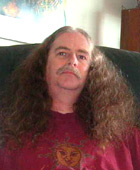 http://famouspoetsandpoems.com/poets/w__jude_aher/photo
 [CENTER]An Indian At the Burial Place Of His Fathers
by William Cullen Bryant
It is the spot I came to seek,--
My fathers' ancient burial-place
Ere from these vales, ashamed and weak,
Withdrew our wasted race.
It is the spot--I know it well--
Of which our old traditions tell.
For here the upland bank sends out
A ridge toward the river-side;
I know the shaggy hills about,
The meadows smooth and wide,--
The plains, that, toward the southern sky,
Fenced east and west by mountains lie.
A white man, gazing on the scene,
Would say a lovely spot was here,
And praise the lawns, so fresh and green,
Between the hills so sheer.
I like it not--I would the plain
Lay in its tall old groves again.
The sheep are on the slopes around,
The cattle in the meadows feed,
And labourers turn the crumbling ground,
Or drop the yellow seed,
And prancing steeds, in trappings gay,
Whirl the bright chariot o'er the way.
Methinks it were a nobler sight
To see these vales in woods arrayed,
Their summits in the golden light,
Their trunks in grateful shade,
And herds of deer, that bounding go
O'er hills and prostrate trees below.
And then to mark the lord of all,
The forest hero, trained to wars,
Quivered and plumed, and lithe and tall,
And seamed with glorious scars,
Walk forth, amid his reign, to dare
The wolf, and grapple with the bear.
This bank, in which the dead were laid,
Was sacred when its soil was ours;
Hither the artless Indian maid
Brought wreaths of beads and flowers,
And the gray chief and gifted seer
Worshipped the god of thunders here.
But now the wheat is green and high
On clods that hid the warrior's breast,
And scattered in the furrows lie
The weapons of his rest;
And there, in the loose sand, is thrown
Of his large arm the mouldering bone.
Ah, little thought the strong and brave
Who bore their lifeless chieftain forth--
Or the young wife, that weeping gave
Her first-born to the earth,
That the pale race, who waste us now,
Among their bones should guide the plough.
They waste us--ay--like April snow
In the warm noon, we shrink away;
And fast they follow, as we go
Towards the setting day,--
Till they shall fill the land, and we
Are driven into the western sea.
But I behold a fearful sign,
To which the white men's eyes are blind;
Their race may vanish hence, like mine,
And leave no trace behind,
Save ruins o'er the region spread,
And the white stones above the dead.
Before these fields were shorn and tilled,
Full to the brim our rivers flowed;
The melody of waters filled
The fresh and boundless wood;
And torrents dashed and rivulets played,
And fountains spouted in the shade.
Those grateful sounds are heard no more,
The springs are silent in the sun;
The rivers, by the blackened shore,
With lessening current run;
The realm our tribes are crushed to get
May be a barren desert yet.[/CENTER]
I'm feeling all nostalgic-like.
DULCE ET DECORUM EST
Bent double, like old beggars under sacks,
Knock-kneed, coughing like hags, we cursed through sludge,
Till on the haunting flares we turned our backs
And towards our distant rest began to trudge.
Men marched asleep. Many had lost their boots
But limped on, blood-shod. All went lame; all blind;
Drunk with fatigue; deaf even to the hoots
Of tired, outstripped Five-Nines that dropped behind.
Gas! Gas! Quick, boys! – An ecstasy of fumbling,
Fitting the clumsy helmets just in time;
But someone still was yelling out and stumbling,
And flound'ring like a man in fire or lime9 . . .
Dim, through the misty panes and thick green light,
As under a green sea, I saw him drowning.
In all my dreams, before my helpless sight,
He plunges at me, guttering, choking, drowning.
If in some smothering dreams you too could pace
Behind the wagon that we flung him in,
And watch the white eyes writhing in his face,
His hanging face, like a devil's sick of sin;
If you could hear, at every jolt, the blood
Come gargling from the froth-corrupted lungs,
Obscene as cancer, bitter as the cud
Of vile, incurable sores on innocent tongues,
My friend, you would not tell with such high zest
To children ardent for some desperate glory,
The old Lie; Dulce et Decorum est
Pro patria mori.
Turns out I have a closer connection to a poet I much admire than I thought.
The arts centre where I do occupational therapy (pottery) is an old school.
I knew this - I was in two musicals based in the theatre there.
But the blue plaque was put up well after my am-dram days - after his death in 2007.
Vernon Scannell was Aylesbury born, and I did not know this.
My first English teacher almost definitely did - she was the one who read us A Case of Murder (
here).
And he went to school in the building now known as the Queens Park Arts Centre.
So as this thread reminded me that there are other poetry lovers out there, I'm also sharing this one of his. Which I find delightfully creepy. Reminds me very much of Betjamin's False Security, which I also found disturbing, but memorable. And dare I say it, a bit Dr Who?!
I probably should have posted one of Scannell's war poems - to continue the theme - but to be honest, it's always been the childhood ones that appealed to me.
Hide & Seek.
Call out, call loud -
"I'm ready. Come and find me!"
The sacks in the tool-shed smell like the seaside.
They'll never find you in the salty dark,
But be careful that your feet aren't sticking out,
Wiser not to risk another shout.
The floor is cold.
They'll probably be searching the bushes, near the swing.
Whatever happens you mustn't sneeze
When they come prowling in.
And here they are, whispering at the door
You've never heard them sound so hushed before.
Don't breathe, don't move, stay dumb.
Hide in your blindness, they're moving closer
Someone stumbles, mutters
Their words and laughter scuttle and they're gone,
But don't come out just yet, they'll try the lane
And then the greenhouse and back here again.
They must be thinking that you're very clever,
Getting more puzzled as they search all over.
It seems a long time since they went away.
Your legs are stiff, the cold bites through your coat.
The dark damp smell of sand moves in your throat.
It's time to let them know that you're the winner
Push off the sacks, uncurl and stretch.
That's better! Out of the shed and call to them -
"I've won! Here I am! Come and own up! I've caught you!"
The darkening garden watches, nothing stirs
The bushes hold their breath, the sun is gone
Yes, here you are - But where are they who sought you?
Vernon Scannell
(late of Aylesbury)
@ Bri: that was probably the first poem that ever really got me. I remember our English teacher reading it out to us at school.
@ Bri: that was probably the first poem that ever really got me. I remember our English teacher reading it out to us at school.
It really got me, too, when I first read it. A great poem, isn't it?
Under One Small Star
My apologies to chance for calling it necessity.
My apologies to necessity if I'm mistaken, after all.
Please, don't be angry, happiness, that I take you as my due.
May my dead be patient with the way my memories fade.
My apologies to time for all the world I overlook each second.
My apologies to past loves for thinking that the latest is the first.
Forgive me, open wounds, for pricking my finger.
I apologize for my record of minutes to those who cry from
the depths.
I apologize to those who wait in railway stations for being asleep
today at five a.m.
Pardon me, hounded hope, for laughing from time to time.
Pardon me, deserts, that I don't rush to you bearing a spoonful
of water.
And you, falcon, unchanging year after year, always in the
same cage,
your gaze always fixed on the same point in space,
forgive me, even if it turns out you were stuffed.
My apologies to the felled tree for the table's four legs.
My apologies to great questions for small answers.
Truth, please don't pay me much attention.
Dignity, please be magnanimous.
Bear with me, O mystery of existence, as I pluck the occasional
thread from your train.
Soul, don't take offense that I've only got you now and then.
My apologies to everything that I can't be everywhere at once.
My apologies to everyone that I can't be each woman and
each man.
I know I won't be justfied as long as I live,
since I myself stand in my own way.
Don't bear me ill will, speech, that I borrow weighty words,
then labor heavily so that they may seem light.
- Wislawa Symborska
"Invictus" by William Ernest Henley
Out of the night that covers me,
Black as the pit from pole to pole,
I thank whatever gods may be
For my unconquerable soul.
In the fell clutch of circumstance
I have not winced nor cried aloud.
Under the bludgeonings of chance
My head is bloody, but unbowed.
Beyond this place of wrath and tears
Looms but the Horror of the shade,
And yet the menace of the years
Finds and shall find me unafraid.
It matters not how strait the gate,
How charged with punishments the scroll,
I am the master of my fate:
I am the captain of my soul.
I am the Reaper
I am the Reaper.
All things with heedful hook
Silent I gather.
Pale roses touched with the spring,
Tall corn in summer,
Fruits rich with autumn, and frail winter blossoms—
Reaping, still reaping—
All things with heedful hook
Timely I gather.
I am the Sower.
All the unbodied life
Runs through my seed-sheet.
Atom with atom wed,
Each quickening the other,
Fall through my hands, ever changing, still changeless.
Ceaselessly sowing,
Life, incorruptible life,
Flows from my seed-sheet.
Maker and breaker,
I am the ebb and the flood,
Here and Hereafter,
Sped through the tangle and coil
Of infinite nature,
Viewless and soundless I fashion all being.
Taker and giver,
I am the womb and the grave,
The Now and the Ever
William Ernest Henley
Double Ballade on the Nothingness of Things
The big teetotum twirls,
And epochs wax and wane
As chance subsides or swirls;
But of the loss and gain
The sum is always plain.
Read on the mighty pall,
The weed of funeral
That covers praise and blame,
The -isms and the -anities,
Magnificence and shame:--
"O Vanity of Vanities!"
The Fates are subtle girls!
They give us chaff for grain.
And Time, the Thunderer, hurls,
Like bolted death, disdain
At all that heart and brain
Conceive, or great or small,
Upon this earthly ball.
Would you be knight and dame?
Or woo the sweet humanities?
Or illustrate a name?
O Vanity of Vanities!
We sound the sea for pearls,
Or drown them in a drain;
We flute it with the merles,
Or tug and sweat and strain;
We grovel, or we reign;
We saunter, or we brawl;
We search the stars for Fame,
Or sink her subterranities;
The legend's still the same:--
"O Vanity of Vanities!"
Here at the wine one birls,
There some one clanks a chain.
The flag that this man furls
That man to float is fain.
Pleasure gives place to pain:
These in the kennel crawl,
While others take the wall.
She has a glorious aim,
He lives for the inanities.
What come of every claim?
O Vanity of Vanities!
Alike are clods and earls.
For sot, and seer, and swain,
For emperors and for churls,
For antidote and bane,
There is but one refrain:
But one for king and thrall,
For David and for Saul,
For fleet of foot and lame,
For pieties and profanities,
The picture and the frame:--
"O Vanity of Vanities!"
Life is a smoke that curls--
Curls in a flickering skein,
That winds and whisks and whirls,
A figment thin and vain,
Into the vast Inane.
One end for hut and hall!
One end for cell and stall!
Burned in one common flame
Are wisdoms and insanities.
For this alone we came:--
"O Vanity of Vanities!"
Envoy
Prince, pride must have a fall.
What is the worth of all
Your state's supreme urbanities?
Bad at the best's the game.
Well might the Sage exclaim:--
"O Vanity of Vanities!"
William Ernest Henley
good finds Merc. I enjoyed those.
"Invictus" by William Ernest Henley
Out of the night that covers me,
Black as the pit from pole to pole,
I thank whatever gods may be
For my unconquerable soul.
In the fell clutch of circumstance
I have not winced nor cried aloud.
Under the bludgeonings of chance
My head is bloody, but unbowed.
Beyond this place of wrath and tears
Looms but the Horror of the shade,
And yet the menace of the years
Finds and shall find me unafraid.
It matters not how strait the gate,
How charged with punishments the scroll,
I am the master of my fate:
I am the captain of my soul.
I loved this, it made me think of my friend fighting breast cancer... and then the last line made me think of this.....
[youtube]lBlx1JffMQ4[/youtube]
....ah, well, can't win every time
So many wonderful poems. Larkin's poem that Sundae posted takes me back to my English A-levels, when I and a bunch of other 17 year olds 'discovered' Larkin for the first time. Ah bliss.
@ Merc: Invictus is one my favourite poems of all time. Utterly beautiful.
Here's one of my other favourite poems. It's a little long; but I think it's marvellous. Oliver Goldsmith's The Deserted Village. Written after the death of the poet's brother, and in the wake of the Inclosure Act, and the 'death of the countryside' which followed. I think it captures so much of the anger and sorrow at a world which was changing, forcibly; and the coldness of the new age of capital:
The Deserted Village (part 1)
by Oliver Goldsmith
Sweet Auburn! loveliest village of the plain,
Where health and plenty cheered the labouring swain,
Where smiling spring its earliest visits paid,
And parting summer's lingering blooms delayed:
Dear lovely bowers of innocence and ease,
Seats of my youth, where every sport could please,
How often have I loitered o'er your green,
Where humble happiness endeared each scene;
How often have I paused on every charm,
The sheltered cot, the cultivated farm,
The never-failing brook, the busy mill,
The decent church that topped the neighbouring hill,
The hawthorn bush, with seats beneath the shade,
For talking age and whispering lovers made;
How often have I blessed the coming day,
When toil remitting lent its turn to play,
And all the village train, from labour free,
Led up their sports beneath the spreading tree:
While many a pastime circled in the shade,
The young contending as the old surveyed;
And many a gambol frolicked o'er the ground,
And sleights of art and feats of strength went round;
And still as each repeated pleasure tired,
Succeeding sports the mirthful band inspired;
The dancing pair that simply sought renown
By holding out to tire each other down!
The swain mistrustless of his smutted face,
While secret laughter tittered round the place;
The bashful virgin's sidelong look of love,
The matron's glance that would those looks reprove:
These were thy charms, sweet village; sports like these,
With sweet succession, taught even toil to please;
These round thy bowers their cheerful influence shed,
These were thy charms -But all these charms are fled.
Sweet smiling village, loveliest of the lawn,
Thy sports are fled, and all thy charms withdrawn;
Amidst thy bowers the tyrant's hand is seen,
And desolation saddens all thy green:
One only master grasps the whole domain,
And half a tillage stints thy smiling plain:
No more thy glassy brook reflects the day,
But choked with sedges works its weedy way.
Along thy glades, a solitary guest,
The hollow-sounding bittern guards its nest;
Amidst thy desert walks the lapwing flies,
And tires their echoes with unvaried cries.
Sunk are thy bowers, in shapeless ruin all,
And the long grass o'ertops the mouldering wall;
And, trembling, shrinking from the spoiler's hand,
Far, far away, thy children leave the land.
Ill fares the land, to hastening ills a prey,
Where wealth accumulates, and men decay:
Princes and lords may flourish, or may fade;
A breath can make them, as a breath has made;
But a bold peasantry, their country's pride,
When once destroyed can never be supplied.
A time there was, ere England's griefs began,
When every rood of ground maintained its man;
For him light labour spread her wholesome store,
Just gave what life required, but gave no more:
His best companions, innocence and health;
And his best riches, ignorance of wealth.
But times are altered; trade's unfeeling train
Usurp the land and dispossess the swain;
Along the lawn, where scattered hamlet's rose,
Unwieldy wealth and cumbrous pomp repose,
And every want to opulence allied,
And every pang that folly pays to pride.
Those gentle hours that plenty bade to bloom,
Those calm desires that asked but little room,
Those healthful sports that graced the peaceful scene,
Lived in each look, and brightened all the green;
These, far departing, seek a kinder shore,
And rural mirth and manners are no more.
Sweet Auburn! parent of the blissful hour,
Thy glades forlorn confess the tyrant's power.
Here as I take my solitary rounds,
Amidst thy tangling walks and ruined grounds,
And, many a year elapsed, return to view
Where once the cottage stood, the hawthorn grew,
Remembrance wakes with all her busy train,
Swells at my breast, and turns the past to pain.
In all my wanderings round this world of care,
In all my griefs -and God has given my share -
I still had hopes my latest hours to crown,
Amidst these humble bowers to lay me down;
To husband out life's taper at the close,
And keep the flame from wasting by repose.
I still had hopes, for pride attends us still,
Amidst the swains to show my book-learned skill,
Around my fire an evening group to draw,
And tell of all I felt and all I saw;
And, as a hare, whom hounds and horns pursue,
Pants to the place from whence at first she flew,
I still had hopes, my long vexations passed,
Here to return -and die at home at last.
O blest retirement, friend to life's decline,
Retreats from care, that never must be mine,
How happy he who crowns in shades like these
A youth of labour with an age of ease;
Who quits a world where strong temptations try,
And, since 'tis hard to combat, learns to fly!
For him no wretches, born to work and weep,
Explore the mine, or tempt the dangerous deep;
No surly porter stands in guilty state
To spurn imploring famine from the gate;
But on he moves to meet his latter end,
Angels round befriending Virtue's friend;
Bends to the grave with unperceived decay,
While Resignation gently slopes the way;
All, all his prospects brightening to the last,
His Heaven commences ere the world be past!
Sweet was the sound when oft at evening's close
Up yonder hill the village murmur rose;
There, as I passed with careless steps and slow,
The mingling notes came softened from below;
The swain responsive as the milkmaid sung,
The sober herd that lowed to meet their young;
The noisy geese that gabbled o'er the pool,
The playful children just let loose from school;
The watchdog's voice that bayed the whisp'ring wind,
And the loud laugh that spoke the vacant mind;
These all in sweet confusion sought the shade,
And filled each pause the nightingale had made.
But now the sounds of population fail,
No cheerful murmurs fluctuate in the gale,
No busy steps the grass-grown footway tread,
For all the bloomy flush of life is fled.
All but yon widowed, solitary thing,
That feebly bends beside the plashy spring;
She, wretched matron, forced in age for bread
To strip the brook with mantling cresses spread,
To pick her wintry faggot from the thorn,
To seek her nightly shed, and weep till morn;
She only left of all the harmless train,
The sad historian of the pensive plain.
Near yonder copse, where once the garden smiled,
And still where many a garden flower grows wild;
There, where a few torn shrubs the place disclose,
The village preacher's modest mansion rose.
A man he was to all the country dear,
And passing rich with forty pounds a year;
Remote from towns he ran his godly race,
Nor e'er had changed, nor wished to change, his place;
Unpractised he to fawn, or seek for power,
By doctrines fashioned to the varying hour;
Far other aims his heart had learned to prize,
More skilled to raise the wretched than to rise.
His house was known to all the vagrant train,
He chid their wanderings, but relieved their pain;
The long remembered beggar was his guest,
Whose beard descending swept his aged breast;
The ruined spendthrift, now no longer proud,
Claimed kindred there, and had his claims allowed;
The broken soldier, kindly bade to stay,
Sat by his fire, and talked the night away;
Wept o'er his wounds, or, tales of sorrow done,
Shouldered his crutch, and showed how fields were won.
Pleased with his guests, the good man learned to glow,
And quite forgot their vices in their woe;
Careless their merits or their faults to scan,
His pity gave ere charity began.
Thus to relieve the wretched was his pride,
And e'en his failings leaned to Virtue's side;
But in his duty prompt at every call,
He watched and wept, he prayed and felt, for all.
And, as a bird each fond endearment tries
To tempt its new-fledged offspring to the skies,
He tried each art, reproved each dull delay,
Allured to brighter worlds, and led the way.
Beside the bed where parting life was laid,
And sorrow, guilt, and pain, by turns dismayed,
The reverend champion stood. At his control
Despair and anguish fled the struggling soul;
Comfort came down the trembling wretch to raise,
And his last faltering accents whispered praise.
At church, with meek and unaffected grace,
His looks adorned the venerable place;
Truth from his lips prevailed with double sway,
And fools, who came to scoff, remained to pray.
The service passed, around the pious man,
With steady zeal, each honest rustic ran;
Even children followed with endearing wile,
And plucked his gown, to share the good man's smile.
His ready smile a parent's warmth expressed,
Their welfare pleased him, and their cares distressed;
To them his heart, his love, his griefs were given,
But all his serious thoughts had rest in Heaven.
As some tall cliff, that lifts its awful form,
Swells from the vale, and midway leaves the storm,
Though round its breast the rolling clouds are spread,
Eternal sunshine settles on its head.
Beside yon straggling fence that skirts the way,
With blossomed furze unprofitably gay,
There, in his noisy mansion, skilled to rule,
The village master taught his little school;
A man severe he was, and stern to view;
I knew him well, and every truant knew;
Well had the boding tremblers learned to trace
The day's disasters in his morning face;
Full well they laughed, with counterfeited glee,
At all his jokes, for many a joke had he;
Full well the busy whisper, circling round,
Conveyed the dismal tidings when he frowned;
Yet he was kind; or if severe in aught,
The love he bore to learning was in fault.
The village all declared how much he knew;
'Twas certain he could write, and cipher too;
Lands he could measure, terms and tides presage,
And even the story ran that he could gauge.
In arguing too, the parson owned his skill,
For e'en though vanquished, he could argue still;
While words of learned length and thundering sound
Amazed the gazing rustics ranged around,
And still they gazed, and still the wonder grew
That one small head could carry all he knew.
But past is all his fame. The very spot
Where many a time he triumphed is forgot.
Near yonder thorn, that lifts its head on high,
Where once the signpost caught the passing eye,
Low lies that house where nut-brown draughts inspired,
Where grey-beard mirth and smiling toil retired,
Where village statesmen talked with looks profound,
And news much older than their ale went round.
Imagination fondly stoops to trace
The parlour splendours of that festive place:
The white-washed wall, the nicely sanded floor,
The varnished clock that clicked behind the door;
The chest contrived a double debt to pay, -
A bed by night, a chest of drawers by day;
The pictures placed for ornament and use,
The twelve good rules, the royal game of goose;
The hearth, except when winter chilled the day,
With aspen boughs, and flowers, and fennel gay;
While broken teacups, wisely kept for show,
Ranged o'er the chimney, glistened in a row.
Vain transitory splendours! Could not all
Reprieve the tottering mansion from its fall!
Obscure it sinks, nor shall it more impart
An hour's importance to the poor man's heart;
Thither no more the peasant shall repair
To sweet oblivion of his daily care;
No more the farmer's news, the barber's tale,
No more the woodman's ballad shall prevail;
No more the smith his dusky brow shall clear,
Relax his ponderous strength, and lean to hear;
The host himself no longer shall be found
Careful to see the mantling bliss go round;
Nor the coy maid, half willing to be pressed,
Shall kiss the cup to pass it to the rest.
Yes! let the rich deride, the proud disdain,
These simple blessings of the lowly train;
To me more dear, congenial to my heart,
One native charm, than all the gloss of art.
Spontaneous joys, where Nature has its play,
The soul adopts, and owns their first-born sway;
Lightly they frolic o'er the vacant mind,
Unenvied, unmolested, unconfined:
But the long pomp, the midnight masquerade,
With all the freaks of wanton wealth arrayed,
In these, ere triflers half their wish obtain,
The toiling pleasure sickens into pain;
And, even while fashion's brightest arts decoy,
The heart distrusting asks, if this be joy.
Ye friends to truth, ye statesmen, who survey
The rich man's joys increase, the poor's decay,
'Tis yours to judge how wide the limits stand
Between a splendid and a happy land.
Proud swells the tide with loads of freighted ore,
And shouting Folly hails them from her shore;
Hoards even beyond the miser's wish abound,
And rich men flock from all the world around.
Yet count our gains. This wealth is but a name
That leaves our useful products still the same.
Not so the loss. The man of wealth and pride
Takes up a space that many poor supplied;
Space for his lake, his park's extended bounds,
Space for his horses, equipage, and hounds;
The robe that wraps his limbs in silken sloth
Has robbed the neighbouring fields of half their growth;
His seat, where solitary sports are seen,
Indignant spurns the cottage from the green;
Around the world each needful product flies,
For all the luxuries the world supplies:
While thus the land adorned for pleasure, all
In barren splendour feebly waits the fall.
As some fair female unadorned and plain,
Secure to please while youth confirms her reign,
Slights every borrowed charm that dress supplies,
Nor shares with art the triumph of her eyes;
But when those charms are passed, for charms are frail,
When time advances and when lovers fail,
She then shines forth, solicitous to bless,
In all the glaring impotence of dress.
Thus fares the land, by luxury betrayed,
In nature's simplest charms at first arrayed;
But verging to decline, its splendours rise,
Its vistas strike, its palaces surprise;
While, scourged by famine, from the smiling land
The mournful peasant leads his humble band;
And while he sinks, without one arm to save,
The country blooms -a garden, and a grave.
Where then, ah! where, shall poverty reside,
To 'scape the pressure of contiguous pride?
If to some common's fenceless limits strayed,
He drives his flock to pick the scanty blade,
Those fenceless fields the sons of wealth divide,
And even the bare-worn common is denied.
If to the city sped -what waits him there?
To see profusion that he must not share;
To see ten thousand baneful arts combined
To pamper luxury, and thin mankind;
To see those joys the sons of pleasure know
Extorted from his fellow creature's woe.
Here, while the courtier glitters in brocade,
There the pale artist plies the sickly trade;
Here, while the proud their long-drawn pomps display,
There the black gibbet glooms beside the way.
The dome where Pleasure holds her midnight reign
Here, richly decked, admits the gorgeous train;
Tumultuous grandeur crowds the blazing square,
The rattling chariots clash, the torches glare.
Sure scenes like these no troubles e'er annoy!
Sure these denote one universal joy!
Are these thy serious thoughts? -Ah, turn thine eyes
Where the poor houseless shivering female lies.
She once, perhaps, in a village plenty blessed,
Has wept at tales of innocence distressed;
Her modest looks the cottage might adorn,
Sweet as the primrose peeps beneath the thorn;
Now lost to all; her friends, her virtue fled,
Near her betrayer's door she lays her head,
And, pinched with cold, and shrinking from the shower,
With heavy heart deplores that luckless hour,
When idly first, ambitious of the town,
She left her wheel and robes of country brown.
Do thine, sweet Auburn, thine, the loveliest train,
Do thy fair tribes participate her pain?
E'en now, perhaps, by cold and hunger led,
At proud men's doors they ask a little bread!
Ah, no! -To distant climes, a dreary scene,
Where half the convex world intrudes between,
Through torrid tracts with fainting steps they go,
Where wild Altama murmurs to their woe.
Far different there from all that charmed before,
The various terrors of that horrid shore;
Those blazing suns that dart a downward ray
And fiercely shed intolerable day;
Those matted woods where birds forget to sing,
But silent bats in drowsy clusters cling;
Those poisonous fields with rank luxuriance crowned,
Where the dark scorpion gathers death around;
Where at each step the stranger fears to wake
The rattling terrors of the vengeful snake;
Where crouching tigers wait their hapless prey,
And savage men more murderous still than they;
While oft in whirls the mad tornado flies,
Mingling the ravaged landscape with the skies.
Far different these from every former scene,
The cooling brook, the grassy-vested green,
The breezy covert of the warbling grove,
That only sheltered thefts of harmless love.
Good Heaven! what sorrows gloomed that parting day
That called them from their native walks away;
When the poor exiles, every pleasure passed,
Hung round their bowers, and fondly looked their last,
And took a long farewell, and wished in vain
For seats like these beyond the western main;
And, shuddering still to face the distant deep,
Returned and wept, and still returned to weep.
The good old sire, the first prepared to go
To new-found worlds, and wept for others' woe;
But for himself, in conscious virtue brave,
He only wished for worlds beyond the grave.
His lovely daughter, lovelier in her tears,
The fond companion of his helpless years,
Silent went next, neglectful of her charms,
And left a lover's for a father's arms.
With louder plaints the mother spoke her woes,
And blessed the cot where every pleasure rose;
And kissed her thoughtless babes with many a tear,
And clasped them close, in sorrow doubly dear;
Whilst her fond husband strove to lend relief
In all the silent manliness of grief.
O luxury! thou cursed by Heaven's decree,
How ill exchanged are things like these for thee!
How do thy potions, with insidious joy,
Diffuse thy pleasures only to destroy!
Kingdoms by thee, to sickly greatness grown,
Boast of a florid vigour not their own;
At every draught more large and large they grow,
A bloated mass of rank unwieldly woe;
Till, sapped their strength, and every part unsound,
Down, down they sink, and spread the ruin round.
Even now the devastation is begun,
And half the business of destruction done;
Even now, methinks, as pondering here I stand,
I see the rural virtues leave the land:
Down where yon anchoring vessel spreads the sail
That idly waiting flaps with every gale,
Downward they move, a melancholy band,
Pass from the shore, and darken all the strand.
Contented toil, and hospitable care,
And kind connubial tenderness, are there;
And piety with wishes placed above,
And steady loyalty, and faithful love.
And thou, sweet Poetry, thou loveliest maid,
Still first to fly where sensual joys invade;
Unfit in these degenerate times of shame
To catch the heart, or strike for honest fame;
Dear charming nymph, neglected and decried,
My shame in crowds, my solitary pride;
Thou source of all my bliss, and all my woe,
That found'st me poor at first, and keep'st me so;
Thou guide by which the nobler arts excel,
Thou nurse of every virtue, fare thee well!
Farewell, and oh! where'er thy voice be tried,
On Torno's cliffs, or Pambamarca's side,
Whether where equinoctial fervours glow,
Or winter wraps the polar world in snow,
Still let thy voice, prevailing over time,
Redress the rigours of th' inclement clime;
Aid slighted truth; with thy persuasive strain
Teach erring man to spurn the rage of gain;
Teach him that states of native strength possessed,
Though very poor, may still be very blessed;
That trade's proud empire hastes to swift decay,
As ocean sweeps the laboured mole away;
While self-dependent power can time defy,
As rocks resist the billows and the sky.
It's a little long;
Quick! dial 999, Dana's pants are on fire!
*grins*
I must admit, I didn't realise quite how long until i was posting it here.
Wow Dana, good stuff. You are right it is a bit long. I had to read it in bits. Beautiful.
I will go back and read that, chick.
I like Oliver Goldsmith.
In fact may print it out - I don't know why, but I've never got on with longer poems on-screen.
Even the short ones I like I feel I need to print - there is something about having them physically.
This one has been in my head during this snowy week, purely for the line "As they slogged up to Arras with rifle and pack" because walking over sheet ice felt like slogging (melodramatic on my part of course!)
The General
"Good-morning; good-morning!" the General said
When we met him last week on our way to the line.
Now the soldiers he smiled at are most of ’em dead,
And we’re cursing his staff for incompetent swine.
"He’s a cheery old card," grunted Harry to Jack
As they slogged up to Arras with rifle and pack.
But he did for them both by his plan of attack.
Sigfried Sassoon
Saw this posted on a board here at the college, said board currently dedicated to domestic violence issues. I found it quite sad. There are those of you who know about what happened to a relative of mine about a year and a half ago. I don't want to revisit that: you know if you know.
Anyway, thought it worth posting.
Another Woman
Carol Geneya Kaplan
June 22, 2002
Today another woman died
and not on a foreign field
and not with a rifle strapped to her back,
and not with a large defense of tanks
rumbling and rolling behind her.
She died without CNN covering her war.
She died without talk of intelligent bombs
and strategic targets
The target was simply her face, her back
her pregnant belly.
The target was her precious flesh
that was once composed like music
in her mother’s body and sung
in the anthem of birth.
The target was this life
that had lived its own dear wildness,
had been loved and not loved,
had danced and not danced.
A life like yours or mine
that had stumbled up
from a beginning
and had learned to walk
and had learned to read.
and had learned to sing.
Another woman died today.
not far from where you live;
Just there, next door where the tall light
falls across the pavement.
Just there, a few steps away
where you’ve often heard shouting,
Another woman died today.
She was the same girl
her mother used to kiss;
the same child you dreamed
beside in school.
The same baby her parents
walked in the night with
and listened and listened and listened
For her cries even while they slept.
And someone has confused his rage
with this woman’s only life.
- Carol Geneya Kaplan
The Day is Done
THE DAY is done, and the darkness
Falls from the wings of Night,
As a feather is wafted downward
From an eagle in his flight.
I see the lights of the village
Gleam through the rain and the mist,
And a feeling of sadness comes o'er me
That my soul cannot resist:
A feeling of sadness and longing,
That is not akin to pain,
And resembles sorrow only
As the mist resembles the rain.
Come, read to me some poem,
Some simple and heartfelt lay,
That shall soothe this restless feeling,
And banish the thoughts of day.
Not from the grand old masters,
Not from the bards sublime,
Whose distant footsteps echo
Through the corridors of Time.
For, like strains of martial music,
Their mighty thoughts suggest
Life's endless toil and endeavor;
And to-night I long for rest.
Read from some humbler poet,
Whose songs gushed from his heart,
As showers from the clouds of summer,
Or tears from the eyelids start;
Who, through long days of labor,
And nights devoid of ease,
Still heard in his soul the music
Of wonderful melodies.
Such songs have power to quiet
The restless pulse of care,
And come like the benediction
That follows after prayer.
Then read from the treasured volume
The poem of thy choice,
And lend to the rhyme of the poet
The beauty of thy voice.
And the night shall be filled with music,
And the cares, that infest the day,
Shall fold their tents, like the Arabs,
And as silently steal away.
~Henry Wadsworth Longfellow
[CENTER]The Graveyard Rabbit
[SIZE="1"]by Frank Lebby Stanton[/SIZE]
In the white moonlight, where the willow waves,
He halfway gallops among the graves—
A tiny ghost in the gloom and gleam,
Content to dwell where the dead men dream,
But wary still!
For they plot him ill;
For the graveyard rabbit hath a charm
(May God defend us!) to shield from harm.
Over the shimmering slabs he goes—
Every grave in the dark he knows;
But his nest is hidden from human eye
Where headstones broken on old graves lie.
Wary still!
For they plot him ill;
For the graveyard rabbit, though sceptics scoff,
Charmeth the witch and the wizard off!
The black man creeps, when the night is dim,
Fearful, still, on the track of him;
Or fleetly follows the way he runs,
For he heals the hurts of the conjured ones.
Wary still!
For they plot him ill;
The soul’s bewitched that would find release,—
To the graveyard rabbit go for peace!
He holds their secret—he brings a boon
Where winds moan wild in the dark o’ the moon;
And gold shall glitter and love smile sweet
To whoever shall sever his furry feet!
Wary still!
For they plot him ill;
For the graveyard rabbit hath a charm
(May God defend us!) to shield from harm. [/CENTER]
Gravdigr. I read your post yesterday. What a great poem. I like it.
Here is something different. I wish I could hear it better in my head. The way it's suppose to sound. Piece of cake for Limey. It would be cool to have a reading video format. :)
Address to the Devil
by Robert Burns
Robert Burns O Prince, O chief of many throned pow'rs!
That led th' embattled seraphim to war!
(Milton, Paradise Lost)
O thou! whatever title suit thee,—
Auld Hornie, Satan, Nick, or Clootie!
Wha in yon cavern, grim an' sootie,
Clos'd under hatches,
Spairges about the brunstane cootie
To scaud poor wretches!
Hear me, Auld Hangie, for a wee,
An' let poor damned bodies be;
I'm sure sma' pleasure it can gie,
E'en to a deil,
To skelp an' scaud poor dogs like me,
An' hear us squeel!
Great is thy pow'r, an' great thy fame;
Far ken'd an' noted is thy name;
An' tho' yon lowin heugh's thy hame,
Thou travels far;
An' faith! thou's neither lag nor lame,
Nor blate nor scaur.
Whyles, ranging like a roarin lion,
For prey a' holes an' corners tryin;
Whyles, on the strong-wing'd tempest flyin,
Tirlin' the kirks;
Whyles, in the human bosom pryin,
Unseen thou lurks.
I've heard my rev'rend graunie say,
In lanely glens ye like to stray;
Or whare auld ruin'd castles gray
Nod to the moon,
Ye fright the nightly wand'rer's way
Wi' eldritch croon.
When twilight did my graunie summon
To say her pray'rs, douce honest woman!
Aft yont the dike she's heard you bummin,
Wi' eerie drone;
Or, rustlin thro' the boortrees comin,
Wi' heavy groan.
Ae dreary, windy, winter night,
The stars shot down wi' sklentin light,
Wi' you mysel I gat a fright,
Ayont the lough;
Ye like a rash-buss stood in sight,
Wi' waving sugh.
The cudgel in my nieve did shake,
Each bristl'd hair stood like a stake,
When wi' an eldritch, stoor "Quaick, quaick,"
Amang the springs,
Awa ye squatter'd like a drake,
On whistling wings.
Let warlocks grim an' wither'd hags
Tell how wi' you on ragweed nags
They skim the muirs an' dizzy crags
Wi' wicked speed;
And in kirk-yards renew their leagues,
Owre howket dead.
Thence, countra wives wi' toil an' pain
May plunge an' plunge the kirn in vain;
For oh! the yellow treasure's taen
By witchin skill;
An' dawtet, twal-pint hawkie's gaen
As yell's the bill.
Thence, mystic knots mak great abuse,
On young guidmen, fond, keen, an' croose;
When the best wark-lume i' the house,
By cantraip wit,
Is instant made no worth a louse,
Just at the bit.
When thowes dissolve the snawy hoord,
An' float the jinglin icy-boord,
Then water-kelpies haunt the foord
By your direction,
An' nighted trav'lers are allur'd
To their destruction.
And aft your moss-traversing spunkies
Decoy the wight that late an drunk is:
The bleezin, curst, mischievous monkeys
Delude his eyes,
Till in some miry slough he sunk is,
Ne'er mair to rise.
When Masons' mystic word an grip
In storms an' tempests raise you up,
Some cock or cat your rage maun stop,
Or, strange to tell!
The youngest brither ye wad whip
Aff straught to hell!
Lang syne, in Eden'd bonie yard,
When youthfu' lovers first were pair'd,
An all the soul of love they shar'd,
The raptur'd hour,
Sweet on the fragrant flow'ry swaird,
In shady bow'r;
Then you, ye auld snick-drawin dog!
Ye cam to Paradise incog,
And play'd on man a cursed brogue,
(Black be your fa'!)
An gied the infant warld a shog,
Maist ruin'd a'.
D'ye mind that day, when in a bizz,
Wi' reeket duds an reestet gizz,
Ye did present your smoutie phiz
Mang better folk,
An' sklented on the man of Uz
Your spitefu' joke?
An' how ye gat him i' your thrall,
An' brak him out o' house and hal',
While scabs and blotches did him gall,
Wi' bitter claw,
An' lows'd his ill-tongued, wicked scaul,
Was warst ava?
But a' your doings to rehearse,
Your wily snares an' fechtin fierce,
Sin' that day Michael did you pierce,
Down to this time,
Wad ding a Lallan tongue, or Erse,
In prose or rhyme.
An' now, Auld Cloots, I ken ye're thinkin,
A certain Bardie's rantin, drinkin,
Some luckless hour will send him linkin,
To your black pit;
But faith! he'll turn a corner jinkin,
An' cheat you yet.
But fare you weel, Auld Nickie-ben!
O wad ye tak a thought an' men'!
Ye aiblins might—I dinna ken—
Still hae a stake:
I'm wae to think upo' yon den,
Ev'n for your sake!
Yeah, I'd hafta hear that in a native accent to really get something out of it.
"Spairges about the brunstane cootie", WTF?:p:
hehe Yeah, I saw that.
I think the title should be,Address To The Deil
and this is a translation. I do not vouch for its authenticity.
http://www.worldburnsclub.com/poems/translations/address_to_the_deil.htmCan't find Address to the Deil on YouTube, but the Address tae the Haggis should show you that it's just as incomprehensible when read out loud:
[youtube]C8l2m3_2Xjg[/youtube]
[SIZE=2]“Your Luck Is About To Change”[/SIZE]
by Susan Elizabeth Howe
(A fortune cookie)
Ominous inscrutable Chinese news
to get just before Christmas,
considering my reasonable health,
marriage spicy as moo-goo-gai-pan,
career running like a not-too-old Chevrolet.
Not bad, considering what can go wrong:
the bony finger of Uncle Sam
might point out my husband,
my own national guard,
and set him in Afghanistan;
my boss could take a personal interest;
the pain in my left knee could spread to my right.
Still, as the old year tips into the new,
I insist on the infant hope, gooing and kicking
his legs in the air. I won't give in
to the dark, the sub-zero weather, the fog,
or even the neighbors' Nativity.
Their four-year-old has arranged
his whole legion of dinosaurs
so they, too, worship the child,
joining the cow and sheep. Or else,
ultimate mortals, they've come to eat
ox and camel, Mary and Joseph,
then savor the newborn babe.
I liked that.
here's one from Teddy Hughes: I like a poet who can put "cunt" in a poem.
Do Not Pick Up The Telephone – Ted Hughes
That plastic Buddha jars out a Karate screech
Before the soft words with their spores
The cosmic breath of the gravestone
Death invented the phone it looks like the altar of death
Do not worship the telephone
It drags its worshippers into actual graves
With a variety of devices, through a variety of disguised voices
Sit godless when you hear the religious wail of the telephone
Panties are hotting up their circle for somebody to burn in
Nipples are evangelizing bringing a sword or at least a razor
Cunt is proclaiming heaven on earth i.e. death to the infidel
Do not think your house is a hideout it is a telephone
Do not think you walk on your own road, you walk down a telephone
Do not think you sleep in the hand of God you sleep in the mouthpiece of a telephone
Do not think your future is yours it waits upon a telephone
Do not think your thoughts are your own thoughts they are the toys of the telephone
Do not think these days are days they are the sacrificial priests of the telephone
The secret police of the telephone
O phone get out of my house
You are a bad god
Go and whisper on some other pillow
Do not lift your snake head in my house
Do not bite any more beautiful people
You plastic crab
Why is your oracle always the same in the end?
What rake off for you from the cemeteries?
Your silences are bad
When you are needed, dumb with the malice of the clairvoyant insane
The stars whisper together in your breathing
World's emptiness oceans in your mouthpiece
Stupidly your string dangles into the abysses
Plastic you are then stone a broken box of letters
And you cannot utter
Lies or truth, only the evil one
Makes you tremble with sudden appetite to see somebody undone
Blackening electrical connections
To where death bleaches its crystals
You swell and you writhe
You open your Buddha gape
You screech at the root of the house
Do not pick up the detonator of the telephone
A flame from the last day will come lashing out from the telephone
A dead body will fall out of the telephone
Do not pick up the telephone
I love Haggis!
Robbie Burns day is just around the corner!
Maya
Still I Rise
You may write me down in history
With your bitter, twisted lies,
You may trod me in the very dirt
But still, like dust, I'll rise.
Does my sassiness upset you?
Why are you beset with gloom?
'Cause I walk like I've got oil wells
Pumping in my living room.
Just like moons and like suns,
With the certainty of tides,
Just like hopes springing high,
Still I'll rise.
Did you want to see me broken?
Bowed head and lowered eyes?
Shoulders falling down like teardrops.
Weakened by my soulful cries.
Does my haughtiness offend you?
Don't you take it awful hard
'Cause I laugh like I've got gold mines
Diggin' in my own back yard.
You may shoot me with your words,
You may cut me with your eyes,
You may kill me with your hatefulness,
But still, like air, I'll rise.
Does my sexiness upset you?
Does it come as a surprise
That I dance like I've got diamonds
At the meeting of my thighs?
Out of the huts of history's shame
I rise
Up from a past that's rooted in pain
I rise
I'm a black ocean, leaping and wide,
Welling and swelling I bear in the tide.
Leaving behind nights of terror and fear
I rise
Into a daybreak that's wondrously clear
I rise
Bringing the gifts that my ancestors gave,
I am the dream and the hope of the slave.
I rise
I rise
I rise.
I love it, Bri.
I've seen Maya speak twice. She's just mesmerizing.
Tell it Sylvia! Go on!! Sylvia Plath reading: Daddy. It isn't pretty, it's scathing...Here she is reading her own work..
http://www.youtube.com/watch?v=6hHjctqSBwM
Edison recording Whitman:
http://www.youtube.com/watch?v=wf7J2AvCQO4
Such a very amazing link!
I just love Stephen Crane:
In the Desert
In the desert
I saw a creature, naked, bestial,
Who, squatting upon the ground,
Held his heart in his hands,
And ate of it.
I said, "Is it good, friend?"
"It is bitter – bitter", he answered,
"But I like it
Because it is bitter,
And because it is my heart."
I stood upon a high place,
And saw, below, many devils
Running, leaping, and carousing in sin.
One looked up, grinning,
And said, "Comrade! Brother!"
-Stephen Crane I Stood Upon a High Place
See? Poems should be short and sweet.
Zodiac
Words by Richie Havens
There is a secret that has been kept from man 2,000 years
There is a secret that has been kept from man 2,000 years
And that secret is that there are only
twelve people on the earth at any given time
That there are only twelve people on the earth at any given time
And these people have been symbolized
Down through the ages of mankind, by many symbols
They were called:
Twelve tribes of Israel
Twelve sons of Jacob
Twelve gates of Heaven
Twelve inches in a foot
Twelve months to the year
Twelve men on the jury
Twelve days of Christmas
Twelve disciples of Jesus Christ
Twelve manners of fruit on the tree by the side of the river
Good for the healing of all nations
Good for the healing of all nations
And these people are
And these people are:
Aries, who is… I am, ain’t I?
Taurus, who is… I have, don’t I?
Gemini, who is… I think, I think…
I think so much I wish I could stop thinking
Cancer, who is… I feel, I feel,
and there are no words to describe how I feel
Leo, who is… I will, o’er my will
Virgo, who is… I analyze, I analyze
Libra, who is… I balance, I balance, I balance
between those who know and those who do not know
Scorpio, who is… I desire, I desire, I desire…
Sagittarius, who is… I see, I see… I see so much in
what I’m doing I cannot finish what I’m doing
Capricorn, who is… I use, I use… I use all of
my experience in order to survive
Aquarius, who is… I know, I know…
why do I know when no one around me knows what I know
Pisces, who is… I believe, I believe…
or there is nothing for me to believe in
These are the twelve people who inherit the earth
You are one of them and there are only eleven others
And if you get to know the eleven others
You will be able to get along with everyone all over the world…
all over the world
I have a thousand brilliant lies
For the question:
How are you?
I have a thousand brilliant lies
For the question:
What is God?
If you think that the Truth can be known
From words,
If you think that the Sun and the Ocean
Can pass through that tiny opening Called the mouth,
O someone should start laughing!
Someone should start wildly Laughing –Now!
-by Daniel Ladinsky
Do not go gentle into that good night,
Old age should burn and rave at close of day;
Rage, rage against the dying of the light.
Though wise men at their end know dark is right,
Because their words had forked no lightning they
Do not go gentle into that good night.
Good men, the last wave by, crying how bright
Their frail deeds might have danced in a green bay,
Rage, rage against the dying of the light.
Wild men who caught and sang the sun in flight,
And learn, too late, they grieved it on its way,
Do not go gentle into that good night.
Grave men, near death, who see with blinding sight
Blind eyes could blaze like meteors and be gay,
Rage, rage against the dying of the light.
And you, my father, there on the sad height,
Curse, bless, me now with your fierce tears, I pray.
Do not go gentle into that good night.
Rage, rage against the dying of the light
Dylan Thomas
MOAR DYLAN!!!
In my craft or sullen art
Exercised in the still night
When only the moon rages
And the lovers lie abed
With all their griefs in their arms,
I labor by singing light
Not for ambition or bread
Or the strut and trade of charms
On the ivory stages
But for the common wages
Of their most secret heart.
Not for the proud man apart
From the raging moon I write
On these spindrift pages
Nor for the towering dead
With their nightingales and psalms
But for the lovers, their arms
Round the griefs of the ages,
Who pay no praise or wages
Nor heed my craft or art.
And another Rilke
Solemn Hour
Whoever now weeps somewhere in the world,
weeps without reason in the world,
weeps over me.
Whoever now laughs somewhere in the night,
laughs without reason in the night,
laughs at me.
Whoever now wanders somewhere in the world,
wanders without reason out in the world,
wanders toward me.
Whoever now dies somewhere in the world,
dies without reason in the world,
looks at me.
Mihai Eminescu
--------------------------------------------------------------------------------
And If...
And if the branches tap my pane
And the poplars whisper nightly,
It is to make me dream again
I hold you to me tightly.
And if the stars shine on the pond
And light its sombre shoal,
It is to quench my mind's despond
And flood with peace my soul.
And if the clouds their tresses part
And does the moon outblaze,
It is but to remind my heart
I long for you always.
JOURNEY
Ah, could I lay me down in this long grass
And close my eyes, and let the quiet wind
Blow over me--I am so tired, so tired
Of passing pleasant places! All my life,
Following Care along the dusty road,
Have I looked back at loveliness and sighed;
Yet at my hand an unrelenting hand
Tugged ever, and I passed. All my life long
Over my shoulder have I looked at peace;
And now I fain would lie in this long grass
And close my eyes.
Yet onward!
Cat birds call
Through the long afternoon, and creeks at dusk
Are guttural. Whip-poor-wills wake and cry,
Drawing the twilight close about their throats.
Only my heart makes answer. Eager vines
Go up the rocks and wait; flushed apple-trees
Pause in their dance and break the ring for me;
Dim, shady wood-roads, redolent of fern
And bayberry, that through sweet bevies thread
Of round-faced roses, pink and petulant,
Look back and beckon ere they disappear.
Only my heart, only my heart responds.
Yet, ah, my path is sweet on either side
All through the dragging day,--sharp underfoot
And hot, and like dead mist the dry dust hangs--
But far, oh, far as passionate eye can reach,
And long, ah, long as rapturous eye can cling,
The world is mine: blue hill, still silver lake,
Broad field, bright flower, and the long white road
A gateless garden, and an open path:
My feet to follow, and my heart to hold.
Edna St. Vincent Millay
MOAR Edna St. Vincent Millay!!
Well, I have lost you; and I lost you fairly;
In my own way, and with my full consent.
Say what you will, kings in a tumbrel rarely
Went to their deaths more proud than this one went.
Some nights of apprehension and hot weeping
I will confess; but that's permitted me;
Day dried my eyes; I was not one for keeping
Rubbed in a cage a wing that would be free.
If I had loved you less or played you slyly
I might have held you for a summer more,
But at the cost of words I value highly,
And no such summer as the one before.
Should I outlive this anguish—and men do—
I shall have only good to say of you.
Civilization
by Carl Phillips
There's an art
to everything. How
the rain means
April and an ongoingness like
that of song until at last
it ends. A centuries-old
set of silver handbells that
once an altar boy swung,
processing...You're the same
wilderness you've always
been, slashing through briars,
the bracken
of your invasive
self. So he said,
in a dream. But
the rest of it—all the rest—
was waking: more often
than not, to the next
extravagance. Two blackamoor
statues, each mirroring
the other, each hoisting
forever upward his burden of
hand-painted, carved-by-hand
peacock feathers. Don't
you know it, don't you know
I love you, he said. He was
shaking. He said:
I love you. There's an art
to everything. What I've
done with this life,
what I'd meant not to do,
or would have meant, maybe, had I
understood, though I have
no regrets. Not the broken but
still-flowering dogwood. Not
the honey locust, either. Not even
the ghost walnut with its
non-branches whose
every shadow is memory,
memory...As he said to me
once, That's all garbage
down the river, now. Turning,
but as the utterly lost—
because addicted—do:
resigned all over again. It
only looked, it—
It must only look
like leaving. There's an art
to everything. Even
turning away. How
eventually even hunger
can become a space
to live in. How they made
out of shamelessness something
beautiful, for as long as they could.
Because I tried to quote it to her whilst cabbaged.
I think I did quite well, given my state, but misquoting will never do any poem justice.
Jon Stallworthy also wrote The Trap, which affected me very much on first reading. In the same way horror or pornography does. It stands out in my memory alongside the paintings of Salidor Dali, Lord of the Flies and James Herbert's The Fog.
This one I read while older.
And being born in 1972, just appreciated for it's tone and cadence.
A Poem About Poems About Vietnam
The spotlights had you covered (thunder
in the wings). In the combat zones
and in the Circle, darkness. Under
the muzzles of the microphones
you opened fire, and a phalanx
of loudspeakers shook on the wall;
but all your cartridges were blanks
when you were at the Albert Hall.
Lord George Byron cared for Greece,
Auden and Cornford cared for Spain,
confronted bullets and disease
to make their poems' meaning plain;
but you - by what right did you wear
suffering like a service medal,
numbing the nerve that they laid bare,
when you were at the Albert Hall?
The poets of another time -
Owen with a rifle butt
between his paper and the slime,
Donne quitting her pillow to cut
a quill - knew tha in love and war
dispatches from the front are all.
We believe them, they were there,
when you were at the Albert Hall.
Poet, they whisper in their sleep
louder from underground than all
the mikes that hung upon your lips
when you were at the Albert Hall.
NB - Capital letters copied from the original. The Albert Hall is a large, prestigious and historical venue in London.
one of my favorites
The Young British Soldier
By Rudyard Kipling
When the 'arf-made recruity goes out to the East
'E acts like a babe an' 'e drinks like a beast,
An' 'e wonders because 'e is frequent deceased
Ere 'e's fit for to serve as a soldier.
Serve, serve, serve as a soldier,
Serve, serve, serve as a soldier,
Serve, serve, serve as a soldier,
So-oldier OF the Queen!
Now all you recruities what's drafted to-day,
You shut up your rag-box an' 'ark to my lay,
An' I'll sing you a soldier as far as I may:
A soldier what's fit for a soldier.
Fit, fit, fit for a soldier . . .
First mind you steer clear o' the grog-sellers' huts,
For they sell you Fixed Bay'nets that rots out your guts --
Ay, drink that 'ud eat the live steel from your butts --
An' it's bad for the young British soldier.
Bad, bad, bad for the soldier . . .
When the cholera comes -- as it will past a doubt --
Keep out of the wet and don't go on the shout,
For the sickness gets in as the liquor dies out,
An' it crumples the young British soldier.
Crum-, crum-, crumples the soldier . . .
But the worst o' your foes is the sun over'ead:
You must wear your 'elmet for all that is said:
If 'e finds you uncovered 'e'll knock you down dead,
An' you'll die like a fool of a soldier.
Fool, fool, fool of a soldier . . .
If you're cast for fatigue by a sergeant unkind,
Don't grouse like a woman nor crack on nor blind;
Be handy and civil, and then you will find
That it's beer for the young British soldier.
Beer, beer, beer for the soldier . . .
Now, if you must marry, take care she is old --
A troop-sergeant's widow's the nicest I'm told,
For beauty won't help if your rations is cold,
Nor love ain't enough for a soldier.
'Nough, 'nough, 'nough for a soldier . . .
If the wife should go wrong with a comrade, be loath
To shoot when you catch 'em -- you'll swing, on my oath! --
Make 'im take 'er and keep 'er: that's Hell for them both,
An' you're shut o' the curse of a soldier.
Curse, curse, curse of a soldier . . .
When first under fire an' you're wishful to duck,
Don't look nor take 'eed at the man that is struck,
Be thankful you're livin', and trust to your luck
And march to your front like a soldier.
Front, front, front like a soldier . . .
When 'arf of your bullets fly wide in the ditch,
Don't call your Martini a cross-eyed old bitch;
She's human as you are -- you treat her as sich,
An' she'll fight for the young British soldier.
Fight, fight, fight for the soldier . . .
When shakin' their bustles like ladies so fine,
The guns o' the enemy wheel into line,
Shoot low at the limbers an' don't mind the shine,
For noise never startles the soldier.
Start-, start-, startles the soldier . . .
If your officer's dead and the sergeants look white,
Remember it's ruin to run from a fight:
So take open order, lie down, and sit tight,
And wait for supports like a soldier.
Wait, wait, wait like a soldier . . .
When you're wounded and left on Afghanistan's plains,
And the women come out to cut up what remains,
Jest roll to your rifle and blow out your brains
An' go to your Gawd like a soldier.
Go, go, go like a soldier,
Go, go, go like a soldier,
Go, go, go like a soldier,
So-oldier of the Queen!
Samurai Song
by Robert Pinsky
When I had no roof I made
Audacity my roof. When I had
No supper my eyes dined.
When I had no eyes I listened.
When I had no ears I thought.
When I had no thought I waited.
When I had no father I made
Care my father. When I had
No mother I embraced order.
When I had no friend I made
Quiet my friend. When I had no
Enemy I opposed my body.
When I had no temple I made
My voice my temple. I have
No priest, my tongue is my choir.
When I have no means fortune
Is my means. When I have
Nothing, death will be my fortune.
Need is my tactic, detachment
Is my strategy. When I had
No lover I courted my sleep.
Dream where I meet myself
Lynn Emanuel
Even the butter's a block of sleazy light. I see that first,
as though I am a dreary guest come to a dreary supper.
On her table, its scrubbed deal trim and lonely as a cot,
is food for one, and everything we've ever hated: a plate of pallid
grays and whites is succotash and chops are those dark shapes glaring up at us.
Are you going to eat this? I want to ask; she's at the stove dishing up,
wearing that apron black and stiff as burned bacon, reserved for maids and waitresses.
The dream tells us: She is still a servant. Even here.
So she has to clean our plate. It's horrible to watch.
She pokes the bits of stuff into her mouth. The roll's glued shut like a little box
with all that sticky butter. Is this all living gets you? The room, a gun stuck in your back?
Don't move, It says. She's at the bureau lining up bobby pins.
Worried and fed up I wander to the window
with its strict bang of blind. My eyes fidget and scratch.
And then I see myself: I am this dream's dog. I want out.
Guilty at the Rapture
by
Keith Taylor
All things good would rise
into air, pulled from dirt and sky,
from cars left driverless
below, slamming into trees
That would be my first clue.
On my ride home from the river--
burning on my gold Schwinn
and sucking hard on a mint to smother
the newspaper cigarette I'd just smoked
in a stand of scrub willow--
I would have to dodge
machines abandoned by vanished Christians,
glorified while driving back from work
after centuries of trial.
I would know a final loneliness
before I screamed through the back door
and found supper smoldering over gas.
My parents gone. Even my sister--
only a hair less guilty--
called to her celestial chorus.
I would be alone in a world
of smokers, crooks, murderers,
of moviegoers, gamblers and sex fiends,
left, at last, alone in a world
without one hope of grace.
.
Weird. I just wrote a rapture haiku.
Short History of the Apple
The crunch is the thing, a certain joy in crashing through
living tissue, a memory of Neanderthal days.
—Edward Bunyard, The Anatomy of Dessert, 1929
Teeth at the skin. Anticipation.
Then flesh. Grain on the tongue.
Eve's knees ground in the dirt
of paradise. Newton watching
gravity happen. The history
of apples in each starry core,
every papery chamber's bright
bitter seed. Woody stem
an infant tree. William Tell
and his lucky arrow. Orchards
of the Fertile Crescent. Bushels.
Fire blight. Scab and powdery mildew.
Cedar apple rust. The apple endures.
Born of the wild rose, of crab ancestors.
The first pip raised in Kazakhstan.
Snow White with poison on her lips.
The buried blades of Halloween.
Budding and grafting. John Chapman
in his tin pot hat. Oh Westward
Expansion. Apple pie. American
as. Hard cider. Winter banana.
Melt-in-the-mouth made sweet
by hives of Britain's honeybees:
white man's flies. O eat. O eat.
best poem here do date. thanks!
He's right, darling - that's wonderful.
A Small Dragon
I've found a small dragon in the woodshed.
Think it must have come from deep inside a forest
because it's damp and green and leaves
are still reflecting in its eyes.
I fed it on many things, tried grass,
the roots of stars, hazel-nut and dandelion,
but it stared up at me as if to say, I need
foods you can't provide.
It made a nest among the coal,
not unlike a bird's but larger, it
is out of place here
and is quite silent.
If you believed in it
I would come hurrying to your house
to let you share my wonder,
but I want instead to see
if you yourself will pass this way.
Brian Patten
Oooo! Love it, Sundae!
and here is a summer song from the Bard:
Tempest, Act V, Scene I [Where the bee sucks, there suck I]
by William Shakespeare
Ariel sings
Where the bee sucks, there suck I:
In a cowslip's bell I lie;
There I couch when owls do cry.
On the bat's back I do fly
After summer merrily.
Merrily, merrily shall I live now
Under the blossom that hangs on the bough.
I liked the Edward Bunyard poem.
Part V
from The Hollow Men by T. S. E.
V
Here we go round the prickly pear
Prickly pear prickly pear
Here we go round the prickly pear
At five o'clock in the morning.
Between the idea
And the reality
Between the motion
And the act
Falls the Shadow
For Thine is the Kingdom
Between the conception
And the creation
Between the emotion
And the response
Falls the Shadow
Life is very long
Between the desire
And the spasm
Between the potency
And the existence
Between the essence
And the descent
Falls the Shadow
For Thine is the Kingdom
For Thine is
Life is
For Thine is the
This is the way the world ends
This is the way the world ends
This is the way the world ends
Not with a bang but a whimper.
Tonight I can write the saddest lines
Pablo Neruda
Tonight I can write the saddest lines.
Write, for example,'The night is shattered
and the blue stars shiver in the distance.'
The night wind revolves in the sky and sings.
Tonight I can write the saddest lines.
I loved her, and sometimes she loved me too.
Through nights like this one I held her in my arms
I kissed her again and again under the endless sky.
She loved me sometimes, and I loved her too.
How could one not have loved her great still eyes.
Tonight I can write the saddest lines.
To think that I do not have her. To feel that I have lost her.
To hear the immense night, still more immense without her.
And the verse falls to the soul like dew to the pasture.
What does it matter that my love could not keep her.
The night is shattered and she is not with me.
This is all. In the distance someone is singing. In the distance.
My soul is not satisfied that it has lost her.
My sight searches for her as though to go to her.
My heart looks for her, and she is not with me.
The same night whitening the same trees.
We, of that time, are no longer the same.
I no longer love her, that's certain, but how I loved her.
My voice tried to find the wind to touch her hearing.
Another's. She will be another's. Like my kisses before.
Her voide. Her bright body. Her inifinite eyes.
I no longer love her, that's certain, but maybe I love her.
Love is so short, forgetting is so long.
Because through nights like this one I held her in my arms
my sould is not satisfied that it has lost her.
Though this be the last pain that she makes me suffer
and these the last verses that I write for her.
Roses are red,
Violets are blue.
This poem makes no sense,
Refrigerator.
There once was a man from Nantucket
who mistook his wife for a bucket
he threw her down the well
and said oh what the hell
now I'll have to take this bucket
and...
go to the next town for water.
[SIZE="1"]from Get Fuzzy[/SIZE]
[CENTER]Untitled
by Satchel
On the sidewalk,
But not walking.
Seen, but avoided.
You feel uneasy
And cross the street.
Our eyes meet.
Don't look at me!
I didn't do it![/CENTER]
Usually, I don't like this kind of weirdness but I like this. This is good.
April frigging 6
by Anselm Berrigan
Meat pies delivered daily from
tuck shop the chalkboard
improvisionally utters to a
chump's eye. Somewhere in
the thick of the grip of the
shit that must be said to be
gotten out of the way. Can I
sit in your lap and watch
kitty videos? No, I have to
go to work. Can I go to
work with you? We can
walk outside together.
Earlier I felt — how's that
radiation going — like
a — I misheard that,
now they are saying
things like "she's a
new girl" — bartender
& medical worker of
other type — I felt
like an old creep making
younger wobbly guys
give me their opinions
on things: "he had all
these great lines! & then
they just kept coming one
after the other & it started
to make me crazy." Look
of indignation on early
morning L train face.
Inside that recreation
a phone rang. I did
not ignore the phone
but I did ignore the call.
This afuturistic handling
of little pads, first aid
for choking, and yet the
company came with dog
& I moved, no, was.
Don't be coming over to join me
this bird says, you hover and
take up shade, you simplify
into unwinged liftoff, you
bear scars of an individually
unremarkable nature, you stop
nothing. I'll stay here without
joining you, I say, and create
as little energy in your vicinity
as I can disimagine. Fuck you
and your disimagination, this
bird, now beginning to resemble
Allen Ginsberg, yells at me.
How I am feeling today:
Moonlight
by Sara Teasdale
It will not hurt me when I am old,
A running tide where moonlight burned
Will not sting me like silver snakes;
The years will make me sad and cold,
It is the happy heart that breaks.
The heart asks more than life can give,
When that is learned, then all is learned;
The waves break fold on jewelled fold,
But beauty itself is fugitive,
It will not hurt me when I am old.
I like that Bri. I had just come here to post how I was feeling these days. So, here it is:
Alone
by Maya Angelou
Lying, thinking
Last night
How to find my soul a home
Where water is not thirsty
And bread loaf is not stone
I came up with one thing
And I don't believe I'm wrong
That nobody,
But nobody
Can make it out here alone.
Alone, all alone
Nobody, but nobody
Can make it out here alone.
There are some millionaires
With money they can't use
Their wives run round like banshees
Their children sing the blues
They've got expensive doctors
To cure their hearts of stone.
But nobody
No, nobody
Can make it out here alone.
Alone, all alone
Nobody, but nobody
Can make it out here alone.
Now if you listen closely
I'll tell you what I know
Storm clouds are gathering
The wind is gonna blow
The race of man is suffering
And I can hear the moan,
'Cause nobody,
But nobody
Can make it out here alone.
Alone, all alone
Nobody, but nobody
Can make it out here alone.
Brianna made me think of this one:
If
If freckles were lovely, and day was night,
And measles were nice and a lie warn't a lie,
Life would be delight,--
But things couldn't go right
For in such a sad plight
I wouldn't be I.
If earth was heaven and now was hence,
And past was present, and false was true,
There might be some sense
But I'd be in suspense
For on such a pretense
You wouldn't be you.
If fear was plucky, and globes were square,
And dirt was cleanly and tears were glee
Things would seem fair,--
Yet they'd all despair,
For if here was there
We wouldn't be we.
--e.e. cummings
Wondered if anyone remembered this. Sure you can google it but I really wanted to know if anyone remembers.
Dark and lonely on the summer night.
Kill my landlord, kill my landlord.
Watchdog barking - Do he bite?
Kill my landlord, kill my landlord.
Slip in his window,
Break his neck!
Then his house
I start to wreck!
Got no reason
What the heck!
Kill my landlord, kill my landlord
C-I-L-L
My landlord.
I have no idea.
Not a scooby as we say.
It's powerful.
And seems to ring a bell.
But I see it more as a lyric than a poem.
Shows what I know.
:)
I keep giggling. I've been going down a memory lane.
But it's actually a pome, not a lyric. Well, sort of actually. ;)
I like "not a scooby."
Here sometimes W33D is called 'scooby snacks.'
Mr Robinson Wrote that, bitch!
My Dad is Mr Robinson. As is my bro.
I think I might have recognised it.
I stand corrected. It was Tyrone Green
[YOUTUBE]hZ0up_MjsLk[/YOUTUBE]
Couldn't understand a word.
Even knowing what he was saying.
Can I get a grant for studying American before I come on my US Road Trip?
Here's the transcript:
http://snltranscripts.jt.org/81/81aprose.phtml
Yes jim, Tyrone Green. When I first remembered it I was thinking it was a Garrett Morris skit. It's been that long ago! But we used to quote it and laugh our asses off. C-I-L-L...
Thanks for the video!
What made me think of it was you writing about your New Jersey accent and I remembered Piscopo's "You from Joisey? I'm from Joisey" bit, and my thoughts went from there.
But OMG Mr Robinson's Neighborhood. "My wife left me today. I'm so glad the bitch is gone."
Funny, funny, funny man.
Couldn't understand a word.
Even knowing what he was saying.
Can I get a grant for studying American before I come on my US Road Trip?
You can come to work with me. Crash course. ;)
[CENTER][SIZE="4"]Circus Love[/SIZE]
[SIZE="1"]by Paul Gilmartin[/SIZE]
“Last call,” announced the barkeep
and then their eyes did meet.
Betty the Bearded Lady
and Tom the Four-inch Freak.
Tom lowered his voice and made a pass,
“What’re you doin’ later?”
Betty thought as she stroked her beard,
“Nothin’ sweet potater.”
People pointed, jokes were made,
but it fell on four deaf ears.
Tom thrust his tiny shoulders back,
and ignored the painful jeers.
“Betty,” he said, “The world can be
such a cruel, unfeeling place.”
She said, “I know my little punkin’,”
and kissed his tiny face.
She carried him through the parking lot,
to the woods that lay beyond.
Never before had either felt
such an instant common bond.
“Betty,” he said, gazing down at his tiny platform shoe,
“Tonight I would like nothing more
than to make sweet love to you.”
She said, “I’m a virgin.”
He said, “So am I.”
She said, “Don’t you think that’s weird?”
He said, “Not really, I’m four inches tall
and, you know, you’ve got the beard.”
She pressed him tight against her bosom,
he inhaled her perfumed air.
He covered her neck with tiny hickies,
and stroked her facial hair.
The moonlight danced off his cowboy hat,
she giggled and she swayed.
She undid his tiny rhinestone belt.
A cricket looked away.
She set him down, unzipped her dress,
still tipsy from the booze.
She tripped pulling off her panties,
and crushed him with her shoes.
Bearded Betty never married.
Her mistake sure took its toll.
She still owns that pair of shoes,
and Tom’s still in her sole. [/CENTER]
:DYou're welcome.:D
Joo evah see Freaks? (Tod Browning)
I have no new poems to contribute.
I need to start looking again.
According to the world at large I had enough favourite poems to last a lifetime and make me a literary snob; who has a favourite poem, let alone many?!
Here I learned the answer. Even more. Ta.
Wondered if anyone remembered this. Sure you can google it but I really wanted to know if anyone remembers.
Dark and lonely on the summer night.
Kill my landlord, kill my landlord.
Watchdog barking - Do he bite?
Kill my landlord, kill my landlord.
Slip in his window,
Break his neck!
Then his house
I start to wreck!
Got no reason
What the heck!
Kill my landlord, kill my landlord
C-I-L-L
My landlord.
Pensive Pam.
[CENTER]Crossing The Bar
by Alfred Lord Tennyson
Sunset and evening star,
And one clear call for me!
And may there be no moaning of the bar,
When I put out to sea,
But such a tide as moving seems asleep,
Too full for sound and foam,
When that which drew from out the boundless deep
Turns again home.
Twilight and evening bell,
And after that the dark!
And may there be no sadness of farewell,
When I embark;
For tho' from out our bourne of Time and Place
The flood may bear me far,
I hope to see my Pilot face to face
When I have crost the bar.[/CENTER]
[CENTER]Sister Joan
by Paul Gilmartin
Sister Joan, age 42, ignores the desert sun,
The stranded church bus smoking, no sign of anyone.
Buzzards circle overhead, panic starts to set.
The kids are getting restless, her habit's soaked with sweat.
The minutes become hours, she wobbles in the heat.
Then, a distant engine roars, approaching from the East.
She squints through horn-rimmed glasses, her pure heart skips a beat.
Snake McGinty's Harley Hog, parts the dusty heat.
Black leather-clad from head to toe, his eyelids barely open,
Sister Joan says, "Holy Ghost, please tell me that you're jokin'."
He parks his bike, stands six foot four, then gives her a nod.
Through leather pants his manhood shows, she rolls her eyes at God.
"Havin' trouble?", he barely mumbles. "Yes sir", she replies.
He pops the hood, takes off his shirt, she covers up her eyes.
"Kids", she says, "Back on the bus. Everyone be good."
Her fingers part, her eyes take in his reflection off the hood.
She grips her rosary tight with guilt and stares down at her socks.
Her mind protects her vows with God, but her body picks the locks.
He bends to check the fan belt, her nipples say, "Hello".
Her eyes climb up his leather chaps like a snail with vertigo.
She shuts her eyes and shakes her head, her legs start feeling funny.
"Lord", she says, "For work like this, I'm making lousy money."
He shuts the hood, "My name is Snake, I'm wanted in five states."
She says, "Snake you're my forbidden fruit, and I need a little taste."
The kids look on in disbelief. The kisses slow, then faster.
Cheering rocks the school bus, till she says "Snake let's ditch these bastards."
As they left, the kids screamed "No", she turned around and waved.
Her next confession killed the priest and lasted seven days.
For years the scandal rocked the church, but she regained their trust.
She still teaches Sunday school, but she doesn't drive the bus.[/CENTER]
I've been trying to find a reading of The Dolly on the Dustcart, by Pam Ayres. It was my favourite poem when I was a kiddiwink.
Couldn't find it, but did find her doing a reading of a more recent poem but found an audio only reading of two of her best known:
I wish I'd looked after me teeth & The voice at the foot of the stairs: (parents might find the second one quite funny)
[YOUTUBE]y5P5BM23uUU[/YOUTUBE]
And a more recent one:
Should have asked my husband
[YOUTUBE]Y4oydSZTAns[/YOUTUBE]
Here is the poem I was trying to find a reading of:
The Dolly on the Dustcart, by Pam Ayres
I'm the dolly on the dustcart,
I can see you're not impressed,
I'm fixed above the driver's cab,
With wire across me chest,
The dustman see, he spotted me,
Going in the grinder,
And he fixed me on the lorry,
I dunno if that was kinder.
This used to be a lovely dress,
In pink and pretty shades,
But it's torn now, being on the cart,
And black as the ace of spades,
There's dirt all round me face,
And all across me rosy cheeks,
well, I've had me head thrown back,
But we ain't had no rain for weeks.
I used to be a 'Mama' doll,
Tipped forward, I'd say 'Mum'
But the rain got in me squeaker,
And now I been struck dumb,
I had two lovely blue eyes,
But out in the wind and weather,
One's sunk back in me head like,
And one's gone altogether.
I'm not a soft, flesh coloured dolly,
Modern chidren like so much,
I'm one of those hard old dollies,
What are very cold to touch,
Modern dolly's underwear,
Leaves me a bit nonplussed,
I haven't got a bra,
But then I haven't got a bust!
Yet I was happy in that dolls house,
I was happy as a Queen,
I never knew that Tiny Tears,
Was coming on the scene,
I heard of dolls with hair that grew,
And I was quite enthralled,
Until I realised my head
Was hard and pink.....and bald.
So I travels with the rubbish,
Out of fashion, out of style,
Out of me environment,
For mile after mile,
No longer prized....dustbinized!
Unfeminine, Untidy,
I'm the dolly on the dustcart.
There'll be no collection Friday.
Ima copy that for Momdigr.
__________________________________
An illustrated poem...'Woulda-Coulda-Shoulda' by Shel Silverstein:
[ATTACH]39629[/ATTACH]
Dana,
your poem reminded me of this song:
[YOUTUBE]5y3OzInCxZI[/YOUTUBE]
Ha! I can see why it did.
I love it. That chorus is going to be going around my head for the rest of the day :p
Loneliness by John Matthew
I pause midway in the whirl,
Of deadlines, things undone,
And average the sadness and joys -
There remains only loneliness,
Of which I see no cure,
No bitter palliatives, no anodyne.
We remain in life’s journey,
Like loners sitting depressed,
On solitary park benches, or,
Standing in balconies, staring,
Loneliness gnawing at our minds,
As hungry ants at a grain of food.
Often in life’s vicious lanes,
In lonesome moments,
It’s our failures we ponder,
Not trasient joys and victories,
We do not remember other's courage,
Only their faults, and habits.
When in each passing lonely moment,
I count the millions of joyous seconds,
I was alive to witness this world, and,
Hurtful mimetic thoughts that passed me by,
My loneliness vanishes, I scream,
“I live; I am alive this lonely moment.”
God's Grandeur
by Gerard Manley Hopkins
The world is charged with the grandeur of God.
It will flame out, like shining from shook foil;
It gathers to a greatness, like the ooze of oil
Crushed. Why do men then now not reck his rod?
Generations have trod, have trod, have trod;
And all is seared with trade; bleared, smeared
with toil;
And wears man's smudge and shares man's smell:
the soil
Is bare now, nor can foot feel, being shod.
And for all this, nature is never spent;
There lives the dearest freshness deep down things;
And though the last lights off the black West went
Oh, morning, at the brown brink eastward, springs--
Because the Holy Ghost over the bent
World broods with warm breast and with ah!
bright wings.
Dana,
your poem reminded me of this song:
[YOUTUBE]5y3OzInCxZI[/YOUTUBE]
Very late finding this, V, but ... I love it.
good orthodoc. I love it too. I've been the bear and I've been the boy and both are blessings.
Poppies in October
Even the sun-clouds this morning cannot manage such skirts.
Nor the woman in the ambulance
Whose red heart blooms through her coat so astoundingly ----
A gift, a love gift
Utterly unasked for
By a sky
Palely and flamily
Igniting its carbon monoxides, by eyes
Dulled to a halt under bowlers.
O my God, what am I
That these late mouths should cry open
In a forest of frost, in a dawn of cornflowers.
-Sylvia Plath
[CENTER][SIZE="4"]The Spider and the Fly[/SIZE]
by Mary Howitt
"Will you walk into my parlor?" said the Spider to the Fly,
"'Tis the prettiest little parlor that ever you did spy;
The way into my parlor is up a winding stair,
And I have many curious things to show you when you are there."
"Oh no, no," said the Fly, "to ask me is in vain;
For who goes up your winding stair can ne'er come down again."
"I'm sure you must be weary, dear, with soaring up so high;
Will you rest upon my little bed?" said the Spider to the Fly.
"There are pretty curtains drawn around, the sheets are fine and thin;
And if you like to rest awhile, I'll snugly tuck you in!"
"Oh no, no," said the little Fly, "for I've often heard it said
They never, never wake again, who sleep upon your bed!"
Said the cunning Spider to the Fly, "Dear friend, what can I do
To prove that warm affection I've always felt for you?
I have within my pantry, good store of all that's nice;
I'm sure you're very welcome - will you please take a slice?"
"Oh no, no," said the little Fly, "kind sir, that cannot be,
I've heard what's in your pantry, and I do not wish to see!"
"Sweet creature," said the Spider, "you're witty and you're wise;
How handsome are your gauzy wings, how brilliant are your eyes!
I have a little looking-glass upon my parlor shelf;
If you step in one moment, dear, you shall behold yourself."
"I thank you, gentle sir," she said, "for what you're pleased to say;
And bidding good morning now, I'll call another day."
The Spider turned him round about, and went into his den,
For well he knew the silly Fly would soon come back again;
So he wove a subtle web in a little corner sly,
And set his table ready to dine upon the Fly.
then he came out to his door again, and merrily did sing,
"Come hither, hither, pretty Fly, with the pearl and silver wing;
Your robes are green and purple, there's a crest upon your head;
Your eyes are like the diamond bright, but mine are as dull as lead."
Alas, alas! how very soon this silly little Fly,
Hearing his wily, flattering words, came slowly flitting by;
With buzzing wings she hung aloft, then near and nearer drew, -
Thinking only of her brilliant eyes, and green and purple hue;
Thinking only of her crested head - poor foolish thing! At last,
Up jumped the cunning Spider, and fiercely held her fast.
He dragged her up his winding stair, into his dismal den
Within his little parlor - but she ne'er came out again!
And now, dear little children, who may this story read,
To idle, silly, flattering words, I pray you ne'er heed;
Unto an evil counsellor close heart, and ear, and eye,
And take a lesson from this tale of the Spider and the Fly.[/CENTER]
There once was a little girl
who had a little curl
right in the middle of her forehead.
when she was good she was very, very good;
but when she was bad SHE WAS HORRID!
my mom used to say that poem to me all the time when I was a youngster.
Ohhh! My Gran used to say that one to me :)
Ohhh! My Gran used to say that one to me :)
really helps with the self esteem doesn't it ;)
Mom also used to say "You lie like a rug" when she didn't believe me. Which was often. Which was probably fair enough.
I posted this last year, I think. I also had a copy pinned to the shelf at work. I just love this April poem. (I was reminded by Dana's thread about april and foot's poem therein.)
Spring
By Edna St. Vincent Millay 1892–1950
To what purpose, April, do you return again?
Beauty is not enough.
You can no longer quiet me with the redness
Of little leaves opening stickily.
I know what I know.
The sun is hot on my neck as I observe
The spikes of the crocus.
The smell of the earth is good.
It is apparent that there is no death.
But what does that signify?
Not only under ground are the brains of men
Eaten by maggots.
Life in itself
Is nothing,
An empty cup, a flight of uncarpeted stairs.
It is not enough that yearly, down this hill,
April
Comes like an idiot, babbling and strewing flowers.
Whenever I need to say Millet, we eat it from time to time, I first think in my head that it should be pronounced Millay (like Fillet of fish) so I just refer to it as Edna St. Vincent, as in "Do we have any more Edna St. Vincent or are we out?"
I think my doing things like that has made my kids better at figuring things out. Certainly if they end up doing double acrostics.
Inside A Toddler's Brain:
"Epiphanette"
In "Epiphanette," Woodinville poet Dennis Caswell speculates on what happens to the "carefree cognitive tumbleweed" of his baby daughter's mind when it "is struck by the SUV of enlightenment" in the form of a little epiphany.
No transcript available, but it's the best 3:06 of internet audio you'll hear today.
A Man's Poem - by Tony
[ATTACH]45305[/ATTACH]
A Man's Poem - by Tony
[ATTACH]45305[/ATTACH]
reminded me of:
[YOUTUBE]PtMU8nvZzOs[/YOUTUBE]
"Close But No Cigar"
by WEIRD AL YANKOVIC
Jillian was her name
She was sweeter than aspartame
Her kisses reconfigured my DNA
And after that I never was the same
And I loved her even more
Than Marlon Brando loved souffle
She was gorgeous, she was charming
Yeah, she was perfect in every way
Except she was always using the word "infer"
When she obviously meant "imply"
And I know some guys would put up with that kind of thing
But frankly, I can't imagine why
And I told her, I said
"Hey! Are we playing horseshoes, honey?
No, I don't think we are!
You're close! (Close!)
But no cigar!"
Then I met sweet young Janet
Prettiest thing on the planet
Had a body hotter than a habanero
She had lips like a ripe pomegranate
And I was crazy like Manson about her
She got me all choked up like Momma Cass
She had a smile so incredibly radiant
You had to watch it through a piece of smoked glass
I thought after all these years of searching around
I'd found my soulmate finally
But one day I found OUT she actually owned a copy
Of Joe Dirt on DVD
Oh, no! I said
"Hey! Are we lobbing hand grenades, kiddo?
No I don't think we are!
You're close! (Close!)
Oh, so very close! (Close!)
Yeah, baby, you're close! (Close!)
So close!
But no cigar!"
(Oh, yeah!)
(Oh, no!)
(Oh, yeah!)
(Oh, no!)
(Oh, yeah!)
(Oh, no!)
(ALL RIGHT!)
[Hand claps, trumpet solo]
Julie played water polo
She wore a ribbon on her left manolo
She had me sweating like Nixon every time she was near
My heart was beating like a Buddy Rich solo
And she was everything I've dreamed of
She moved right up to #1 on my list
And did I mention she's a world famous billionaire
Bikini supermodel astrophysicist
Yeah, she was so pretty she made Charlize Theron
Look like a big fat slobbering pig
The only caveat is one of her earlobes
Was just a little tiny bit too big
I said
"Hey! Are we doing government work here?
No I don't think we are!
You're close! (Close!)
So very, very close! (Close!)
Aaw, baby, you're close! (Close!)
So close!
But no cigar!"
Missed it by that much! (No cigar!)
Ah, yeah! Ah, right! (No cigar!)
Really, really, really close! (No cigar!)
But no cigar!
Boys, these do not fit my poetry criteria.
But FSM Grav's poem (by Tony) made me laugh.
Big V as lyrics go those are right up there.
But they are lyrics after all.
You get a pass though, because they made me laugh too.
Now.
No more laughing.
Poetry.
NB - I'm not quite serious.
Not quite.
great thread...big love for the WCW poems...here's an excerpt from City by one of my favourite poets Roy Fisher. From my home town....
I come quite often now upon a sort of ecstasy, a rag of light blowing among the things I know, making me feel I am not the one for whom it was intended, that I have inadvertently been looking through another’s eyes and have seen what I cannot receive.
I want to believe I live in a single world. That is why I am keeping my eyes at home while I can. The light keeps on separating the world like a table knife: it sweeps across what I see and suggests what I do not. The imaginary comes to me with as much force as the real, the remembered with as much force as the immediate. The countries on the map divide and pile up like ice-floes: what is strange is that I feel no stress, no grating discomfort among the confusion, no loss; only a belief that I should not be here. I see the iron fences and the shallow ditches of the countryside the mild wind has travelled over. I cannot enter that countryside; nor can I escape it. I cannot join together the mild wind and the shallow ditches, I cannot lay the light across the world and then watch it slide away. Each thought is at once translucent and icily capricious. A polytheism without gods.
TREES
by: Joyce Kilmer (1886-1918)
THINK that I shall never see A poem lovely as a tree. A tree whose hungry mouth is prest Against the earth's sweet flowing breast; A tree that looks at God all day, And lifts her leafy arms to pray; A tree that may in Summer wear A nest of robins in her hair; Upon whose bosom snow has lain; Who intimately lives with rain. Poems are made by fools like me, But only God can make a tree.
Got curious and went digging on wiki for why the author died so young... He was a soldier in WW1, should have guessed from the date. He and his wife already had 5 children by then.
Technical World Magazine, Feb 1909
THE BUILDERS
By S.E. Kiser
We trust a hundred times a day to bolts and bars and chains
As fearlessly we hurry forth in eager search of gains;
We go by anxious thousands to unfinished tasks or new,
Where each danger might be trebled by a faulty nut or screw;
So let their work be flawless who design and forge and build,
Lest faith be shamefully destroyed and blood be dearly spilled.
We are but soldiers, going where our duties bid us go,
We may not pause to choose the ways, but trusting, high and low,
That gleaming rails and whirring wheels and flashing cranks are free
From faults that careless hands might leave or slovens fail to see,
We travel forth to do our best, each in his ordered way,
With faith that it were well to guard and shameful to betray.
They that design and they that forge, they that direct and build,
They that perform the pregnant tasks allotted to the skilled,
They have us in their keeping, ’tis to them we owe at night
Our freedom from disaster and the strength that brings delight,
So let their work be fairly done, that we, plunged in the stress,
May keep the faith ’twere shameful to betray through carelessness!
like many trades, the better the job is done, the less it is noticed.
Yeah, so Roses
ARE red.
I made up the rest
If you got some big
FUCKen secret,
Then why don't you sing
ME something.
I'm in the midst of a Trauma.
Leave a message,... I'll call you back.
Leave it by the bed.
Some people SHOULD die
That's just unconscious knowledge.
Because, because...
the bigger you get,
the wider you spread,
you gotta depend on me...
... now.
your vision is dead.
The more your dream is dead
Vision's, take yourself from my eyes
Like an eagle's claw
Read more:
Janes Addiction - Pig's In Zen Lyrics | MetroLyrics
~Perry Ferrel
Fire and Ice
Some say the world will end in fire,
Some say in ice.
From what I've tasted of desire
I hold with those who favor fire.
But if it had to perish twice,
I think I know enough of hate
To say that, for destruction, ice
Is also great
And would suffice.
Robert Frost
Following a night of extraordinary wind and rain (extraordinary for this corner of the county).
Wind
This house has been far out at sea all night,
The woods crashing through darkness, the booming hills,
Winds stampeding the fields under the window
Floundering black astride and blinding wet
Till day rose; then under an orange sky
The hills had new places, and wind wielded
Blade-light, luminous black and emerald,
Flexing like the lens of a mad eye.
At noon I scaled along the house-side as far as
The coal-house door. Once I looked up –
Through the brunt wind that dented the balls of my eyes
The tent of the hills drummed and strained its guyrope,
The fields quivering, the skyline a grimace,
At any second to bang and vanish with a flap:
The wind flung a magpie away and a black-
Back gull bent like an iron bar slowly. The house
Rang like some fine green goblet in the note
That any second would shatter it. Now deep
In chairs, in front of the great fire, we grip
Our hearts and cannot entertain book, thought,
Or each other. We watch the fire blazing,
And feel the roots of the house move, but sit on,
Seeing the window tremble to come in,
Hearing the stones cry out under the horizons.
Ted Hughes
FTR, this poem is a staple of comprehension/ literacy appreciation exams. I hated it.
I always found Ted Hughes too brutal and disturbing for poetry, his images and comparisons unsettling. Forgive me, I was >15. In my defence it wasn't because I was a Plath fan.
Love to eat them mousies
mousies what I love to eat
bite they little heads off
nibble on they tiny feat
- B. Kliban
from Cat
See now that's the sort of thing that confuses people about poetry.
Like some abstract art, it's so simple it shouldn't count.
But it bloody does, because it's so simple it's a marvel; like finding a glistening piece of cherry that's slipped unchopped into a fruit cake.
Glorious.
IF you can keep your head when all about you
Are losing theirs and blaming it on you,
If you can trust yourself when all men doubt you,
But make allowance for their doubting too;
If you can wait and not be tired by waiting,
Or being lied about, don't deal in lies,
Or being hated, don't give way to hating,
And yet don't look too good, nor talk too wise:
If you can dream - and not make dreams your master;
If you can think - and not make thoughts your aim;
If you can meet with Triumph and Disaster
And treat those two impostors just the same;
If you can bear to hear the truth you've spoken
Twisted by knaves to make a trap for fools,
Or watch the things you gave your life to, broken,
And stoop and build 'em up with worn-out tools:
If you can make one heap of all your winnings
And risk it on one turn of pitch-and-toss,
And lose, and start again at your beginnings
And never breathe a word about your loss;
If you can force your heart and nerve and sinew
To serve your turn long after they are gone,
And so hold on when there is nothing in you
Except the Will which says to them: 'Hold on!'
If you can talk with crowds and keep your virtue,
Or walk with Kings - nor lose the common touch,
If neither foes nor loving friends can hurt you,
If all men count with you, but none too much;
If you can fill the unforgiving minute
With sixty seconds' worth of distance run,
Yours is the Earth and everything that's in it,
And - which is more - you'll be a Man, my son!
Rudyard Kipling.
Love to eat them mousies
mousies what I love to eat
bite they little heads off
nibble on they tiny feat
- B. Kliban
from Cat
[ATTACH]46305[/ATTACH]
Father in the Railway Buffet
What are you doing here, ghost, among these urns,
These film-wrapped sandwiches and help-yourself biscuits,
Upright and grand, with your stick, hat and gloves,
Your breath of eau-de-cologne?
What have you to say to these head-scarfed tea-ladies,
For whom your expensive vowels are as exotic as Japan?
Stay, ghost, in your proper haunts, the clubland smokerooms,
Where you know the waiters by name.
You have no place among these damp and nameless.
Why do you walk here? I came to say goodbye.
You were ashamed of me for being different.
It didn't matter.
You who never even learned to queue.
U A Fanthorpe.
[COLOR="White"](my favourite poems of hers always hurt my throat. this even more than most)[/COLOR]
Missed this when you posted it. What an awesome poem.
Well now, guess who replaced her Dragon Book of Verse (which went to the charity shop in a pre-move clearout because Mum thought it was just an old schoolbook - which it was, but one I read fortnightly)
I'll give you a clue. It was someone posting right now in this thread.
I've referenced Timothy Winters before, but searching suggests I've never shared the poem.
It has an easily accessible and consistent rhythm and rhyme scheme, unlike much of the blank verse I often post. Which may be why it comes to mind quite frequently. Then again, I'm a bugger for quotes of any kind, even from sitcoms.
Timothy Winters
Timothy Winters comes to school
With eyes as wide as a football-pool,
Ears like bombs and teeth like splinters:
A blitz of a boy is Timothy Winters.
His belly is white, his neck is dark,
And his hair is an exclamation-mark.
His clothes are enough to scare a crow
And through his britches the blue winds blow.
When teacher talks he won't hear a word
And he shoots down dead the arithmetic bird,
He licks the pattern off his plate
And he's not even heard of the Welfare State.
Timothy Winters has bloody feet
And he lives in a house on Suez Street,
He sleeps in a sack on the kitchen floor
And they say there aren't boys like him anymore.
Old Man Winters likes his beer
And his missus ran off with a bombardier,
Grandma sits in the grate with a gin
And Timothy's dosed with an aspirin.
The Welfare Worker lies awake
But the law's as tricky as a ten-foot snake,
So Timothy Winters drinks his cup
And slowly goes on growing up.
At Morning Prayers the Master helves
For children less fortunate than ourselves,
And the loudest response in the room is when
Timothy Winters roars "Amen!"
So come one angel, come on ten:
Timothy Winters says "Amen
Amen amen amen amen."
Timothy Winters, Lord.
Amen.
Charles Causley
So another favourite poet. Welsh.
Wrote one of my favourite poems of all time, which I have already posted.
Damn I wish Brianna was here.
The Welsh Hill Country
Too far for you to see
The fluke and the foot-rot and the fat maggot
Gnawing the skin from the small bones,
The sheep are grazing at Bwlch-y-Fedwen,
Arranged romantically in the usual manner
On a bleak background of bald stone.
Too far for you to see
The moss and the mould on the cold chimneys,
The nettles growing through the cracked doors,
The houses stand empty at Nant-yr-Eira,
There are holes in the roofs that are thatched with sunlight,
And the fields are reverting to the bare moor.
Too far, too far to see
The set of his eyes and the slow pthisis
Wasting his frame under the ripped coat,
There's a man still farming at Ty'n-y-Fawnog,
Contributing grimly to the accepted pattern,
The embryo music dead in his throat.
R S Thomas
While I am on a Welsh bent.
Welsh Incident
'But that was nothing to what things came out
From the sea-caves of Criccieth yonder.'
'What were they? Mermaids? dragons? ghosts?'
'Nothing at all of any things like that.'
'What were they, then?'
'All sorts of queer things,
Things never seen or heard or written about,
Very strange, un-Welsh, utterly peculiar
Things. Oh, solid enough they seemed to touch,
Had anyone dared it. Marvellous creation,
All various shapes and sizes, and no sizes,
All new, each perfectly unlike his neighbour,
Though all came moving slowly out together.'
'Describe just one of them.'
'I am unable.'
'What were their colours?'
'Mostly nameless colours,
Colours you'd like to see; but one was puce
Or perhaps more like crimson, but not purplish.
Some had no colour.'
'Tell me, had they legs?'
'Not a leg or foot among them that I saw.'
'But did these things come out in any order?'
What o'clock was it? What was the day of the week?
Who else was present? How was the weather?'
'I was coming to that. It was half-past three
On Easter Tuesday last. The sun was shining.
The Harlech Silver Band played Marchog Jesu
On thrity-seven shimmering instruments
Collecting for Caernarvon's (Fever) Hospital Fund.
The populations of Pwllheli, Criccieth,
Portmadoc, Borth, Tremadoc, Penrhyndeudraeth,
Were all assembled. Criccieth's mayor addressed them
First in good Welsh and then in fluent English,
Twisting his fingers in his chain of office,
Welcoming the things. They came out on the sand,
Not keeping time to the band, moving seaward
Silently at a snail's pace. But at last
The most odd, indescribable thing of all
Which hardly one man there could see for wonder
Did something recognizably a something.'
'Well, what?'
'It made a noise.'
'A frightening noise?'
'No, no.'
'A musical noise? A noise of scuffling?'
'No, but a very loud, respectable noise ---
Like groaning to oneself on Sunday morning
In Chapel, close before the second psalm.'
'What did the mayor do?'
'I was coming to that.'
Robert Graves
Damn, I can't format it properly.
Some of the lines are set in, which breaks the line of the poem up and implies pauses.
I've inserted breaks but it's not the same.
Look up The Journey of the Magi.
I always wanted to narrate it to you. It's so wonderful spoken aloud.z
[ATTACH]46941[/ATTACH]
~Jonathan
That's very strong, I like the meter.
The illustration matches the poem. Very simple and powerful. No waste. Everything is on message.
I am suspicious.
But I do like it.
Dark and lonely on the summer night.
Kill my landlord, kill my landlord.
Watchdog barking - Do he bite?
Kill my landlord, kill my landlord.
Slip in his window,
Break his neck!
Then his house
I start to wreck!
Got no reason --
What the heck!
Kill my landlord, kill my landlord.
C-I-L-L ...
My land - lord ...
--Tyrone Greene
Ramstein in Schtupenburg.
Schtupenburg has deluge.
Deluge of entrails.
Entrails for Ramstein.
Schtupenburg has deluge.
Deluge of entrails.
Entrails for Ramstein.
Ramstein in Schtupenburg.
Deluge of entrails.
Entrails for Ramstein.
Ramstein in Schtupenburg.
Schtupenburg has deluge.
Entrails for Ramstein.
Ramstein in Schtupenburg.
Schtupenburg has deluge.
Deluge of entrails.
Ramstein in Schtupenburg.
Schtupenburg has deluge.
Deluge of entrails.
Entrails for Ramstein.
Ramstein Schtupenburg
Schtupenburg deluge
Deluge entrails
Entrails Ramstein
Schtupenburg deluge
Deluge entrails
Entrails Ramstein
Ramstein Schtupenburg
Deluge entrails
Entrails Ramstein
Ramstein Schtupenburg
Schtupenburg deluge
Entrails Ramstein
Ramstein Schtupenburg
Schtupenburg deluge
Deluge entrails
Ramstein Schtupenburg
Schtupenburg deluge
Deluge entrails
Entrails Ramstein
Ramstein Schtupenburg Schtupenburg deluge deluge entrails entrails Ramstein
Schtupenburg deluge deluge entrails entrails Ramstein Ramstein Schtupenburg
Deluge entrails entrails Ramstein Ramstein Schtupenburg Schtupenburg deluge
Entrails Ramstein Ramstein Schtupenburg Schtupenburg deluge deluge entrails
Ramstein Schtupenburg Schtupenburg deluge deluge entrails entrails Ramstein
Ramstein Schtupenburg deluge entrails Ramstein
Schtupenburg deluge entrails Ramstein Schtupenburg
Deluge entrails Ramstein Schtupenburg deluge
Entrails Ramstein Schtupenburg deluge entrails
Ramstein Schtupenburg deluge entrails Ramstein
Sundae and Me
It's Saturday and Sundae
can sleep in and catch up on the sleep
that Ortho doesn't get
and neither has to listen to
Wake Up to Money
There's another day until the Merkins lose
an hour to Edison's greed
Any day that happens
is a good day
for Sundae and me
Orthodoc
Say something I'm giving up on you ...
not mine, but it's bouncing around in my head tonight.
I don't think I'm going to get much sleep.
Bone scan at lunch; instead of lunch. I have to show up at work in 4 hours.
The question is whether to even attempt to go to sleep.
Jury's out.
Bruce,
Where did you find that?
I like it.
Not from my new/ old copy of The Dragon Book of Verse.
But a poem from childhood all the same.
Tarantella
(1929)
Do you remember an Inn,
Miranda?
Do you remember an Inn?
And the tedding and the spreading
Of the straw for a bedding,
And the fleas that tease in the High Pyrenees,
And the wine that tasted of tar?
And the cheers and the jeers of the young muleteers
(Under the vine of the dark verandah)?
Do you remember an Inn, Miranda,
Do you remember an Inn?
And the cheers and the jeers of the young muleteeers
Who hadn't got a penny,
And who weren't paying any,
And the hammer at the doors and the Din?
And the Hip! Hop! Hap!
Of the clap
Of the hands to the twirl and the swirl
Of the girl gone chancing,
Glancing,
Dancing,
Backing and advancing,
Snapping of a clapper to the spin
Out and in --
And the Ting, Tong, Tang, of the Guitar.
Do you remember an Inn,
Miranda?
Do you remember an Inn?
Never more;
Miranda,
Never more.
Only the high peaks hoar:
And Aragon a torrent at the door.
No sound
In the walls of the Halls where falls
The tread
Of the feet of the dead to the ground
No sound:
But the boom
Of the far Waterfall like Doom.
Hilaire Belloc
Ooooh. That sent a shiver down my spine.
The Lesson
“Your father’s gone,” my bald headmaster said.
His shiny dome and brown tobacco jar
Splintered at once in tears. It wasn’t grief.
I cried for knowledge which was bitterer
Than any grief. For there and then I knew
That grief has uses – that a father dead
Could bind the bully’s fist a week or two;
And then I cried for shame, then for relief.
I was a month past ten when I learnt this:
I still remember how the noise was stilled
in school-assembly when my grief came in.
Some goldfish in a bowl quietly sculled
Around their shining prison on its shelf.
They were indifferent. All the other eyes
Were turned towards me. Somewhere in myself
Pride, like a goldfish, flashed a sudden fin.
Edward Lucie-Smith
[COLOR="White"]That last sentence has helped me get through some tricky times.[/COLOR]
Two caught my eye from reddit, the first is 5 posts...
Sounds like a Dr. Seuss rhyme.
One state, two state
Red state, blue state
Will you vote in favor of gay rights?
Or does that give you the frights?
Do you mind if they suck cocks
Do you mind if they lick box
Will you let them buy a house
Will you let them have a spouse
Whether they do it with the poo poo,
Or by rubbing the hoo hoo:
Will you let them wear the ring?
To own that marital bling?
If he offered to give you dome
Would you let him buy a home?
Fishnet shirts and pink toe-socks
Don't mind the rainbow lollipops
Corderoy pants with walking boots,
Tank tops, short hair, power suits,
Packing sausage or packing heat,
The girls are good enough to eat!
The second a single post...
One state, two state
Red state, blue state
Will you support bills for gay rights?
Or does that make your butthole tight?
Will you vote to legalize pot?
Or are your knickers, in a knot?
Do you think the healthcare plan is cool?
How 'bout crippling debt, to go to school?
All in all it's pretty sound,
We're quite nice folk to be around,
Unless of course there's oil found,
Bubbling, oozing, from the ground,
Their cries of protest quickly drowned,
We tout our prowess to be renowned;
I swear on me mum that pound for pound,
I am the greatest, and must be crowned.
So go ahead, gild, me, ask around.
"Bird On The Wire"
Like a bird on the wire,
like a drunk in a midnight choir
I have tried in my way to be free.
Like a worm on a hook,
like a knight from some old fashioned book
I have saved all my ribbons for thee.
If I, if I have been unkind,
I hope that you can just let it go by.
If I, if I have been untrue
I hope you know it was never to you.
Like a baby, stillborn,
like a beast with his horn
I have torn everyone who reached out for me.
But I swear by this song
and by all that I have done wrong
I will make it all up to thee.
I saw a beggar leaning on his wooden crutch,
he said to me, "You must not ask for so much."
And a pretty woman leaning in her darkened door,
she cried to me, "Hey, why not ask for more?"
Oh like a bird on the wire,
like a drunk in a midnight choir
I have tried in my way to be free.
Leonard Cohen
Sung best, perhaps, by Katey Sagal
Sherry Belly
[SIZE="1"]I’m celebratin’ bellies,
mine wobbles every day,
it follows me in bed at night,
it just won't go away.
I’ve kneaded and I’ve teased it
but fear it’s not receded
and so I’m drinking Sherry
to make it more appealing.
We old'ns like a Sherry,
it’s good for fadin’ wrinkles
and beats a Lemonade by far
to make our worlds twinkle.
My belly seems to thrive on it,
it’s growin’ all the while
and there’s a perk to all this work,
it makes my hubby smile. [/SIZE]
Ruth Walters
An earworm (The Traveling Wilburys) that's been burrowing for a while now...makes a decent poem with the chorus removed.
[CENTER]"Tweeter And The Monkey Man"
Tweeter and the Monkey Man were hard up for cash
They stayed up all night selling cocaine and hash
To an undercover cop who had a sister named Jan
For reasons unexplained she loved the Monkey Man
Tweeter was a boy scout before she went to Vietnam
And found out the hard way nobody gives a damn
They knew that they found freedom just across the Jersey Line
So they hopped into a stolen car took Highway 99
The undercover cop never liked the Monkey Man
Even back in childhood he wanted to see him in the can
Jan got married at fourteen to a racketeer named Bill
She made secret calls to the Monkey Man from a mansion on the hill
It was out on thunder road - Tweeter at the wheel
They crashed into paradise - they could hear them tires squeal
The undercover cop pulled up and said "Everyone of you's a liar
If you don't surrender now it's gonna go down to the wire"
An ambulance rolled up, a state trooper close behind
Tweeter took his gun away and messed up his mind
The undercover cop was left tied up to a tree
Near the souvenir stand by the old abandoned factory
Next day the undercover cop was-a hot in pursuit
He was taking the whole thing personal
He didn't care about the loot
Jan had told him many times it was you to me who taught
In Jersey anything's legal as long as you don't get caught
Someplace by Rahway prison they ran out of gas
The undercover cop had cornered them said "Boy, you didn't think that this could last"
Jan jumped out of bed said "There's someplace I gotta go"
She took a gun out of the drawer and said "It's best if you don't know"
The undercover cop was found face down in a field
The monkey man was on the river bridge using Tweeter as a shield
Jan said to the Monkey Man "I'm not fooled by Tweeter's curl
I knew him long before he ever became a Jersey girl"
Now the town of Jersey City is quieting down again
I'm sitting in a gambling club called the Lion's Den
The TV set was blown up, every bit of it is gone
Ever since the nightly news show that the Monkey Man was on
I guess I'll go to Florida and get myself some sun
There ain't no more opportunity here, everything's been done
Sometime I think of Tweeter, sometimes I think of Jan
Sometimes I don't think about nothing but the Monkey Man[/CENTER]
Hear it in the
'Earworms' thread
Damn, haven't heard that for awhile.
[ATTACH]47582[/ATTACH]
[ATTACH]47583[/ATTACH]
This is racing through my head tonight as I fight to keep from closing my eyes for I know they wait for me in my sleep. Sometimes, I enjoy the dreams and sometimes not. Tonight I fear there will be no rest for me....... anyway, here is the poem
If you are able,
save them a place
inside of you
and save one backward glance
when you are leaving
for the places they can
no longer go.
Be not ashamed to say
you loved them,
though you may
or may not have always.
Take what they have left
and what they have taught you
with their dying
and keep it with your own.
And in that time
when men decide and feel safe
to call the war insane,
take one moment to embrace
those gentle heroes
you left behind.
Major Michael Davis O'Donnell
1 January 1970
Dak To, Vietnam
That's an amazing poem, Sarge.
I was reminded of this by the "Tuba, Or, Not Tuba" thread:
[CENTER]TUBAL CAIN
by Charles Mackay
Old Tubal Cain was a man of might
In the days when the Earth was young;
By the fierce red light of his furnace bright
The strokes of his hammer rung;
And he lifted high his brawny hand
On the iron glowing clear,
Till the sparks rushed out in scarlet showers
And he fashioned the sword and spear.
And he sang "Hurra for the handiwork!
Hurra for the spear and sword!
Hurra for the hand that shall wield them well,
For he shall be king and lord!"
To Tubal Cain came many a one,
As he wrought by his roaring fire;
And each one prayed for a strong steel blade
As the crown of his desire.
And he made them weapons sharp and strong,
Till they shouted loud for glee,
And gave him gifts of pearl and gold,
And spoils of the forest free;
And they said, "Hurra for Tubal Cain,
Who hath given us strength anew!
Hurra for the smith, hurra for the fire,
And hurra for the metal true!"
But a sudden change came o'er his heart
Ere the setting of the sun,
And Tubal Cain was filled with pain for
The Evil he had done;
He saw that men, with rage and hate,
Made war upon their kind,
That the land was red with the blood they shed,
In their lust for carnage blind.
And he said, "Alas! that ever I made,
Or the skill of mine should plan,
The spear and the sword for men whose joy
Is to slay their fellow-man."
And for many a day old Tubal Cain
Sat brooding o'er his woe;
And his hand forebore to smite the ore,
And his furnace smoldered low.
But he rose at last with a cheerful face,
And a bright courageous eye,
And bared his strong right hand for work
While the quick flames mounted high!
And he sang, "Hurra for my handicraft!"
And the red sparks lit the air;
"Not alone for the blade was the bright steel made!"
And he fashioned the first ploughshare.
And men, taught wisdom from the past,
In friendship joined their hands;
Hung the sword in the hall, the spear on the wall,
And ploughed the willing lands;
And sang, "Hurra for Tubal Cain!
Our staunch good friend is he;
And for the ploughshare and the plough
To him our praise shall be;
But while oppression lifts its head,
Or a tyrant would be lord
Though we may thank him for the plough
We'll not forget the sword!"[/CENTER]
Thank you for that, Sarge. Beautiful.
I was reminded of this by the "Tuba, Or, Not Tuba" thread.
[CENTER]TUBAL CAIN
by Charles Mackay
Old Tubal Cain was a man of might
In the days when the Earth was young;
By the fierce red light of his furnace bright
The strokes of his hammer rung;
And he lifted high his brawny hand
On the iron glowing clear,
Till the sparks rushed out in scarlet showers
And he fashioned the sword and spear.
And he sang "Hurra for the handiwork!
Hurra for the spear and sword!
Hurra for the hand that shall wield them well,
For he shall be king and lord!"
To Tubal Cain came many a one,
As he wrought by his roaring fire;
And each one prayed for a strong steel blade
As the crown of his desire.
And he made them weapons sharp and strong,
Till they shouted loud for glee,
And gave him gifts of pearl and gold,
And spoils of the forest free;
And they said, "Hurra for Tubal Cain,
Who hath given us strength anew!
Hurra for the smith, hurra for the fire,
And hurra for the metal true!"
But a sudden change came o'er his heart
Ere the setting of the sun,
And Tubal Cain was filled with pain for
The Evil he had done;
He saw that men, with rage and hate,
Made war upon their kind,
That the land was red with the blood they shed,
In their lust for carnage blind.
And he said, "Alas! that ever I made,
Or the skill of mine should plan,
The spear and the sword for men whose joy
Is to slay their fellow-man."
And for many a day old Tubal Cain
Sat brooding o'er his woe;
And his hand forebore to smite the ore,
And his furnace smoldered low.
But he rose at last with a cheerful face,
And a bright courageous eye,
And bared his strong right hand for work
While the quick flames mounted high!
And he sang, "Hurra for my handicraft!"
And the red sparks lit the air;
"Not alone for the blade was the bright steel made!"
And he fashioned the first ploughshare.
And men, taught wisdom from the past,
In friendship joined their hands;
Hung the sword in the hall, the spear on the wall,
And ploughed the willing lands;
And sang, "Hurra for Tubal Cain!
Our staunch good friend is he;
And for the ploughshare and the plough
To him our praise shall be;
But while oppression lifts its head,
Or a tyrant would be lord
Though we may thank him for the plough
We'll not forget the sword!"[/CENTER]
Aaaand a little Goggling confirmed that Rudyard hisownself wrote a piece on Tubal Cain (and his brother Jubal). (Remember these names the next time you have twins. There was a Jabal, also, in case of triplets.)
[CENTER]Jubal and Tubal Cain
by Rudyard Kipling
Jubal sang of the Wrath of God And the curse of thistle and thorn
But Tubal got him a pointed rod, And scrabbled the earth for corn.
Old -- old as that early mould, Young as the sprouting grain
Yearly green is the strife between
Jubal and Tubal Cain!
Jubal sang of the new-found sea, And the love that its waves divide
But Tubal hollowed a fallen tree And passed to the further side.
Black -- black as the hurricane-wrack, Salt as the under-main
Bitter and cold is the hate they hold
Jubal and Tubal Cain!
Jubal sang of the golden years When wars and wounds shall cease
But Tubal fashioned the hand-flung spears And showed his neighbours peace.
New -- new as Nine-point-Two, Older than Lamech's slain
Roaring and loud is the feud avowed
Twix' Jubal and Tubal Cain!
Jubal sang of the cliffs that bar And the peaks that none may crown
But Tubal clambered by jut and scar And there he builded a town.
High -- high as the snowsheds lie, Low as the culverts drain
Wherever they be they can never agree
Jubal and Tubal Cain![/CENTER]
[CENTER]"ON THE PULSE OF MORNING"
by Maya Angelou
Spoken at [Bill Clinton's] Presidential Inauguration Ceremony, January 20, 1993.
A Rock, A River, A Tree
Hosts to species long since departed,
Marked the mastodon,
The dinosaur, who left dried tokens
Of their sojourn here
On our planet floor,
Any broad alarm of their hastening doom
Is lost in the gloom of dust and ages.
But today, the Rock cries out to us, clearly, forcefully,
Come, you may stand upon my
Back and face your distant destiny,
But seek no haven in my shadow.
I will give you no hiding place down here.
You, created only a little lower than
The angels, have crouched too long in
The bruising darkness
Have lain too long
Face down in ignorance.
Your mouths spilling words
Armed for slaughter.
The Rock cries out to us today, you may stand upon me,
But do not hide your face.
Across the wall of the world,
A River sings a beautiful song. It says,
Come, rest here by my side.
Each of you, a bordered country,
Delicate and strangely made proud,
Yet thrusting perpetually under siege.
Your armed struggles for profit
Have left collars of waste upon
My shore, currents of debris upon my breast.
Yet today I call you to my riverside,
If you will study war no more. Come,
Clad in peace, and I will sing the songs
The Creator gave to me when I and the
Tree and the rock were one.
Before cynicism was a bloody sear across your
Brow and when you yet knew you still
Knew nothing.
The River sang and sings on.
There is a true yearning to respond to
The singing River and the wise Rock.
So say the Asian, the Hispanic, the Jew
The African, the Native American, the Sioux,
The Catholic, the Muslim, the French, the Greek
The Irish, the Rabbi, the Priest, the Sheik,
The Gay, the Straight, the Preacher,
The privileged, the homeless, the Teacher.
They hear. They all hear
The speaking of the Tree.
They hear the first and last of every Tree
Speak to humankind today. Come to me, here beside the River.
Plant yourself beside the River.
Each of you, descendant of some passed
On traveller, has been paid for.
You, who gave me my first name, you,
Pawnee, Apache, Seneca, you
Cherokee Nation, who rested with me, then
Forced on bloody feet,
Left me to the employment of
Other seekers -- desperate for gain,
Starving for gold.
You, the Turk, the Arab, the Swede, the German, the Eskimo, the Scot,
You the Ashanti, the Yoruba, the Kru, bought,
Sold, stolen, arriving on the nightmare
Praying for a dream.
Here, root yourselves beside me.
I am that Tree planted by the River,
Which will not be moved.
I, the Rock, I the River, I the Tree
I am yours -- your passages have been paid.
Lift up your faces, you have a piercing need
For this bright morning dawning for you.
History, despite its wrenching pain
Cannot be unlived, but if faced
With courage, need not be lived again.
Lift up your eyes upon
This day breaking for you.
Give birth again
To the dream.
Women, children, men,
Take it into the palms of your hands,
Mold it into the shape of your most
Private need. Sculpt it into
The image of your most public self.
Lift up your hearts
Each new hour holds new chances
For a new beginning.
Do not be wedded forever
To fear, yoked eternally
To brutishness.
The horizon leans forward,
Offering you space to place new steps of change.
Here, on the pulse of this fine day
You may have the courage
To look up and out and upon me, the
Rock, the River, the Tree, your country.
No less to Midas than the mendicant.
No less to you now than the mastodon then.
Here, on the pulse of this new day
You may have the grace to look up and out
And into your sister's eyes, and into
Your brother's face, your country
And say simply
Very simply
With hope --
Good morning. [/CENTER]
From Carruthers' link in the 'What Is This' thread, concerning "Breaking Bad" shooting locations.
'Ozymandias' - as read by Bryan Cranston:
[YOUTUBE]T3dpghfRBHE[/YOUTUBE]
I just knew, when he got to the "My name is" part that he was gonna say "Heisenberg".
It was a great reading, wasn't it?
Awesome. That man has such gravitas.
In another post, I made a reference to 'The Revenue Men' who were responsible for tracking down smugglers and those who sought to avoid duty on illicitly produced alcohol.
It reminded me of a poem that I hadn't read since about the age of twelve.
A Smuggler's Song
IF you wake at midnight, and hear a horse's feet,
Don't go drawing back the blind, or looking in the street,
Them that ask no questions isn't told a lie.
Watch the wall my darling while the Gentlemen go by.
Five and twenty ponies,
Trotting through the dark -
Brandy for the Parson, 'Baccy for the Clerk.
Laces for a lady; letters for a spy,
Watch the wall my darling while the Gentlemen go by!
Running round the woodlump if you chance to find
Little barrels, roped and tarred, all full of brandy-wine,
Don't you shout to come and look, nor use 'em for your play.
Put the brishwood back again - and they'll be gone next day !
If you see the stable-door setting open wide;
If you see a tired horse lying down inside;
If your mother mends a coat cut about and tore;
If the lining's wet and warm - don't you ask no more !
If you meet King George's men, dressed in blue and red,
You be careful what you say, and mindful what is said.
If they call you " pretty maid," and chuck you 'neath the chin,
Don't you tell where no one is, nor yet where no one's been !
Knocks and footsteps round the house - whistles after dark -
You've no call for running out till the house-dogs bark.
Trusty's here, and Pincher's here, and see how dumb they lie
They don't fret to follow when the Gentlemen go by !
'If You do as you've been told, 'likely there's a chance,
You'll be give a dainty doll, all the way from France,
With a cap of Valenciennes, and a velvet hood -
A present from the Gentlemen, along 'o being good !
Five and twenty ponies,
Trotting through the dark -
Brandy for the Parson, 'Baccy for the Clerk.
Them that asks no questions isn't told a lie -
Watch the wall my darling while the Gentlemen go by !
Rudyard Kipling.
There are one or two renditions on Youtube but none seems to bring out the underlying threat of the piece: 'You'll keep quiet if you know what's good for you'.
...but none seems to bring out the underlying threat of the piece: 'You'll keep quiet if you know what's good for you'.
Even shorter, and less sweet:
Don't be a snitch.
Pretty cool poem.
ETA for no good reason: I'm trying to memorize "Ozymandias", see post #230.
I win.
I bet myself that when I saw Carruthers had posted a poem it would be Kipling.
Yay me.
Grav, I pretty much have Ozymandias. I've gone back to Kubla Khan, but I can't get past the fast thick pants. It makes me snicker like a schoolboy and disrupts my attention.
I win.
I bet myself that when I saw Carruthers had posted a poem it would be Kipling.
Yay me.
:):):)
Robert Service's poetry tends to be looked down upon by purists but I enjoy his narrative style.
Even if you don't read the poem, spend a few minutes listening to
Bill Kerr's recitation.
He was ninety-one when he recorded the video and did it without notes or autocue.
The Shooting of Dan McGrew
By Robert W. Service
A bunch of the boys were whooping it up in the Malamute saloon;
The kid that handles the music-box was hitting a jag-time tune;
Back of the bar, in a solo game, sat Dangerous Dan McGrew,
And watching his luck was his light-o'-love, the lady that's known as Lou.
When out of the night, which was fifty below, and into the din and the glare,
There stumbled a miner fresh from the creeks, dog-dirty, and loaded for bear.
He looked like a man with a foot in the grave and scarcely the strength of a louse,
Yet he tilted a poke of dust on the bar, and he called for drinks for the house.
There was none could place the stranger's face, though we searched ourselves for a clue;
But we drank his health, and the last to drink was Dangerous Dan McGrew.
There's men that somehow just grip your eyes, and hold them hard like a spell;
And such was he, and he looked to me like a man who had lived in hell;
With a face most hair, and the dreary stare of a dog whose day is done,
As he watered the green stuff in his glass, and the drops fell one by one.
Then I got to figgering who he was, and wondering what he'd do,
And I turned my head — and there watching him was the lady that's known as Lou.
His eyes went rubbering round the room, and he seemed in a kind of daze,
Till at last that old piano fell in the way of his wandering gaze.
The rag-time kid was having a drink; there was no one else on the stool,
So the stranger stumbles across the room, and flops down there like a fool.
In a buckskin shirt that was glazed with dirt he sat, and I saw him sway;
Then he clutched the keys with his talon hands — my God! but that man could play.
Were you ever out in the Great Alone, when the moon was awful clear,
And the icy mountains hemmed you in with a silence you most could hear;
With only the howl of a timber wolf, and you camped there in the cold,
A half-dead thing in a stark, dead world, clean mad for the muck called gold;
While high overhead, green, yellow and red, the North Lights swept in bars? —
Then you've a haunch what the music meant. . . hunger and night and the stars.
And hunger not of the belly kind, that's banished with bacon and beans,
But the gnawing hunger of lonely men for a home and all that it means;
For a fireside far from the cares that are, four walls and a roof above;
But oh! so cramful of cosy joy, and crowned with a woman's love —
A woman dearer than all the world, and true as Heaven is true —
(God! how ghastly she looks through her rouge, — the lady that's known as Lou.)
Then on a sudden the music changed, so soft that you scarce could hear;
But you felt that your life had been looted clean of all that it once held dear;
That someone had stolen the woman you loved; that her love was a devil's lie;
That your guts were gone, and the best for you was to crawl away and die.
'Twas the crowning cry of a heart's despair, and it thrilled you through and through —
"I guess I'll make it a spread misere", said Dangerous Dan McGrew.
The music almost died away ... then it burst like a pent-up flood;
And it seemed to say, "Repay, repay," and my eyes were blind with blood.
The thought came back of an ancient wrong, and it stung like a frozen lash,
And the lust awoke to kill, to kill ... then the music stopped with a crash,
And the stranger turned, and his eyes they burned in a most peculiar way;
In a buckskin shirt that was glazed with dirt he sat, and I saw him sway;
Then his lips went in in a kind of grin, and he spoke, and his voice was calm,
And "Boys," says he, "you don't know me, and none of you care a damn;
But I want to state, and my words are straight, and I'll bet my poke they're true,
That one of you is a hound of hell. . .and that one is Dan McGrew."
Then I ducked my head, and the lights went out, and two guns blazed in the dark,
And a woman screamed, and the lights went up, and two men lay stiff and stark.
Pitched on his head, and pumped full of lead, was Dangerous Dan McGrew,
While the man from the creeks lay clutched to the breast of the lady that's known as Lou.
These are the simple facts of the case, and I guess I ought to know.
They say that the stranger was crazed with "hooch," and I'm not denying it's so.
I'm not so wise as the lawyer guys, but strictly between us two —
The woman that kissed him and — pinched his poke — was the lady that's known as Lou.
[YOUTUBEWIDE]7wtz1zu3Y24[/YOUTUBEWIDE]
Bravo Carruthers!
I'll see your The Shooting of Dan McGrew from Bill Kerr and raise you The Cremation of Sam McGee from Johnny Cash.
[YOUTUBEWIDE]yJNZwuamwj0[/YOUTUBEWIDE]
[SIZE="5"]The Cremation of Sam McGee[/SIZE]
By Robert W. Service
There are strange things done in the midnight sun
By the men who moil for gold;
The Arctic trails have their secret tales
That would make your blood run cold;
The Northern Lights have seen queer sights,
But the queerest they ever did see
Was that night on the marge of Lake Lebarge
I cremated Sam McGee.
Now Sam McGee was from Tennessee, where the cotton blooms and blows.
Why he left his home in the South to roam 'round the Pole, God only knows.
He was always cold, but the land of gold seemed to hold him like a spell;
Though he'd often say in his homely way that "he'd sooner live in hell."
On a Christmas Day we were mushing our way over the Dawson trail.
Talk of your cold! through the parka's fold it stabbed like a driven nail.
If our eyes we'd close, then the lashes froze till sometimes we couldn't see;
It wasn't much fun, but the only one to whimper was Sam McGee.
And that very night, as we lay packed tight in our robes beneath the snow,
And the dogs were fed, and the stars o'erhead were dancing heel and toe,
He turned to me, and "Cap," says he, "I'll cash in this trip, I guess;
And if I do, I'm asking that you won't refuse my last request."
Well, he seemed so low that I couldn't say no; then he says with a sort of moan:
"It's the cursèd cold, and it's got right hold till I'm chilled clean through to the bone.
Yet 'tain't being dead—it's my awful dread of the icy grave that pains;
So I want you to swear that, foul or fair, you'll cremate my last remains."
A pal's last need is a thing to heed, so I swore I would not fail;
And we started on at the streak of dawn; but God! he looked ghastly pale.
He crouched on the sleigh, and he raved all day of his home in Tennessee;
And before nightfall a corpse was all that was left of Sam McGee.
There wasn't a breath in that land of death, and I hurried, horror-driven,
With a corpse half hid that I couldn't get rid, because of a promise given;
It was lashed to the sleigh, and it seemed to say: "You may tax your brawn and brains,
But you promised true, and it's up to you to cremate those last remains."
Now a promise made is a debt unpaid, and the trail has its own stern code.
In the days to come, though my lips were dumb, in my heart how I cursed that load.
In the long, long night, by the lone firelight, while the huskies, round in a ring,
Howled out their woes to the homeless snows— O God! how I loathed the thing.
And every day that quiet clay seemed to heavy and heavier grow;
And on I went, though the dogs were spent and the grub was getting low;
The trail was bad, and I felt half mad, but I swore I would not give in;
And I'd often sing to the hateful thing, and it hearkened with a grin.
Till I came to the marge of Lake Lebarge, and a derelict there lay;
It was jammed in the ice, but I saw in a trice it was called the "Alice May."
And I looked at it, and I thought a bit, and I looked at my frozen chum;
Then "Here," said I, with a sudden cry, "is my cre-ma-tor-eum."
Some planks I tore from the cabin floor, and I lit the boiler fire;
Some coal I found that was lying around, and I heaped the fuel higher;
The flames just soared, and the furnace roared—such a blaze you seldom see;
And I burrowed a hole in the glowing coal, and I stuffed in Sam McGee.
Then I made a hike, for I didn't like to hear him sizzle so;
And the heavens scowled, and the huskies howled, and the wind began to blow.
It was icy cold, but the hot sweat rolled down my cheeks, and I don't know why;
And the greasy smoke in an inky cloak went streaking down the sky.
I do not know how long in the snow I wrestled with grisly fear;
But the stars came out and they danced about ere again I ventured near;
I was sick with dread, but I bravely said: "I'll just take a peep inside.
I guess he's cooked, and it's time I looked"; ... then the door I opened wide.
And there sat Sam, looking cool and calm, in the heart of the furnace roar;
And he wore a smile you could see a mile, and he said: "Please close that door.
It's fine in here, but I greatly fear you'll let in the cold and storm—
Since I left Plumtree, down in Tennessee, it's the first time I've been warm."
There are strange things done in the midnight sun
By the men who moil for gold;
The Arctic trails have their secret tales
That would make your blood run cold;
The Northern Lights have seen queer sights,
But the queerest they ever did see
Was that night on the marge of Lake Lebarge
I cremated Sam McGee.
I liked the Sam McGee thing.:thumb:
I'm posting this poem a couple of days early (July 4th you know). Please listen to all of it and you might be surprised to hear parts for the first time.
[YOUTUBEWIDE]watch?v=_Ut6CQwpNrc[/YOUTUBEWIDE]
Oh, just so you know: Independence was declared on July 2, 1776!!!!!!!!!!
A few days ago, BBC Radio 4 broadcasted a programme entitled 'O Say Can You See?'. The subject matter doesn't require any explanation of course, but I thought that it might still be of interest to US Dwellars.
The on demand service, aka iPlayer, isn't always available to listeners beyond these shores for obscure copyright reasons, but you should still be able to listen to the broadcast repeat on Saturday 5th July at 1500 UK/1000 Eastern.
Here's the blurb:
The author and critic Erica Wagner, a New Yorker by birth, explores America's relationship with its national anthem.
The Star-Spangled Banner is embedded in American national identity and yet it only became the official national anthem in 1931. Erica returns to its origins, almost exactly two centuries ago at the Battle of Baltimore in 1814, a decisive moment in the Second War of American Independence, to find out how Francis Scott Key came to write these lyrics about the American flag. She speaks to the acclaimed American poet Mary Jo Salter about the merit of the lyrics, and to the musicologist David Hildebrand about how the music changed over time to become the anthem we know today.
Central to the appeal of The Star-Spangled Banner is the reverence - what some term the religiosity - which the United States has for its flag. Through insights from Annin Flagmakers, the oldest surviving flagmaking company founded in 1847, and Marc Leepson, author of biographies of both Francis Scott Key and the American flag, Erica unpicks this unique relationship - something she is always aware of whenever she returns to the United States - and examines the positive and negative responses to the anthem.
With music by Whitney Houston, Beyonce Knowles and, of course, Jimi Hendrix.
Producer: Philippa Geering
A Unique production for BBC Radio 4.
Last but not least, the link:
O Say Can You See?Many of us have deep reverence for that flag because it is the banner we fought under and our friends died under.
True story: When Tull was killed and they got his body back to Camp Hit, I ran upstairs and got his flag off the wall. We put the flag over his body (in the body bag) until the body and wounded were flown out. We sent that flag to his mother. I met her the next year. She cried and thanked us. That flag is almost a religious icon to her.
So yes, if you fight for something it is precious to you. If you sit on your ass at home and discuss the merits of war, it is probably a piece of cloth.
So yes, if you fight for something it is precious to you. If you sit on your ass at home and discuss the merits of war, it is probably a piece of cloth.
Except it isn't is it? Just a piece of cloth for those who've never fought. There seems a general reverence in the US for the flag which is unusual (to my mind).
Yep, we're kinda proud of that ragged old flag:
[YOUTUBE]JnivJb3Rv5A[/YOUTUBE]
I'm almost certain that Johnny Cash wrote that poem.
Things
There are worse things than having behaved foolishly in public.
There are worse things than these miniature betrayals,
committed or endured or suspected; there are worse things
than not being able to sleep for thinking about them.
It is 5 a.m. All the worse things come stalking in
and stand icily about the bed looking worse and worse.
Fleur Adcock
From ghoulies and ghosties
And long-leggedy beasties
And things that go bump in the night,
Good Lord, deliver us!
Scottish Prayer.
Things
There are worse things than having behaved foolishly in public.
There are worse things than these miniature betrayals,
committed or endured or suspected; there are worse things
than not being able to sleep for thinking about them.
It is 5 a.m. All the worse things come stalking in
and stand icily about the bed looking worse and worse.
Fleur Adcock
I love this!
This is one of my favourite poems.
It was written for 'Night Mail', a 22 minute documentary film about a London, Midland and Scottish Railway (LMS) mail train from London to Scotland, produced by the General Post Office (GPO) in 1936.
NIGHT MAIL
by W H Auden
This is the Night Mail crossing the border,
Bringing the cheque and the postal order,
Letters for the rich, letters for the poor,
The shop at the corner and the girl next door.
Pulling up Beattock, a steady climb:
The gradient's against her, but she's on time.
Thro' sparse counties she rampages,
Her driver's eye upon the gauges.
Panting up past lonely farms
Fed by the fireman's restless arms.
Striding forward along the rails
Thro' southern uplands with northern mails.
Winding up the valley to the watershed,
Thro' the heather and the weather and the dawn overhead.
Past cotton-grass and moorland boulder
Shovelling white steam over her shoulder,
Snorting noisily as she passes
Silent miles of wind-bent grasses.
Birds turn their heads as she approaches,
Stare from the bushes at her blank-faced coaches.
Sheepdogs cannot turn her course;
They slumber on with paws across.
In the farm she passes no one wakes,
But a jug in the bedroom gently shakes.
Dawn freshens, the climb is done.
Down towards Glasgow she descends
Towards the steam tugs yelping down the glade of cranes,
Towards the fields of apparatus, the furnaces
Set on the dark plain like gigantic chessmen.
All Scotland waits for her:
In the dark glens, beside the pale-green sea lochs
Men long for news.
Letters of thanks, letters from banks,
Letters of joy from the girl and the boy,
Receipted bills and invitations
To inspect new stock or visit relations,
And applications for situations
And timid lovers' declarations
And gossip, gossip from all the nations,
News circumstantial, news financial,
Letters with holiday snaps to enlarge in,
Letters with faces scrawled in the margin,
Letters from uncles, cousins, and aunts,
Letters to Scotland from the South of France,
Letters of condolence to Highlands and Lowlands
Notes from overseas to Hebrides
Written on paper of every hue,
The pink, the violet, the white and the blue,
The chatty, the catty, the boring, adoring,
The cold and official and the heart's outpouring,
Clever, stupid, short and long,
The typed and the printed and the spelt all wrong.
Thousands are still asleep
Dreaming of terrifying monsters,
Or of friendly tea beside the band at Cranston's or Crawford's:
Asleep in working Glasgow, asleep in well-set Edinburgh,
Asleep in granite Aberdeen,
They continue their dreams,
And shall wake soon and long for letters,
And none will hear the postman's knock
Without a quickening of the heart,
For who can bear to feel himself forgotten?
[YOUTUBE]JPLHOOtlcnM[/YOUTUBE]
This video is the last four minutes of the original film when the poem was recited.
Technical quality leaves something to be desired, but it was made nearly eighty years ago so some allowance has to be made.
[YOUTUBE]FkLoDg7e_ns [/YOUTUBE]
This is the complete film. (22 mins)
[YOUTUBE]Y5yqSmoXGxk[/YOUTUBE]
The poem was adapted for a 1988 British Rail corporate video narrated by Sir Tom Courtnay.
NB There is a remastered version on YouTube which can't be linked to external websites.
Try it first.
LINK On Election Day
I hear democracy weep, on election day.
The streets are filled with brokered promise, on election day.
The miscreant’s vote the same as saint’s, on election day.
The dead unleash their fury, on election day.
My brother crushed in sorrow, on election day.
The sister does her washing, on election day.
Slowly, I approach the voices dark, on election day.
The men prepare for dying, on election day.
The morning hush defends its brood, on election day.
So still, so kindly faltering, on election day.
On election day, the cats take tea with the marmoset.
On election day, the mother refuses her milk.
On election day, the frogs croak so fiercely you would think that Mars had fallen into Earth.
On election day, the iron man meets her frozen gasp.
The air is putrid, red, interpolating, quixotic, torpid, vulnerable, on election day.
Your eyes slide, on election day.
Still the mourners mourn, the weepers wept, the children sleep alone in bed, on election day.
No doubt a comet came to see me, fiery and irreconciled, torrid, strummed, on election day.
On election day, the trespass of the fatuous alarm and ignominious aspiration fells the golden leap to girdled crest.
The tyrant becomes prince, on election day.
Neither friend nor foe, fear nor fate, on election day.
The liar lies with the lamb, on election day.
The last shall be the first and first sent to the back of the line, on election day.
The beggar made a king, on election day.
“Let him who is without my poems be assassinated!” on election day.
Let he who has not sinned, let him sin, on election day.
The ghosts wear suits, on election day.
On election day, sulfur smells like beer.
On election day, the minister quakes in fear.
On election day, the Pole and the Jew dance the foxtrot.
On election day, the shoe does not fit the foot, the bullet misfires in its pistol, the hungry waiter reels before steadying himself on facts.
The grid does not gird the fiddler, on election day.
Galoshes and tears, on election day.
The sperm cannot find the egg, on election day.
The drum beat becomes bird song, on election day.
I feel like a nightmare is ending but can’t wake up, on election day.
—Charles Bernstein
For both the Limes. It's not Arran, but even without the title I thought of you and your clan.
Orkney/ This Life
It is big sky and its changes,
the sea all round and the waters within.
It is the way sea and sky
work off each other constantly,
like people meeting in Alfred Street,
each face coming away with a hint
of the other's face pressed in it.
It is the way a week long gale
ends and folks emerge to hear
a single bird cry way high up.
It is the way you lean to me
and the way I lean to you, as if
we are each other's prevailing;
how we connect along our shores,
the way we are tidal islands
joined for hours then inaccessible,
I'll go for that, and smile when I
pick sand off myself in the shower.
The way I am an inland loch to you
when a clatter of white whoops and rises...
It is the way Scotland looks to the South,
the way we enter friends' houses
to leave what we came with, or flick
the kettle's switch and wait.
This is where I want to live,
close to where the heart gives out,
ruined, perfected, an empty arch against the sky
where birds fly through instead of prayers
while in Hoy Sound the ferry's engines thrum
this life this life this life.
Andrew Greg
Thank you, Sundae. That's glorious!
Sent by thought transference
If you had seen me pecking it out, letter by letter on this tiny phone...
I swear, I must value you above rubies.
Love you, too, sis!
Sent by thought transference
Danse Macabre
I love dispatch I strike at once
The wit, the wise, the fool, the dunce;
The steel-clad soldier, stout and bold,
The miser with his treasur'd gold;
The studious sage, and matron grave,
The haughty noble, and the slave,
I strip, with unrelenting paw,
The ermine from the man of law:
Disrobe the prelate of his his lawn;
And dim with clouds the op'ning dawn...
I love Danse Macabre. A truly astonishing work. One of those almost timeless pieces of art. Nearly 500 years old and still speaks to us.
Stopping by Woods on a Snowy Evening
Whose woods these are I think I know.
His house is in the village though;
He will not see me stopping here
To watch his woods fill up with snow.
My little horse must think it queer
To stop without a farmhouse near
Between the woods and frozen lake
The darkest evening of the year.
He gives his harness bells a shake
To ask if there is some mistake.
The only other sound’s the sweep
Of easy wind and downy flake.
The woods are lovely, dark and deep,
But I have promises to keep,
And miles to go before I sleep,
And miles to go before I sleep.
Robert Frost
Yes, On the scale of greys, that's black.
Could have been written by any modern tax-payer.
Yes, it's time again for my annual posting of one of my favorite poems!
April
To what purpose, April, do you return again?
Beauty is not enough.
You can no longer quiet me with the redness
Of little leaves opening stickily.
I know what I know.
The sun is hot on my neck as I observe
The spikes of the crocus.
The smell of the earth is good.
It is apparent that there is no death.
But what does that signify?
Not only under ground are the brains of men
Eaten by maggots,
Life in itself
Is nothing,
An empty cup, a flight of uncarpeted stairs.
It is not enough that yearly, down this hill,
April
Comes like an idiot, babbling and strewing flowers.
--Edna St. Vincent Millay
Very nice.
Life in itself
Is nothing,
An empty cup
Yes...the job and joy, for each and every one, is to fill that cup.
Is It Fair by JB Barrington
I live in a prosperous city
Rich in history and heritage and beauty that beguiles
But take a look past the wall and the shops that enthral
For somewhat contrasting lifestyles
If my eyes can see injustice
Surely your eyes can see it too
We’ve all got the wisdom and courage to oppose it
As a collective it’s not difficult to do
I want fair and square just and honest
I want them free from discrimination
I wanna snap and unwrap the reels of red tape
In the corridors of administration
Where the regulators regulate
In favour of the greedy
Where a wave of cuts make and create
More vulnerable and needy
For them it’s a buyer’s market
For I am of the plenty
I’m one big pound sign as they buy my time
Their purse gets fat mine stays empty
It’s the same old theme in the same grand scheme
In the same old day to day
It’s the same fat chance and the same old dance
To the same old tune they play
Now that my children have gone
My boxes and suitcase they wait in the hall
But it’s all about numbers cos memories don’t matter
As the last of the photos come down from the wall
Is it fair that I now have to leave
Just because I’ve grown old and alone
Is it fair that I’m forced to leave behind
My house that once was my family home
I have no family heirlooms
No crystal cut glass or antiques
When death does bereave all I’ll bequeath
Is some debt and more tears to soak cheeks
I wish i could just have that something
To pass down to my next of kin
Instead of sleeping pills and unpaid bills
In an empty biscuit tin
Centuries ago the people of York
Marched to London to have their say
They said they wouldn’t accept poverty
Or inequality
So why should we accept it today?
Teacher assigned a 16 line poem.
:lol2:
Teach shoulda been more specific, I guess.
Distances
Swifts turn in the heights of the air;
higher still turn the invisible stars.
When day withdraws to the ends of the earth
their fires shine on a dark expanse of sand.
We live in a world of motion and distance.
The heart flies from tree to bird,
from bird to distant star,
from star to love; and love grows
in the quiet house, turning and working,
servant of thought, a lamp held in one hand.
Phillippe Jaccottet
[COLOR="Gray"](translated from the French by Derek Mahon)[/COLOR]
The Oven Bird
[SIZE="1"]by Robert Frost[/SIZE]
There is a singer everyone has heard,
Loud, a mid-summer and a mid-wood bird,
Who makes the solid tree trunks sound again.
He says that leaves are old and that for flowers
Mid-summer is to spring as one to ten.
He says the early petal-fall is past
When pear and cherry bloom went down in showers
On sunny days a moment overcast;
And comes that other fall we name the fall.
He says the highway dust is over all.
The bird would cease and be as other birds
But that he knows in singing not to sing.
The question that he frames in all but words
Is what to make of a diminished thing.
I have a hard time understanding that poem. And at first I wondered WTF? But then I saw your post in the other thread.
I still can't follow the poem, but now I understand why you posted it.
Well, ya see, Frost got a little confused when he stopped by the woods on that snowy evening when he took the road less traveled. I think I know, and that has made all the difference. ;)
Upon further reflection, I think it's about the passage of the seasons and abruptly switches to a bird coming to realize, to its great embarrassment, that it can't carry a tune.
But that he knows in singing not to sing.
The question that he frames in all but words
Is what to make of a diminished thing.
See, it was singing and then got all self conscious, so it stopped. And now it wonders what to do now that it realizes its singing sucks.
Upon further reflection, I think it's about the passage of the seasons and abruptly switches to a bird coming to realize, to its great embarrassment, that it can't carry a tune.
See, it was singing and then got all self conscious, so it stopped. And now it wonders what to do now that it realizes its singing sucks.
And, being a bird and all...what the heck else it is supposed to do? So he applied for a job as 'poet muse.'
Uncle.
Aunt.
Oh, thought this was word ass. Sorry. It was brilliant though, wasn't it?
Uncle
I hope it didn't seem like I was being critical of you, Gravdigr. I was taking a shot at Frost, but mostly it was from my own feelings of inadequacy at not being able to do this poetry stuff well. You know, tearing somebody else down so I can feel better about myself. Even if it is a dead guy who doesn't know I'm doing it. And I didn't even really feel that bad in the first place, so it was completely unnecessary.
I don't get that poem, but I think that says more about me than it does about Frost. Or you.
Thanks for teaching me a little about the oven bird.
Poetry is obfuscated communication. :(
Um yeah...it was just joking around. it didn't occur to me for a second that grav might take it as an insult...because that seems far to go and grav has a great sense of jokery. Saying uncle just seemed a 'haha mudderpluckers, ya got me.'
And anyway, I like Frost. so, that was fun. Sigh. I'm starting to hate that oven bird. Damn you ovenbird, damn you to hell.
Saying uncle just seemed a 'haha mudderpluckers, ya got me.'
That's pretty much all it was. No offenses.
This one, I understand.
My Grandparents’ Generation
by Faith Shearin
They are taking so many things with them:
their sewing machines and fine china,
their ability to fold a newspaper
with one hand and swat a fly.
They are taking their rotary telephones,
and fat televisions, and knitting needles,
their cast iron frying pans, and Tupperware.
They are packing away the picnics
and perambulators, the wagons
and church socials. They are wrapped in
lipstick and big band music, dressed
in recipes. Buried with them: bathtubs
with feet, front porches, dogs without leashes.
These are the people who raised me
and now I am left behind in
a world without paper letters,
a place where the phone
has grown as eager as a weed.
I am going to miss their attics,
their ordinary coffee, their chicken
fried in lard. I would give anything
to be ten again, up late with them
in that cottage by the river, buying
Marvin Gardens and passing go,
collecting two hundred dollars.
I liked that.^^ 'Sall true, too.
*************************************************
[ATTACH]51427[/ATTACH]
from
Get FuzzyThis morning I heard the screaming of
Swifts as I was walking down the High Street.
Turning around I caught a brief glimpse of about eight of the birds just before they flew out of sight around an old building.
They are the first I've seen this year and are always last to arrive from their wintering grounds in sub-Saharan Africa, Swallows and House Martins arriving before them.
Sadly they are the first to leave and suddenly, one day in late August, they are gone.
Swifts - Ted Hughes
Fifteenth of May. Cherry blossom. The swifts
Materialize at the tip of a long scream
Of needle. ‘Look! They’re back! Look!’ And they’re gone
On a steep
Controlled scream of skid
Round the house-end and away under the cherries. Gone.
Suddenly flickering in sky summit, three or four together,
Gnat-whisp frail, and hover-searching, and listening
For air-chills – are they too early? With a bowing
Power-thrust to left, then to right, then a flicker they
Tilt into a slide, a tremble for balance,
Then a lashing down disappearance
Behind elms.
They’ve made it again,
Which means the globe’s still working, the Creation’s
Still waking refreshed, our summer’s
Still all to come --
And here they are, here they are again
Erupting across yard stones
Shrapnel-scatter terror. Frog-gapers,
Speedway goggles, international mobsters --
A bolas of three or four wire screams
Jockeying across each other
On their switchback wheel of death.
They swat past, hard-fletched
Veer on the hard air, toss up over the roof,
And are gone again. Their mole-dark labouring,
Their lunatic limber scramming frenzy
And their whirling blades
Sparkle out into blue --
Not ours any more.
Rats ransacked their nests so now they shun us.
Round luckier houses now
They crowd their evening dirt-track meetings,
Racing their discords, screaming as if speed-burned,
Head-height, clipping the doorway
With their leaden velocity and their butterfly lightness,
Their too much power, their arrow-thwack into the eaves.
Every year a first-fling, nearly flying
Misfit flopped in our yard,
Groggily somersaulting to get airborne.
He bat-crawled on his tiny useless feet, tangling his flails
Like a broken toy, and shrieking thinly
Till I tossed him up — then suddenly he flowed away under
His bowed shoulders of enormous swimming power,
Slid away along levels wobbling
On the fine wire they have reduced life to,
And crashed among the raspberries.
Then followed fiery hospital hours
In a kitchen. The moustached goblin savage
Nested in a scarf. The bright blank
Blind, like an angel, to my meat-crumbs and flies.
Then eyelids resting. Wasted clingers curled.
The inevitable balsa death.
Finally burial
For the husk
Of my little Apollo --
The charred scream
Folded in its huge power.
Quiet Fun”
My son Augustus, in the street, one day,
Was feeling quite exceptionally merry.
A stranger asked him: “Can you tell me, pray,
The quickest way to Brompton Cemetery?”
“The quickest way? You bet I can!” said Gus,
And pushed the fellow underneath a bus.
— Harry Graham
WHEREAS, on an occasion immediately preceding the Nativity Festival, throughout a certain
dwelling unit, quiet descended, in which would be heard no disturbance, not even the sound
emitted by a diminutive rodent related to, and in form resembling, a rat; and
WHEREAS, the offspring of the occupants had affixed their tubular, closely knit coverings for
the nether limbs to the flue of the fireplace in the expectation that a personage known as
St. Nicholas would arrive; and
WHEREAS, said offspring had become somnolent and were entertaining nocturnal hallucinations
re: saccharine-flavored fruit; and
WHEREAS, the adult male of the family, et ux, attired in proper headgear, had also become
quiescent in anticipation of nocturnal inertia; and
WHEREAS, a distraction on the snowy acreage outside aroused the owner to investigate; and
WHEREAS, he perceived in a most unbelieving manner a vehicle propelled by eight domesticated
quadrupeds of a species found in arctic regions; and
WHEREAS, a most odd rotund gentleman was entreating the aforesaid animals by their
appellations, as follows: “Your immediate cooperation is requested, Dasher, Dancer,
Prancer, and Vixen, and collective action by you will be appreciated, Comet, Cupid, Donder,
and Blitzen”; and
WHEREAS, subsequent to the above, there occured a swift descent to the hearth by
the aforementioned gentleman, where he proceeded to deposit gratuities in the
aforementioned tubular coverings,
NOW, THEREFORE, be ye advised: That upon completion of these acts, and upon his
return to his original point of departure, he proclaimed a felicitation of the type prevalent
and suitable to these occasions, i.e., “Merry Christmas to all, and to all a good night!”
This article about the worst poems published in the last 100 years, has the top six plus an honorable mention.
#1
And the winner is—the envelope, please—Hal G.P. Colebatch, the Western Australian from outer space, whose bibliography includes such science-fiction tours de force as Man-Kzin Wars X. (“How the Wunderlanders,” Man-Kzin Wars X’s blurb-writer hyperventilates, “first learned of the Kzin attacks on Earth by slower-than-light communications, barely in time to prepare to fight back—how valiant human defenders turned to guerilla warfare in the Wunderland jungles and caves after the feline warrior race had destroyed . . . ” The suspense is killing you, right?)
There could be no denying Colebatch the cordon bleu once the judges discovered his “Reactionary Observations at the Pistol Club” (Quadrant, June 2008), and in particular the sheer astuteness of its first couplet, as opposed to its first quatrain. Quickly, the judges realized that whatever connotations of self-respect, discretion, or skill his title’s adjective reactionary might imply, Colebatch’s actual poem shows his aesthetic kinship with the decorum levels of interchangeable Kardashians. Who needs the deep understanding of the human heart that is obtainable from Jane Austen or Scott Fitzgerald, who needs the billets-doux of John Donne or Andrew Marvell, when we have Colebatch’s laser-like insight into emotional relations between the sexes?
Watching women pull the trigger,
It’s funny how their nipples get bigger.
You and Me and P.B. Shelley
What is life? Life is stepping down a step or sitting in a chair,
And it isn't there.
Life is not having been told that the man has just waxed the floor,
It is pulling doors marked PUSH and pushing doors marked PULL and not noticing notices which say PLEASE USE OTHER DOOR.
It is when you diagnose a sore throat as an unprepared geography lesson and send your child weeping to school only to be returned an hour later covered with spots that are indubitably genuine,
It is a concert with a trombone soloist filling in for Yehudi Menuhin.
Were it not for frustration and humiliation
I suppose the human race would get ideas above its station.
Somebody once described Shelley as a beautiful and ineffective angel beating his luminous wings against the void in vain,
Which is certainly describing with might and main,
But probably means that we are all brothers under our pelts,
And Shelley went around pulling doors marked PUSH and pushing doors marked PULL just like everybody else.
Ogden Nash
"Richard Cory"
Whenever Richard Cory went down town,
We people on the pavement looked at him:
He was a gentleman from sole to crown,
Clean favored, and imperially slim.
And he was always quietly arrayed,
And he was always human when he talked;
But still he fluttered pulses when he said,
"Good-morning," and he glittered when he walked.
And he was rich – yes, richer than a king –
And admirably schooled in every grace:
In fine, we thought that he was everything
To make us wish that we were in his place.
So on we worked, and waited for the light,
And went without the meat, and cursed the bread;
And Richard Cory, one calm summer night,
Went home and put a bullet through his head.
A poem by Edwin Arlington Robinson, published in 1897
That is brilliant. I think I may have heard it somewhere a long time ago - but I don't think I ever really took note of it.
I first heard of Richard Cory from Paul McCartney
They say that Richard Cory owns one half of this whole town,
With political connections to spread his wealth around.
Born into society, a banker's only child,
He had everything a man could want: power, grace, and style.
But I work in his factory
And I curse the life I'm living
And I curse my poverty
And I wish that I could be,
Oh, I wish that I could be,
Oh, I wish that I could be
Richard Cory.
The papers print his picture almost everywhere he goes:
Richard Cory at the opera, Richard Cory at a show.
And the rumor of his parties and the orgies on his yacht!
Oh, he surely must be happy with everything he's got.
But I work in his factory
And I curse the life I'm living
And I curse my poverty
And I wish that I could be,
Oh, I wish that I could be,
Oh, I wish that I could be
Richard Cory.
He freely gave to charity, he had the common touch,
And they were grateful for his patronage and thanked him very much,
So my mind was filled with wonder when the evening headlines read:
"Richard Cory went home last night and put a bullet through his head."
But I work in his factory
And I curse the life I'm living
And I curse my poverty
And I wish that I could be,
Oh, I wish that I could be,
Oh, I wish that I could be
Richard Cory.
If you listen to the song, he really emphasizes the bullet through the head part. It was fairly powerful.
But I like the Robinson poem better.
Simon and Garfunkel it was --
I like this guy.:thumb:
Davey Flower Becomes a Pterodactyl
“Raaaaak! Awrrrk! Kraaa! Urrgg!” I heard from down the hall,
A piercing, plaintive, prehistoric sort of call.
“What’s going on?” I called out, and soon my wife replied.
“Your son’s become a pterodactyl. Seriously. No lie.”
It’s true indeed—our little boy, our blue-eyed Davey Flower
Had become an awkward, flapping, pointy dinosaur.
His sister promptly cheered and laughed, the bratty little wench.
“Yay, my baby brother’s gone!” then whined about the stench.
And as he tried to flap his wings, she quickly wondered too,
“Maybe could he do tricks like the parrot at the zoo?”
His mother started out concerned, but quickly justified it
As punishment for messy rooms and making her so tired.
What do you feed a pterodactyl? He’s got goldfish from the tank!
No, don’t eat the hamster too! And put down baby Frank!
Chicken fingers, popcorn, fries. Figures, some things never change,
That’s all he’d eat before too! Even then we thought it strange.
Davey gained more energy at whatever rate we lost it.
It wore off around midnight, when we were just exhausted.
By then he’d mastered flapping, and hovering in place,
And started eyeing windows, contemplating outer space.
Now he’s grown, and when I ask if he recalls those days,
He says, while diapering his kid, “It was just a phase.”
But I wonder if he dreams at night and maybe sort of cries.
I still do when I recall my blue-eyed son once knew the way to fly.
Jack Gilbert’s poem, “The Forgotten Dialect of the Heart”:
"How astonishing it is that language can almost mean,
and frightening that it does not quite. Love, we say,
God, we say, Rome and Michiko, we write, and the words
Get it wrong. We say bread and it means according
to which nation. French has no word for home,
and we have no word for strict pleasure. A people
in northern India is dying out because their ancient
tongue has no words for endearment. I dream of lost
vocabularies that might express some of what
we no longer can. Maybe the Etruscan texts would
finally explain why the couples on their tombs
are smiling. And maybe not. When the thousands
of mysterious Sumerian tablets were translated,
they seemed to be business records. But what if they
are poems or psalms? My joy is the same as twelve
Ethiopian goats standing silent in the morning light.
O Lord, thou art slabs of salt and ingots of copper,
as grand as ripe barley lithe under the wind’s labor.
Her breasts are six white oxen loaded with bolts
of long-fibered Egyptian cotton. My love is a hundred
pitchers of honey. Shiploads of thuya are what
my body wants to say to your body. Giraffes are this
desire in the dark. Perhaps the spiral Minoan script
is not a language but a map. What we feel most has
no name but amber, archers, cinnamon, horses and birds."
This will ring a bell with UK Dwellars.
No sun - no moon!
No morn - no noon -
No dawn - no dusk - no proper time of day.
No warmth, no cheerfulness, no healthful ease,
No comfortable feel in any member -
No shade, no shine, no butterflies, no bees,
No fruits, no flowers, no leaves, no birds -
November!
Thomas Hood (1799-1845)
Jack Gilbert’s poem, “The Forgotten Dialect of the Heart”:
"How astonishing it is that language can almost mean,
and frightening that it does not quite. Love, we say,
God, we say, Rome and Michiko, we write, and the words
Get it wrong. We say bread and it means according
to which nation. French has no word for home,
and we have no word for strict pleasure. A people
in northern India is dying out because their ancient
tongue has no words for endearment. I dream of lost
vocabularies that might express some of what
we no longer can. Maybe the Etruscan texts would
finally explain why the couples on their tombs
are smiling. And maybe not. When the thousands
of mysterious Sumerian tablets were translated,
they seemed to be business records. But what if they
are poems or psalms? My joy is the same as twelve
Ethiopian goats standing silent in the morning light.
O Lord, thou art slabs of salt and ingots of copper,
as grand as ripe barley lithe under the wind’s labor.
Her breasts are six white oxen loaded with bolts
of long-fibered Egyptian cotton. My love is a hundred
pitchers of honey. Shiploads of thuya are what
my body wants to say to your body. Giraffes are this
desire in the dark. Perhaps the spiral Minoan script
is not a language but a map. What we feel most has
no name but amber, archers, cinnamon, horses and birds."
I like this. Thanks!
This will ring a bell with UK Dwellars.
No sun - no moon!
No morn - no noon -
No dawn - no dusk - no proper time of day.
No warmth, no cheerfulness, no healthful ease,
No comfortable feel in any member -
No shade, no shine, no butterflies, no bees,
No fruits, no flowers, no leaves, no birds -
November!
Thomas Hood (1799-1845)
And for those of us on the shore of the Salish Sea.
I didn't send a postcard but I did bring back a couple of photos.


Taken on my last trip to the US in 2004. Seems like yesterday.
So you're the one! I tried to take a picture of that and the camera flashed, "It's been done" on the screen. :eyebrow:
In Iceland children who don't do their chores don't get new clothes for Christmas,
and children without new clothes might be eaten by the Christmas cat.
As with any translated poem, it doesn't flow as smoothly as in the language it's written.
But the last eight lines sold me. ;)
Nothing like a little Christmas pussy to lighten the mood...
You Came, Too
I came to the crowd seeking friends
I came to the crowd seeking love
I came to the crowd for understanding
I found you
I came to the crowd to weep
I came to the crowd to laugh
You dried my tears
You shared my happiness
I went from the crowd seeking you
I went from the crowd seeking me
I went from the crowd forever
You came, too
by Sara Teasdale
[CENTER][SIZE="5"]The Duel[/SIZE]
by Eugene Field
The gingham dog and the calico cat
Side by side on the table sat;
‘T was half-past twelve, and (what do you think!)
Nor one nor t’ other had slept a wink!
The old Dutch clock and the Chinese plate
Appeared to know as sure as fate
There was going to be a terrible spat.
(I was n’t there; I simply state
What was told to me by the Chinese plate!)
The gingham dog went “Bow-wow-wow!”
And the calico cat replied “Mee-ow!”
The air was littered, an hour or so,
With bits of gingham and calico,
While the old Dutch clock in the chimney-place
Up with its hands before its face,
For it always dreaded a family row!
(Now mind: I’m only telling you
What the old Dutch clock declares is true!)
The Chinese plate looked very blue,
And wailed, “Oh, dear! what shall we do!”
But the gingham dog and the calico cat
Wallowed this way and tumbled that,
Employing every tooth and claw
In the awfullest way you ever saw—
And, oh! how the gingham and calico flew!
(Don’t fancy I exaggerate—
I got my news from the Chinese plate!)
Next morning, where the two had sat
They found no trace of dog or cat;
And some folks think unto this day
That burglars stole that pair away!
But the truth about the cat and pup
Is this: they ate each other up!
Now what do you really think of that!
(The old Dutch clock it told me so,
And that is how I came to know.)[/CENTER]
A last will and testament in 1732.
To my dear Wife, My Joy and Life, I freely now do give her
My whole Estate, With all my Plate, Being just about to leave her.
A Tub of Soap, a long Cart Rope, A Frying-pan and Kettle,
An Ashes Pail, A threshing Flail, An iron Wedge and Beetle.
Two painted Chairs, Nine warden Pears, A large old dripping-platter,
The Bed of Hay, On which I lay, An old Sauce pan for Butter.
A little Mugg, A Two quart Jugg, A Bottle full of Brandy:
A Looking-Glass To See your Face, You'll find it very handy.
A Musket true As ever flew, A Pound of Shot & Wallet,
A Leather Sash, My Calabash, My Powder-horn & Bullets.
An old Sword blade, A Garden Spade, A Hoe, a Rake, a Ladder,
A wooden Cann, A close-stool Pan, A Clyster-pipe and Bladder.
A greasy Hat, My old Ram-Cat, a Yard and half of Linnen,
A por of Grease, A woollen Fleece, In order for your Spinning.
A small-tooth Comb, An ashen Broom, A Candlestick and Hatchet,
A Coverlid Strip'd down with Red, A Bag of Rags to patch it.
A ragged mat, A Tub of Fat; A Book put out by Bunyan,
Another Book By Robin Rook; A Skain or two of Spunyarn.
An old black Muff, Some Garden Stuff, A Quantity of Burrage,
Some Devils Weed And Burdock Seed, To season well your Porridge.
A Chafing-Dish, With one Salt Fish, If I am not mistaken,
a Leg of Pork, A broken Pork, And half a flitch of bacon.
A Spinning Wheel, One Peck of Meal, A Knife without a Handle,
A rusty Lamp, Two Quarts of Samp, A piece of Tallow-Candle.
My Pouch and Pipes, Two Oxen Tripes, An oaken Dish well carved,
My little Dog, and spotted Hog, With two young Pigs just starved.
This is my Stove, I have no more, I heartily do give it.
WW I pilots drinking song...
A young aviator lay dying
At the end of a bright summer’s day.
His comrades had gathered around him
To carry his fragments away.
The aeroplane was piled on his wishbone,
His Lewis was wrapped round his head,
He wore a spark plug in each elbow,
‘Twas plain he would shortly be dead.
He spat out a valve and a gasket
As he stirred in the sump where he lay,
And then to his wondering comrades
These brave parting words did he say:
“Take the manifold out of my larynx
And the butterfly valve off my neck.
Remove from my kidneys the camrods;
There’s a lot of good parts in this wreck.
“Take the piston rings out of my stomach,
And the cylinders out of my brain.
Extract from my liver the crankshaft,
And assemble the engine again.
“Pull the longeron out of my backbone,
The turnbuckle out of my ear,
From the small of my back take the rudder —
There’s all of your aeroplane here.”
Poetry can be handy. :haha:
Today, while doing a little research on Audie Murphy for Popdigr, I discovered that Mr. Murphy was somewhat of a poet. In addition to helping write several country songs (he was country music fan, but not a musician or singer) he wrote dozens of poems. When he was living in close friend Dave McClure's apartment, McClure would often come home to find the floor littered with poems written on scraps of paper. Here are the three that didn't get thrown away:
THE CROSSES GROW ON ANZIO
Oh, gather 'round me, comrades; and
listen while I speak
Of a war, a war, a war where hell is
six feet deep.
Along the shore, the cannons roar. Oh
how can a soldier sleep?
The going's slow on Anzio. And hell is
six feet deep.
Praise be to God for this captured sod that
rich with blood does seep.
With yours and mine, like butchered
swine's; and hell is six feet deep.
That death awaits there's no debate;
no triumph will we reap.
The crosses grow on Anzio, where hell is
six feet deep.
~Audie Murphy, 1948
ALONE AND FAR REMOVED
Alone and far removed from earthly care
The noble ruins of men lie buried here.
You were strong men, good men
Endowed with youth and much the will to live.
I hear no protest from the mute lips of the dead.
They rest: there is no more to give.
So long my comrades,
Sleep ye where you fell upon the field.
But tread softly please
March O'er my heart with ease.
March on and on,
But to God alone we kneel.
~Audie Murphy, late 1940's
FREEDOM FLIES IN YOUR HEART LIKE AN EAGLE
Dusty old helmet, rusty old gun,
They sit in the corner and wait.
Two souvenirs of the Second World War
That have witnessed the time and the hate.
Mute witness to a time of much trouble
Where kill or be killed was the law.
Were these implements used with high honor?
What was the glory they saw?
Many times I've wanted to ask them...
And now that we're here, all alone,
Relics all three of that long ago war. . .
Where has freedom gone?
Freedom flies in your heart like an eagle.
Let it soar with the winds high above
Among the Spirits of soldiers now sleeping.
Guard with care and with love.
I salute my old friends in the corner.
I agree with all they have said . . .
And if the moment of truth comes tomorrow,
I'll be free, or by God, I'll be dead!
~Audie Murphy, 1968
Info
here, and,
here.
Info on the poems at the second link.
"Martian Gas"
In the midst of the twentieth century,
when man reached for the stars
And probed the void with telescopes
and inter-planet cars
And sought communications
with life beyond our own,
We found we still had earth-men
who feared the great unknown
Scientist, astronomer and physicist but fair;
Yet, Air Force Apologist, most ex' trordinaire.
"Deny, debunk, deplore, decry the witness of your eyes.
Saucer-sighters are but fools delighting in their lies."
Mortal man is not prepared
for inter-stellar strife.
Leave him to the ignorance
of just this earthly life.
Just as priests reserve the faith,
scientists hide the plan;
Martian conquest needs no help
from ordinary man.
UFO Poetry Slam I Wandered Lonely as a Cloud
by William Wordsworth
I wandered lonely as a cloud
That floats on high o'er vales and hills,
When all at once I saw a crowd,
A host of golden daffodils;
Beside the lake, beneath the trees,
Fluttering and dancing in the breeze.
Continuous as the stars that shine
and twinkle on the Milky Way,
They stretched in never-ending line
along the margin of a bay:
Ten thousand saw I at a glance,
tossing their heads in sprightly dance.
The waves beside them danced; but they
Out-did the sparkling waves in glee:
A poet could not but be gay,
in such a jocund company:
I gazed—and gazed—but little thought
what wealth the show to me had brought:
For oft, when on my couch I lie
In vacant or in pensive mood,
They flash upon that inward eye
Which is the bliss of solitude;
And then my heart with pleasure fills,
And dances with the daffodils.
William and his sister took a walk
on this day (April 15) in 1802, and he was inspired by "a long belt of daffodils" and wrote this poem.
A Drumlin Woodchuck
by Robert Frost
One thing has a shelving bank,
Another a rotting plank,
To give it cozier skies
And make up for its lack of size.
My own strategic retreat
Is where two rocks almost meet,
And still more secure and snug,
A two-door burrow I dug.
With those in mind at my back
I can sit forth exposed to attack
As one who shrewdly pretends
That he and the world are friends.
All we who prefer to live
Have a little whistle we give,
And flash, at the least alram
We dive down under the farm.
We allow some time for guile
And don't come out for a while
Either to eat or drink.
We take occasion to think.
And if after the hunt goes past
And the double-barreled blast
(Like war and pestilence
And the loss of common sense),
If I can with confidence say
That still for another day,
Or even another year,
I will be there for you, my dear,
It will be because, though small
As measured against the All,
I have been so instinctively thorough
About my crevice and burrow.
“A Victim of Irregularity”
Though no great catch, this man was caught,
And neighbors tell, I’m told,
That oft, with scratch, his face was scraught,
Till fearful yells he yold.
In sink of sadness almost sunk,
To quit all strife he strove —
And after he a think had thunk,
A happier life he love.
To steal a kiss, no more he stole;
To make a break, he broke;
To remedy the deal he’d dole,
A secret sneak he snoke.
Fate’s dice with crafty shake he shook;
As gamblers feel he felt;
But ere the final stake he stook
A bitter squeal he squelt.
Of earlier days, I think, he thought,
Ere Hymen’s bonds had bound —
Before his links were firmly lought —
When he by blond was blound.
A stroke for liberty he struck;
For in a fly he flew —
But though full many a joke he juck,
A secret cry he crew.
Then stings of conscience no more stung,
And so in peace he slept;
For, on the wings of Morpheus brung,
In Paradise he pept.
— George B. Moregood, Puck, Oct. 2, 1912
From an article about
Victorian Cat Funerals...
AN ELEGY ON PETER, AGED 12.
In vain the kindly call: in vain
The plate for which thou once wast fain
At morn and noon and daylight’s wane,
O King of mousers.
No more I hear thee purr and purr
As in the frolic days that were,
When thou didst rub thy velvet fur
Against my trousers.
How empty are the places where
Thou erst wert frankly debonair,
Nor dreamed a dream of feline care,
A capering kitten.
The sunny haunts where, grown a cat,
You pondered this, considered that,
The cushioned chair, the rug, the mat,
By firelight smitten.
Although of few thou stoodst in dread,
How well thou knew a friendly tread,
And what upon thy back and head
The stroking hand meant.
A passing scent could keenly wake
Thy eagerness for chop or steak,
Yet, Puss, how rarely didst thou break
The eighth commandment.
Though brief thy life, a little span
Of days compared with that of man,
The time allotted to thee ran
In smoother metre.
Now with the warm earth o’er thy breast,
O wisest of thy kind and best,
Forever mayst thou softly rest,
In pace, Peter.
Whose proof this is I think I know.
I can’t improve upon it, though;
You will not see me trying here
To offer up a better show.
His demonstration is quite clear:
For contradiction, take the mere
n primes (no more), then multiply;
Add one to that … the end is near.
In vain one seeks a prime to try
To split this number — thus, a lie!
The first assumption was a leap;
Instead, the primes will reach the sky.
This proof is lovely, sharp, and deep,
But I have promises to keep,
And tests to grade before I sleep,
And tests to grade before I sleep.
(From Mathematics Magazine 78:2 [April 2005], 171.)
[ATTACH]57119[/ATTACH]
:lol2:
I want some of what ol' Chuck was using.
Excerpts of this poem are used in a current
Busch beer commercial. That's where I heard it.
[CENTER]
The Honest Working Man
[SIZE="1"]By Marie Joussaye[/SIZE]
As through the world we take our way
How oftentimes we hear
The praises sung of wealthy men,
Of prince, and duke and peer.
The poets tell us of their fame,
They are lauded o’er the land,
But you very seldom hear them sing
Of the honest working man.
They praise the wealthy banker,
The purse-proud millionaire;
Their pockets have golden lining,
So they’re praised from everywhere.
Let others sing the praises
Of those darlings of the land,
But mine shall be a nobler theme–
The honest working man.
Let monarchs prize their glittering crowns
And all their royal host,
Let lordlings brag of their blue blood–
They have nothing else to boast.
But what is all their rank, compared
To our hero, true and grand,
One of fair Nature’s noblemen–
The honest working man.
His hands may be both rough and hard,
His clothes and speech be plain,
But you will find his manly heart
Without a spot or stain.
And there are some whose clothes are fine.
Whose hands are soft and white,
But the secret records of their lives
Could never bear the light.
May Heaven’s choicest blessings fall
Upon that hero’s head,
Who bravely toils throughout each day
To earn his loved ones bread.
You’ll find no monarch who can show
A record half so grand.
God bless great labor’s true-born knight–
The honest working man.
So now of Fortune’s favored ones,
Henceforth let less be said,
And more be spoken of the man
Who toils for daily bread.
God bless each hardy son of toil
That labors in the land.
Let us give three cheers with right good will
For the honest working man.[/CENTER]
The honest WORKING man. Very cool.
Here's a link to
the commercial, if you're so inclined.
[YOUTUBE]0EjB7rB3sWc[/YOUTUBE]
All of the lovers and the love they made --
Nothing that was between them was a mistake.
All that we did for love's sake
Was not wasted and will never fade.
[YOUTUBE]0EjB7rB3sWc[/YOUTUBE]
I gave that to Momdigr for Mammy's Day.
That was a perfect delivery, too.
No road trip.:headshake
Poem from one of my first wife's distant forebearers.
Proves the whole fucking lineage was crazy.
Lactose intolerant, I guess...
Nick Myer with a cheerful note... :rolleyes:
That's...uh...yeah, kinda.
A
[COLOR="DarkRed"]dirty[/COLOR] limerick:
There once was a lady named Jill
Who tried a dynamite stick for a thrill
They found her vagina
In North Carolina
And bits of her tits in Brazil
:jig:
Thanks to Zip for turning me on to
the website from which the limerick came.
Nobody Loves Me...
[ATTACH]69073[/ATTACH]
Somebody broke into my house.
[COLOR="DarkRed"]***DIRTY LIMERICK AHEAD***[/COLOR]
[COLOR="DarkRed"]***END DiRTY LIMERICK ZONE***[/COLOR]
I am not a thief or a godless heathen
There is no such thing as body stealing
Clothes and jewelry are left behind
To take those would be a crime
We resurrectionist are men of science
Without us anatomist would be blind
To know the inner-workings of a body
Why our profession is the noblest of mankind
It is a shame that we must operate in stealth
Even the moon betrays our work
Flat wooden shovels dampen the noise
A rope wrapped around the neck to pull out bodies
The conditions are most deplorable
Putrefaction is usually the norm
And with stench comes disease
Smallpox is what we heed
We are looked upon as ghouls of the grave
But look at the good we make!
Teeth are used for dentures
Wigs are made from a their hair
We provide a service beyond compare
The vanguard of science should be applauded
Instead, mobs threaten us with violence
Ungrateful, superstitious peasants
Don't they know we are renaissance resurrectionists?
Thomas Coston
From PoemHunter.com
4-4-4-4-5?-4, the hell?
Also, rhyme or don't, geez.
Yeah, that's all I got to bitch about today.
Other than that, though, I kinda liked it.